
Hebrew & Greek Interlinear Bible · Free study tools
Interlinear Audio Bible — Hebrew & Greek with Strong's
Read it. Hear it. Study it. Teach it.
Study every verse word-by-word in the original Hebrew and Greek — Strong's numbers, morphology, and English glosses — while the chapter audio plays with verse-by-verse highlighting. All 66 books, free, no signup. Follow cross-references and early Christian writings, and bring your study into a lesson.
This Bible does more.
See it for yourself.
Click a word. Hear its pronunciation. Open the early Christian writings. Then see how to present and teach.
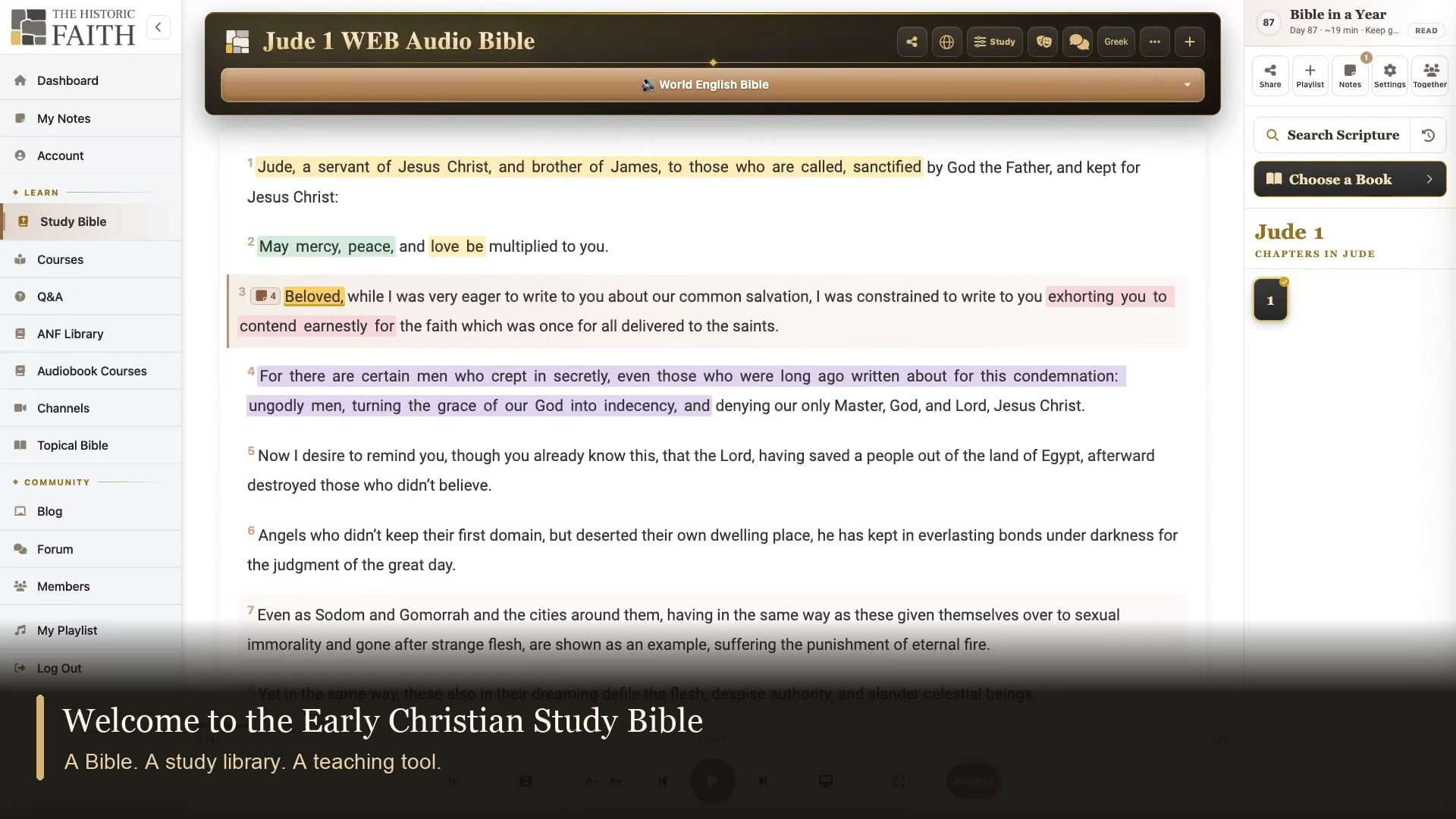 Words. Writings.
Presentations.Watch the video
Guided tour · 21:50 · Several Bible editions.
See the phone experience · 5:31
The Early Christian Study Bible
Follow your curiosity.
Stay close to the sources.
Strong’s · Greek & Hebrew
What’s behind
that English word?
Read Hebrew in the Old Testament and Greek in the New Testament, with English glosses, Strong’s meanings, morphology and pronunciation where available.
Try a word study ↗Early Christian writings & recordings
How did early Christians
read this passage?
Right-click a verse—or press and hold on your phone—and choose Early Church. Read linked quotations and passages, listen where modern recordings are available, and open the full work around them.
Explore the connections in your Interlinear ↗Scripture cross-references
Follow related verses and compare Scripture with Scripture.
5.48 millionEarly Christian connections
Explore patristic writings linked to Scripture, with authors, works, and reading context.
Study → teachNotes, live slides & presentations
Keep notes beside your passage when your account has access. Present the Bible live, build a lesson with source quotations, rehearse, and download.
Counts checked October 3, 2026. Early Christian connections include related research passages; approved direct quotations are a separate selection. Word alignment, recordings, and linked passages vary by edition and verse. Notes and presentation tools require sign-in and enabled account access.
Old Testament — Hebrew Interlinear
Click a book name to start listening, or tap Guide → for the full study guide (themes, key chapters, FAQs).
New Testament — Greek Interlinear
Click a book name to start listening, or tap Guide → for the full study guide (themes, key chapters, FAQs).