

Early Christian Beliefs About Forgiveness of Sins
Early Christian writings teach that forgiveness of sins comes through Jesus Christ, is normally joined to repentance and baptism, and is lived out in a forgiving church. Justin Martyr, Irenaeus, Hermas, Clement of Alexandria, Tertullian, Cyprian, and early liturgies all speak this way. Some texts stress baptism, others confession or church authority, so the details are mixed, but the core belief is early and widespread.
114 early-church witnesses · 197 source quotations · compared with Scripture
What did early Christians believe about absolution and Forgiveness of Sins?
Early Christian writers widely taught that forgiveness of sins comes through Jesus Christ, is tied to repentance and baptism, and must be met with a forgiving heart toward others. Justin Martyr, Irenaeus, Hermas, Clement of Alexandria, Tertullian, Cyprian, Origen, and the liturgical texts all connect remission of sins to Christ’s work, baptism, confession, prayer, and the Church’s ministry.
The evidence is strongest for baptism and repentance as the normal setting for forgiveness, and also for the idea that bishops or apostles could speak with binding and loosing authority. Some writers go further than others on penance and post-baptismal sin, so the details are mixed, but the main teaching is broad and early. Many more early Christian quotations, Bible passages, and source links are gathered below so you can study the evidence for yourself.
Key Takeaways
- Early Christians linked forgiveness of sins to Jesus Christ, repentance, and baptism.
- Several writers also linked forgiveness to confession, prayer, and the Church’s power to bind and loose.
- The strongest agreement is on Christ as the source of forgiveness; the details of later penance are more varied.
Questions Answered by the Sources
Did early Christians teach that repentance and baptism bring forgiveness of sins?
The strongest evidence says repentance and baptism are connected with the forgiveness or remission of sins. Several early writers describe baptism as the place where sins are forgiven, while others speak of repentance as the path toward pardon.
-
Hermas, The Shepherd (Pastor) Direct teaching
... that there is no repentance except the one that happens when we go down into the water and receive forgiveness of our former sins." He said to me, "What you heard was sound teaching, for that is really so. For the person who has received forgiveness of sins ought not to sin anymore, but to live in purity. However, since you are asking carefully about everything, I will explain this to you also. I do not say it in order to give an excuse for error to those who are going to believe, or who have recently believed, in the Lord. For those who have now believed, and those who are going to believe, do not have repentance for sins, but they do have forgiveness of their previous sins. But for those who were called before these days, the Lord has appointed repentance. For the Lord, knowing the heart and knowing beforehand all things, knew the weakness of human beings and the many tricks of the devil, that he would bring some evil on the servants of God and would act wickedly toward them. Therefore the Lord, being merciful, had mercy on the work of His hand and appointed repentance for them. And He has given me authority over this repentance. Therefore I say to you that if anyone is tempt
-
Justin Martyr, Dialogue with Trypho Direct teaching
...spectacle to all flesh.' So you must remove this hope from your hearts and strive to understand how forgiveness of sins and the hope of inheriting the promised blessings can be yours. There is no other way than to know this Christ, be cleansed in the fountain Isaiah mentioned for the forgiveness of sins, and, from then on, to live sinless lives."
-
Anonymous, Treatise on Re-Baptism Supporting witness
For our Lord says to the paralytic man, Be of good cheer, my son, your sins are forgiven you, Matthew 9:2 that He might show that hearts were purified by faith for the forgiveness of sins that should follow.
-
Archelaus, Disputation with Manes Direct teaching
...He was not baptized, then none of us is baptized. But if there is no baptism, then there will be no remission of sins, and every man will die in his own sins." Manes said: "Is baptism, then, given on account of the remission of sins?" Archelaus said: "Certainly." Manes said: "Does it not follow, then, that Christ sinned, since He was baptized?" Archelaus said: "God forbid! No, rather, He was made sin for us, taking our sins upon Himself. For this reason He was born of a woman, and for this reason also He came to the rite of baptism, so that He might receive the purification of this part, and so that the body which He had taken to Himself might be able to bear the Spirit, who had descended in the form of a dove."
-
Hippolytus, Refutation of All Heresies Supporting witness
...hese marvels, he thinks he confuses fools, while at the same time he says the following: that a new remission of sins was preached to men in the third year of Trajan's reign. And Elchasai lays down the nature of baptism, and I will explain this as well. He claims that for those who have been involved in every kind of sexual immorality, uncleanness, and wicked acts, if any of them is a believer, he declares that such a person, when converted and obedient to the book and believing its contents, should receive remission of sins through baptism.
-
Apostolic Constitutions, Apostolic Constitutions Supporting witness
This is blessed by the high priest for the remission of sins and as the first preparation for baptism. For he calls on the unbegotten God, the Father of Christ, the King of all visible and intelligible natures, asking that He would sanctify the oil in the name of the Lord Jesus and give to it spiritual grace and effective power, for the remission of sins and as the first preparation for the confession of baptism. So then, when the candidate for baptism is anointed, he may be freed from all ungodliness and may become worthy of initiation, according to the command of the Only-begotten.
-
Origen, Commentary on John Supporting witness
For it is for forgiveness of sins that this washing is given.
-
Anonymous, Treatise on Re-Baptism Supporting witness
And their hearts being purified, God bestowed upon them at the same time, in virtue of their faith, remission of sins;
-
Acts 2:38 Direct teaching
And Peter said to them, “Repent and be baptized every one of you in the name of Jesus Christ for the forgiveness of your sins, and you will receive the gift of the Holy Spirit.
Did early Christians connect forgiveness with confession and asking pardon?
The evidence shows early Christians speaking of confession, asking forgiveness, and repentance before God. These cards do not form a single technical doctrine of absolution, but they do show a clear pattern of penitential language.
-
Clement of Alexandria, The Stromata (Miscellanies) Direct teaching
So, the person who has received forgiveness of sins ought not to sin anymore. For besides the first and only repentance from sins, which is from the sins of the former life, the first pagan life, that is, sins done in ignorance, there is also immediately set before those who have been called a repentance that cleanses the seat of the soul from transgressions, so that faith may be firmly established. And the Lord, knowing the heart and foreknowing the future, saw beforehand both the weakness of man and the craft and cunning of the devil from the beginning. He saw how the devil, envying man because of the forgiveness of sins, would bring certain causes of sins before the servants of God, skillfully working harm so that they might fall along with him. Therefore, since He is very merciful, He has granted, in the case of those who, though in faith, fall into some transgression, a second repentance. So if anyone is tempted after being called, and is overcome by force and deceit, he may still receive a repentance that is not to be regretted. For if we sin willfully after we have received the knowledge of the truth, there no longer remains a sacrifice for sins, but a certain fearful expect
-
Clement of Alexandria, The Stromata (Miscellanies) Direct teaching
..., a person from among the Gentiles, who has turned from that old way of life to faith, has received forgiveness of sins once. But if someone sins after this, then even if he receives pardon when he repents, he ought to be afraid, because he is no longer being washed for the forgiveness of sins. For the one who has been born again, not of blood, nor of the will of the flesh, John 1:13, but in the Spirit, must give up not only the idols he once treated as gods, but also the deeds of his former life. This new birth consists in repenting by not falling into the same fault again. For repeated repentance, and an easy readiness to change because of lack of training, is really the practice of sinning again. So, asking forgiveness again and again for the things in which we often sin is only the appearance of repentance, not repentance itself. But, as Scripture says, “The righteousness of the blameless cuts straight paths,” Proverbs 11:5. And again, “The righteousness of the innocent will make his way right,” Proverbs 13:6. No, “as a father pities his children, so the Lord pities those who fear Him.” David writes, “Those who sow in tears shall reap in joy,” that is, those who confess with
-
Tatian, The Diatessaron Supporting witness
Luke 24:47 and that repentance unto the forgiveness of sins be preached 12 in his name among all the peoples;
-
Clement of Alexandria, The Stromata (Miscellanies) Supporting witness
And first he will ask forgiveness of sins;
-
Clement of Alexandria, The Stromata (Miscellanies) Supporting witness
The sins committed before faith are accordingly forgiven by the Lord, not that they may be undone, but as if they had not been done.
-
Clement of Alexandria, The Stromata (Miscellanies) Direct teaching
Forgiveness of sins is therefore different from repentance;
-
Justin Martyr, Dialogue with Trypho Supporting witness
If, indeed, you repent of your sins, and recognise Him to be Christ, and observe His commandments, then you may assert this;
-
Clement of Alexandria, The Stromata (Miscellanies) Supporting witness
...d? This shows that the nature of repentance is to bring pardon. But pardon does not consist in mere remission, but in remedy. An example of the same thing is the making of the calf by the people before Aaron. From there, one of the wise men among the Greeks also spoke this saying: "Pardon is better than punishment." In the same way, the saying, "Become surety, and trouble is at hand," is taken from the statement of Solomon, which says, "My son, if you become surety for your friend, you will give your hand to your enemy; for a man's own lips are a strong snare to him, and he is caught by the words of his own mouth." Proverbs 6:1-2 And the saying, "Know yourself," has been taken in a more mystical sense from this: "You have seen your brother, you have seen your God." So also, "You shall love the Lord your God with all your heart, and your neighbour as yourself." For it is said, "On these commandments the law and the prophets hang and are suspended." The following also agree with these: "These things I have spoken to you, that My joy might be fulfilled: and this is My commandment, That you love one another, as I have loved you." John 15:11-12 For the Lord is merciful and pitiful, a
-
Lamentations 1:7 Supporting witness
for thou art the Lord most high, compassionate, long-suffering, and most merciful, repenting of the evils of men. Thou, Lord, according to the abundance of thy goodness, hast proclaimed repentance and forgiveness to those that have sinned against thee, and in the multitude of thy kindnesses thou hast decreed for sinners repentance unto salvation.
-
Wisdom of Solomon 12:19 Supporting witness
But by such works hast thou taught thy people That the just man should be merciful, And hast made thy children to be of a good hope That thou givest repentance for sins.
-
Wisdom of Sirach 21:1 Supporting witness
My son, hast thou sinned? do so no more, But ask pardon for thy former sins.
-
Wisdom of Sirach 2:11 Supporting witness
For the Lord is full of compassion and mercy, Long-suffering, and very pitiful, and forgiveth sins, And saveth in time of affliction.
Did early Christians think bishops or apostles could absolve sins?
Some sources apply Jesus' binding and loosing language to apostles, bishops, or the church's ministry. These texts suggest that forgiveness was sometimes spoken of in a ministerial or ecclesial way, though the wording is not uniform across all authors.
-
Cyprian, Epistles Supporting witness
11. Since in baptism each person has his own sins forgiven, the Lord proves and declares in His Gospel that sins can be taken away only by those who have the Holy Spirit. For after His resurrection, when He sent out His disciples, He spoke to them and said, "As the Father has sent Me, even so I send you." And when He had said this, He breathed on them and said to them, "Receive the Holy Spirit. If you forgive anyone's sins, they will be forgiven; if you retain anyone's sins, they will be retained." John 20:21-23 In this place He shows that only the one who has the Holy Spirit can baptize and give forgiveness of sins. Moreover, John, who was to baptize Christ our Lord Himself, received the Holy Spirit beforehand while he was still in his mother's womb, so that it might be certain and clear that no one can baptize except those who have the Holy Spirit. Therefore those who support heretics or schismatics must answer us whether they have the Holy Spirit or not. If they have Him, why are hands laid on those who were baptized among them when they come to us, so that they may receive the Holy Spirit, since He must surely have been received there, where, if He was there, He could also be g
-
Cyprian, Epistles Supporting witness
Matthew 16:19 And again, in the Gospel, when Christ breathed on the apostles alone, saying, Receive the Holy Ghost: whose soever sins you remit they are remitted unto them, and whose soever sins you retain they are retained.
-
Cyprian, Epistles Direct teaching
But it is clear where and by whom forgiveness of sins can be given: namely, in baptism. For first of all, the Lord gave that power to Peter, on whom He built the Church, and from whom He appointed and showed the source of unity. That is, He gave the power that whatever Peter loosed on earth would be loosed in heaven. And after the resurrection, He also speaks to the apostles, saying, "As the Father has sent Me, even so I send you." And when He had said this, He breathed on them and says to them, "Receive the Holy Spirit. If you forgive anyone's sins, they are forgiven them; if you retain anyone's sins, they are retained." From this we understand that only those who are set over the Church and established in the law of the Gospel and in the ordinance of the Lord are allowed to baptize and to give forgiveness of sins. But outside the Church, nothing can be either bound or loosed, where there is no one who can bind or loose anything.
-
Cyprian, Epistles Supporting witness
...emes Him whom Christ called His Lord and His God is rewarded by Christ, and receives forgiveness of sins and the sanctification of baptism! But by what power can the one who denies God the Creator, the Father of Christ, receive in baptism the forgiveness of sins, since Christ received that very power, by which we are baptized and sanctified, from that same Father? He called the Father greater than Himself. He asked to be glorified by Him. He fulfilled His will even to obeying by drinking the cup and undergoing death. What else is this, then, except becoming a partner with blaspheming heretics, to wish to maintain and insist that one who blasphemes and sins seriously against the Father and the Lord and God of Christ can receive forgiveness of sins in the name of Christ? Moreover, what is this, and what kind of teaching is it, that the one who denies the Son of God does not have the Father, but the one who denies the Father should be thought to have the Son, although the Son Himself testifies and says, "No man can come to me except it were given to him of my Father." John 6:65 So it is clear that no forgiveness of sins can be received in baptism from the Son unless it is plain tha
-
Tertullian, On Modesty Supporting witness
...the first to unbar, in Christ's baptism, the entrance to the heavenly kingdom. In that kingdom, the sins that were previously bound are loosed, and those that have not been loosed are bound, in accordance with true salvation. And he bound Ananias with the bond of death, and he absolved the man weak in his feet from his defect of health. Moreover, in that dispute about the observance or non-observance of the Law, Peter was the first of all to be endowed with the Spirit, and, after making preface about the calling of the nations, to say, "And now why are you tempting the Lord, concerning the imposition upon the brothers of a yoke which neither we nor our fathers were able to support? But through the grace of Jesus we believe that we shall be saved in the same way as they." This sentence both loosed those parts of the law that were abandoned, and bound those that were reserved. Hence the power of loosing and of binding committed to Peter had nothing to do with the capital sins of believers; and if the Lord had given him a precept that he must grant pardon to a brother sinning against him even seventy times sevenfold, of course He would have commanded him to bind, that is, to retain
-
Apostolic Constitutions, Apostolic Constitutions Direct teaching
...t die." Therefore, bishop, understand the dignity of your office. As you have received the power of binding, so you have also received the power of loosing. Since you have the power of loosing, know yourself, and conduct yourself in this world in a way that fits your office, knowing that you must give a great account. For to those whom, as the Scripture says, men have entrusted much, they will require the more, in Luke 12:48. For no man is free from sin, except Him who was made man for us. For it is written, "No man is pure from filthiness, no, not even if his life is only one day long." For this reason, the lives and conduct of the ancient holy men and patriarchs are described, not so that we may reproach them when we read, but so that we ourselves may repent, and may have hope that we also will obtain forgiveness. For their faults are both a safeguard and a warning to us, because from them we learn that when we have sinned, if we repent, we shall have pardon. For it is written: "Who can boast that he has a clean heart? And who dares to say that he is pure from sin?" in Proverbs 20:9. Therefore, no man is without sin. So labor with all your strength to be blameless, and be watc
-
Apostolic Constitutions, Apostolic Constitutions Direct teaching
...ne astray. For you have authority to bring them back and to deliver those who are broken-hearted by remission. For through you our Saviour says to the one discouraged by the sense of his sins, “Your sins are forgiven you; your faith has saved you; go in peace.” But this peace and haven of tranquillity is the Church of Christ. When you have loosed them from their sins, restore them to it, since they are now sound and blameless, full of good hope, diligent, and laborious in good works. Like a skillful and compassionate physician, heal all who have wandered in the ways of sin. For those who are whole have no need of a physician, but those who are sick. For the Son of Man came to save and to seek what was lost. Matthew 9:12; Luke 19:10 Since you are therefore a physician of the Lord’s Church, provide remedies suited to each patient's case. Cure them; heal them by every means possible; restore them sound to the Church. Feed the flock, not with insolence and contempt, as lording it over them, Ezekiel 34:4 but as a gentle shepherd, gathering the lambs into your bosom and gently leading those that are with young. Matthew 20:25; Isaiah 40:11
-
Early Liturgies, Divine Liturgy of St. Mark Supporting witness
...le. You breathed on their faces and said to them, “Receive the Holy Spirit, the Comforter. Whosever sins you remit, they are remitted to them; and whosever sins you retain, they are retained.” Breathe also Your Holy Spirit upon us Your servants, who are standing around and are about to enter on Your holy service: upon the bishops, elders, deacons, readers, singers, and laity, with the entire body of the Holy Catholic and Apostolic Church.
-
Early Liturgies, Divine Liturgy of St. James Supporting witness
...n Lord, hear my prayer for Your servants, and pass over all their errors, remembering them no more. Forgive them every transgression, voluntary and involuntary. Deliver them from everlasting punishment. For You are He who has commanded us, saying, "Whatever things you bind on earth shall be bound in heaven, and whatever things you loose on earth shall be loosed in heaven." For You are our God, a God able to have pity, and to save and to forgive sins. And glory is due to You, with the eternal Father and the life-giving Spirit, now and ever, and to all eternity. Amen.
-
Early Liturgies, Divine Liturgy of St. James Supporting witness
and whatsoever things you loose upon earth, shall be loosed in heaven: for, you are our God, a God able to pity, and to save and to forgive sins;
-
Novatian, Treatise Concerning the Trinity Supporting witness
And the Lord said, Receive the Holy Ghost: whose sins you remit, they shall be remitted;
-
Victorinus, Commentary on the Apocalypse Supporting witness
And the Lord said, Receive the Holy Ghost: whose sins you remit, they shall be remitted;
More related quotations from this section 3 shown
-
John 20:23 Direct teaching
If you forgive the sins of any, they are forgiven them; if you retain the sins of any, they are retained.”
-
Matthew 16:19 Supporting witness
And I will give unto thee the keys of the kingdom of heaven: and whatsoever thou shalt bind on earth shall be bound in heaven: and whatsoever thou shalt loose on earth shall be loosed in heaven.
-
Matthew 18:18 Supporting witness
Verily I say unto you, Whatsoever ye shall bind on earth shall be bound in heaven: and whatsoever ye shall loose on earth shall be loosed in heaven.
Did early Christians say you must forgive others to be forgiven?
Yes. Cyprian, Tatian, and the Apostolic Constitutions teach that a person who wants forgiveness must also forgive other people. They use the Lord’s Prayer and Jesus’ words about forgiving others as the standard.
-
Apostolic Constitutions, Apostolic Constitutions Direct teaching
...is not before their eyes." Now the way of peace is our Savior Jesus Christ, who taught us, saying, "Forgive, and you shall be forgiven. Give, and it shall be given to you." Luke 6:37-38. That is, give remission of sins, and your offenses shall be forgiven you. He also taught us in His prayer to say to God, "Forgive us our debts, as we forgive our debtors." Matthew 6:12. If, therefore, you do not forgive offenders, how can you expect the remission of your own sins? Do you not instead bind yourselves more tightly by claiming in your prayers to forgive, when you really do not forgive? Will you not be judged by your own words, when you say you forgive and do not forgive? For know that he who casts out one who has not behaved wickedly, or who will not receive one who returns, is a murderer of his brother and sheds his blood, as Cain did the blood of his brother Abel, and his blood cries to God, Genesis 4:10, and will be required. For a righteous man unjustly killed by anyone will be at rest with God forever. The same is true of the man who is separated without cause by his bishop. He who has cast him out as a pestilent man when he was innocent is more savage than a murderer. Such a m
-
Cyprian, Treatises Supporting witness
...added the law and bound us with a certain condition and obligation: we must ask for our debts to be forgiven in the same way that we ourselves forgive our debtors. We must know that what we ask for concerning our sins cannot be obtained unless we also have acted in the same way toward our debtors. Therefore He also says in another place, "With what measure you measure, it shall be measured to you again." And the servant who, after his master had forgiven him all his debt, would not forgive his fellow servant, is thrown back into prison. Because he would not forgive his fellow servant, he lost the mercy that his lord had shown him. Christ also sets these things forth more urgently in His commands, with even greater force in His rebuke. "When you stand praying," He says, "forgive, if you have anything against any, so that your Father who is in heaven may forgive you your trespasses. But if you do not forgive, neither will your Father who is in heaven forgive you your trespasses." No ground of excuse remains on the day of judgment, when you will be judged by your own sentence, and whatever you have done, you also will suffer. For God commands us to be peacemakers, to be in agreemen
-
Tatian, The Diatessaron Direct teaching
...uld pay all that he owed. So my Father who is in heaven will do to you, if each one of you does not forgive his brother's wrong conduct from his heart. Take heed within yourselves: if your brother sins, rebuke him; and if he repents, forgive him. And if he acts wrongly toward you seven times in a day, and on that day returns seven times to you and says, “I repent toward you,” forgive him. And if your brother acts wrongly toward you, go and reprove him between you and him alone. If he listens to you, you have gained your brother. But if he does not listen, take with you one or two more, so that by the mouth of two or three every word may be established. And if he does not listen to them either, tell the congregation. And if he does not listen even to the congregation, let him be to you as a publican and a Gentile. Truly I say to you, whatever you bind on earth shall be bound in heaven, and whatever you loose on earth shall be loosed in heaven. I say to you also, if two of you agree on earth to ask, everything shall be granted to them from my Father who is in heaven. For where two or three are gathered in my name, there am I among them. Then Cephas came near to him and said to him
-
Cyprian, Treatises Supporting witness
22. After this we also plead for our sins, saying, "And forgive us our debts, as we also forgive our debtors." After asking for the supply of food, we also ask for pardon for sin. This is so that the one who is fed by God may live in God, and so that not only our present and temporary life may be cared for, but also eternal life, to which we may come if our sins are forgiven. The Lord calls these debts, as He says in His Gospel, "I forgave you all that debt, because you asked me." Matthew 18:32. How necessary, wise, and saving it is that we are warned that we are sinners, since we are required to plead for our sins. And while pardon is asked from God, the soul is reminded of its own awareness of sin. This keeps anyone from flattering himself that he is innocent, and from perishing more deeply by exalting himself. He is instructed and taught that he sins daily, since he is told to ask daily for his sins to be forgiven. Moreover, John also warns us in his epistle and says, "If we say that we have no sin, we deceive ourselves, and the truth is not in us. But if we confess our sins, the Lord is faithful and just to forgive us our sins." In his epistle he included both things: that we s
-
Tatian, The Diatessaron Direct teaching
... Your kingdom come. Your will be done, as in heaven, so on earth. Give us today our daily food. And forgive us our trespasses, as we forgave those who trespassed against us. And do not bring us into temptations, but deliver us from the evil one. For Yours is the kingdom, and the power, and the glory, forever and ever." If you forgive men their wrongdoing, your Father in heaven will forgive you. But if you do not forgive men, neither will your Father pardon your wrongdoing.
-
Tatian, The Diatessaron Direct teaching
...ask for, believe that you receive it, and you shall have it. Mark 11:25 And when you stand to pray, forgive whatever is in your heart against any man; and your Father who is in heaven will also forgive you your wrongdoings. Mark 11:26 But if you do not forgive men their wrongdoings, neither will your Father forgive you your wrongdoings.
-
1 John 1:9 Supporting witness
If we confess our sins, he is faithful and just to forgive us our sins, and to cleanse us from all unrighteousness.
-
Wisdom of Sirach 28:2 Supporting witness
Forgive thy neighbor the hurt that he hath done unto thee, So shall thy sins also be forgiven when thou prayest.
Common Questions
Did early Christians believe sins could be forgiven?
Yes. They taught that Christ forgives sins, and that forgiveness is received through repentance, baptism, and faith.
Did early Christians connect forgiveness with baptism?
Yes. Several writers say baptism is the place where sins are forgiven or washed away.
Did early Christians think church leaders could absolve sins?
Some did, especially in texts about binding and loosing, but the way they explained that authority was not always the same.
Source Index for Absolution and Forgiveness of Sins
The guided sections above show the strongest quotations. This compact index highlights 160 ranked source links from 197 compiled sources for deeper study.
Source index 160 ranked links shown
Early Christian Writings 80 shown of 114
Primary-source quotations from early Christian writers and church documents.
Bible Passages 80 shown of 83
Related Bible passages saved for comparison with the early Christian quotations.
Related Resources
 Course Lesson
What Was the Early Christian View on the Laying on of Hands for the Holy Spirit and Forgiveness of Sins in Baptism?
Open a related course lesson for more teaching connected with Absolution and Forgiveness of Sins.
Course Lesson
What Was the Early Christian View on the Laying on of Hands for the Holy Spirit and Forgiveness of Sins in Baptism?
Open a related course lesson for more teaching connected with Absolution and Forgiveness of Sins.
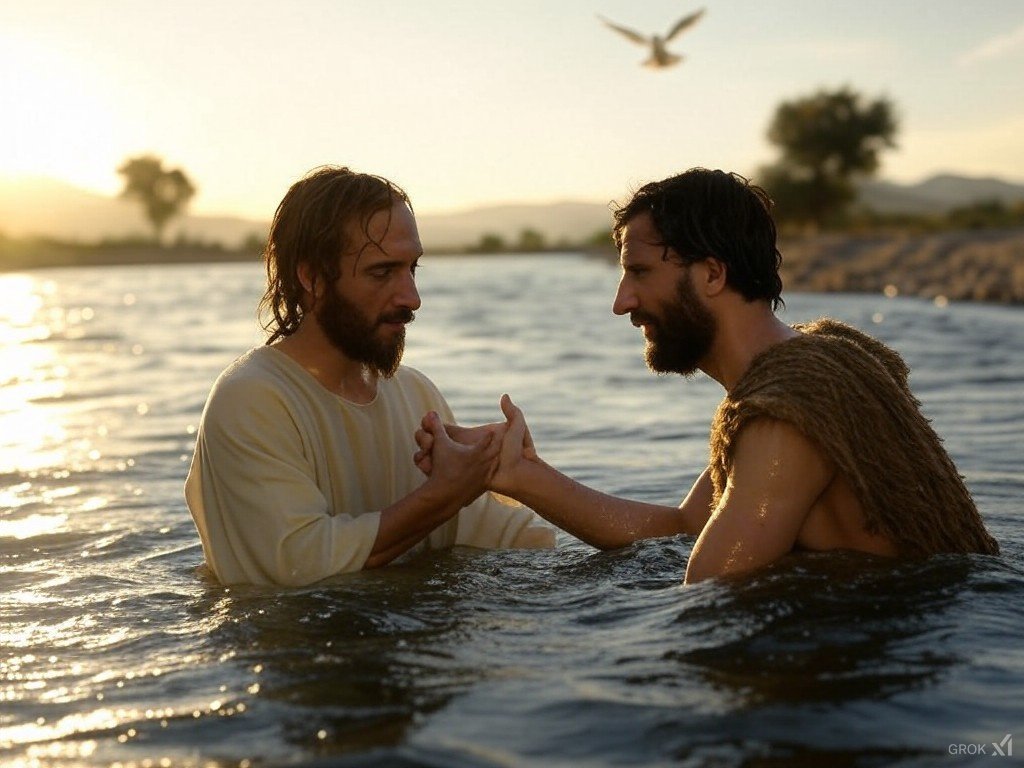 Course Lesson
What Was the Early Christian View on the Laying on of Hands for the Holy Spirit and Forgiveness of Sins in Baptism?
Open a related course lesson for more teaching connected with Absolution and Forgiveness of Sins.
Course Lesson
What Was the Early Christian View on the Laying on of Hands for the Holy Spirit and Forgiveness of Sins in Baptism?
Open a related course lesson for more teaching connected with Absolution and Forgiveness of Sins.
 Site Page
Forgiveness of Sins in the Church
Compare another early Christian topic page with related source quotations.
Site Page
Forgiveness of Sins in the Church
Compare another early Christian topic page with related source quotations.