

Early Christian Views on Free Will
Early Christians commonly taught that people can choose good or evil and are responsible for their choices. Justin Martyr, Irenaeus, Tertullian, Hippolytus, and others connect free choice to obedience, judgment, and moral blame. Many also link free will to God’s commands: choose life, obey, and avoid sin. Some writings also stress grace and God’s rule, so the full picture is broader than free choice alone.
142 early-church witnesses · 245 source quotations · compared with Scripture
What did early Christians believe about free will?
Early Christian writers commonly taught that people really choose between good and evil and are accountable for what they do. Justin Martyr, Irenaeus, Tertullian, Hippolytus, and others say God gave humans freedom of choice, so praise, blame, reward, and punishment make sense. Many also tied this freedom to obedience: people can choose life, keep God’s commands, or turn away and sin.
The evidence is broad and consistent across the 2nd and 3rd centuries, though some writers also stressed God’s grace and foreknowledge, so the topic is not a simple one-line slogan. The strongest view is that early Christians rejected fate as the ruler of human action and taught that free choice works together with God’s law and judgment. Many more early Christian quotations, Bible passages, and source links are gathered below so you can study the evidence for yourself.
Key Takeaways
- Justin Martyr, Irenaeus, Tertullian, and Hippolytus all say humans have real choice and are answerable for it.
- Early Christian writers often pair free will with commands to choose life, obey God, and turn away from sin.
- Some writers also stress God’s grace and foreknowledge, so free will is taught alongside God’s rule, not apart from it.
Questions Answered by the Sources
Did the early Christians teach that humans have free will?
The compiled sources strongly support that early Christians taught human beings have real choice in obedience, sin, and repentance. Justin Martyr, Irenaeus, Tatian, Tertullian, Novatian, Hippolytus, Lactantius, and others speak this way directly.
-
Tertullian, Against Marcion Direct teaching
...appened, which could not have happened because of God. I find, then, that man was made by God to be free, with control over his own will and power. Nothing shows the presence of God's image and likeness in him better than this arrangement of his nature. For it was not by his face or by the features of his body, though these had many forms in human nature, that he expressed his likeness to the form of God. Rather, he showed that mark in the substance he received from God Himself — that is, the spiritual substance, which corresponded to the form of God — and in the freedom and power of his will. This condition of man was confirmed even by the very law that God then laid upon him. For a law would not be laid upon someone if he did not have the power to give the obedience that law requires. And again, the penalty of death would not be threatened against sin if it were impossible for man, in the freedom of his will, to despise the law. So also in the Creator's later laws you will find that, when He sets before man good and evil, life and death, the whole course of instruction is arranged in commands by God's calling people away from sin, and by His threats and exhortations. And this
-
Hippolytus, Refutation of All Heresies Direct teaching
For if man did not possess the power to will and not to will, why should a law be established?
Why did early Christians say God gave commands if people had free will?
The compiled witnesses repeatedly say God’s commands show that obedience and disobedience are meaningful choices. They tie this to reward, punishment, and the fairness of judgment.
-
Novatian, Treatise Concerning the Trinity Direct teaching
... breathing. And when He had given him all things for his service, He willed that he alone should be free. But lest unlimited freedom should again fall into danger, He laid down a command. In it, man was taught that there was no evil in the fruit of the tree, but he was warned beforehand that evil would arise if perhaps he should use his free will in contempt of the law that had been given. For on the one hand, it was necessary for him to be free, lest the image of God should unfittingly be in bondage. And on the other hand, a law had to be added, so that unrestrained liberty might not break out even into contempt of the Giver. In this way, he might receive both worthy rewards and deserved punishment, since by the direction of his mind either way, he had in his own power what he might choose to do. From this, therefore, through envy, mortality comes back upon him. Although he could have escaped it by obedience, he rushes into it by hurrying to be God under the influence of corrupt counsel. Still, nevertheless, God mercifully tempered his punishment by cursing not so much the man himself as his labors on the earth. And what is required is not hidden from man's knowledge. Rather, G
-
Lactantius, The Divine Institutes Supporting witness
...ommands for life ought to remove every kind of excuse, so that he may place on men the necessity of obedience, not by force, but by shame, and yet still leave them freedom. Then a reward may be appointed for those who obey, because it was in their power not to obey if they wished; and punishment for those who do not obey, because it was in their power to obey if they wished. How then can excuse be removed unless the teacher practices what he teaches, and, as it were, goes before and holds out his hand to the one who is about to follow? But how can anyone practice what he teaches unless he is like the one whom he teaches? For if he is subject to no passion, a man may answer his teacher like this: It is my wish not to sin, but I am overcome, for I am clothed with frail and weak flesh. It is this flesh that desires, that becomes angry, that fears pain and death. And so I am carried along against my will, and I sin not because I want to, but because I am forced. I myself know that I sin, but the necessity laid on me by my weakness, which I cannot resist, drives me on. What will that teacher of righteousness say in reply to these things? How will he refute and convict a man who claim
-
Clement of Rome, First Epistle to the Corinthians Supporting witness
...braham, known as "the friend," was found faithful because he obeyed the words of God. In his act of obedience, he left his own country, his relatives, and his father's house, to leave behind a small territory, a weak family, and an insignificant home so he could inherit God's promises. For God told him, "Leave your country, your relatives, and your father's house, and go to the land I will show you. I will make you a great nation, bless you, and make your name great, and you will be blessed. I will bless those who bless you and curse those who curse you, and through you, all the families of the earth will be blessed." Again, when he parted from Lot, God said to him, "Look up, and from where you are, look north, south, east, and west; all the land you see, I will give to you and your descendants forever. I will make your descendants like the dust of the earth, so if anyone could count the dust of the earth, then your descendants could be counted." And again, the Scripture says, "God brought Abram out and said to him, 'Look up now to heaven and count the stars if you can; so shall your descendants be.' And Abram believed God, and it was credited to him as righteousness." Because o
-
Hermas, The Shepherd (Pastor) Supporting witness
and they will live unto God. But do you walk in my commandments, and live.
-
Theophilus of Antioch, To Autolycus Supporting witness
so, obeying the will of God, he who desires is able to procure for himself life everlasting.
-
Clement of Alexandria, The Stromata (Miscellanies) Supporting witness
...they shall inherit the earth," Matthew 5:5. And the meek are those who have quelled the battle of unbelief in the soul, the battle of wrath, and lust, and the other forms subject to them. And He praises those meek by choice, not by necessity. For with the Lord there are both rewards and many mansions, corresponding to people's lives. "Whoever shall receive," He says, "a prophet in the name of a prophet, shall receive a prophet's reward; and whoever shall receive a righteous man in the name of a righteous man, shall receive a righteous man's reward; and whoever shall receive one of the least of these my disciples, shall not lose his reward," Matthew 10:41-42. And again, He showed the differences of virtue according to merit, and the noble rewards, by the hours unequal in number. In addition, by the equal reward given to each of the laborers, that is, salvation, which is meant by the penny, He showed the equality of justice. And He hinted at the difference of those called by those who worked for unequal lengths of time. Therefore they shall work according to the fitting mansions of which they have been counted worthy as rewards, being fellow workers in the ineffable administration
-
Ignatius, Epistle to the Magnesians (Long Version) Supporting witness
...servance of God’s precepts, but death as the result of disobedience, and everyone, according to the choice they make, shall go to their own place, let us flee from death and choose life. For I note that among men there are two different characters—one true coin, the other false. The truly devout person is the right kind of coin, stamped by God Himself. The ungodly person, on the other hand, is false coin, unlawful, counterfeit, wrought not by God, but by the devil. I do not mean to say that there are two different human natures, but that there is one humanity, sometimes belonging to God, and sometimes to the devil. If anyone is truly religious, they are a person of God; but if they are irreligious, they are a person of the devil, made such, not by nature, but by their own choice. The unbelieving bear the image of the prince of wickedness. The believing possess the image of their Prince, God the Father, and Jesus Christ, through whom, if we are not ready to die for the truth in His passion, His life is not in us.
-
Ignatius, Epistle to the Magnesians (Long Version) Supporting witness
Seeing, then, all things have an end, and there is set before us life upon our observance [of God’s precepts], but death as the result of disobedience, and every one, according to the choice he makes, shall go to his own place, let us flee from death, and make choice of life.
-
Justin Martyr, The First Apology Supporting witness
For not like other things, as trees and quadrupeds, which cannot act by choice, did God make man: for neither would he be worthy of reward or praise did he not of himself choose the good, but were created for this end;
-
Cyprian, Epistles Supporting witness
John 6:67 manifestly observing the law whereby a man left to his own liberty, and established in his own choice, himself desires for himself either death or salvation.
More related quotations from this section 7 shown
-
Justin Martyr, The First Apology Direct teaching
...ing of blame. Furthermore, if humanity did not have the power to avoid evil and choose good through free will, they would not be responsible for their actions. We demonstrate that both virtuous and flawed actions are made by free choice. We observe people switching between good and bad behaviors. If it were destined for someone to be either good or bad, they would not be capable of such changes. Moreover, not everyone would be good or bad, as this would make fate responsible for evil and contradict itself; or it would imply that neither virtue nor vice truly exists, and that things are considered good or evil merely by opinion, which the truth reveals as the greatest impiety and wickedness. However, we assert that it is inevitable fate that those who choose good receive worthy rewards, and those who choose the opposite receive due consequences. Unlike trees or animals that cannot act by choice, God created humans with the ability to choose. Thus, a person is deserving of reward or praise for freely choosing good, and is deserving of punishment for being evil by their own choice, rather than being inherently incapable of anything other than what they were made to be.
-
Tatian, Address to the Greeks Supporting witness
...f good, for that is with God alone. But in men it is brought to perfection through their freedom of choice. This is so that the bad man may be justly punished, since he became depraved through his own fault, while the just man may deservedly be praised for his virtuous deeds, since by the exercise of his free choice he refrained from transgressing the will of God. Such is the constitution of things in reference to angels and men. And the power of the Word, having in itself a faculty to foresee future events, foretold from time to time the issues of things to come. It did this not as if they were fated, but as things taking place by the choice of free agents. It also became a forbidder of wickedness by means of prohibitions, and the encomiast of those who remained good. And when men attached themselves to one who was more subtle than the rest, because he was the first-born, and declared him to be God, though he was resisting the law of God, then the power of the Word excluded the beginner of this folly and his adherents from all fellowship with itself. And so the one who was made in the likeness of God, since the more powerful spirit is separated from him, becomes mortal. But tha
-
Irenaeus, Against Heresies: Book IV Supporting witness
But because man is possessed of free will from the beginning, and God is possessed of free will, in whose likeness man was created, advice is always given to him to keep fast the good, which thing is done by means of obedience to God.
-
Alexander of Alexandria, Epistles on the Arian Heresy Supporting witness
1. Natural will is the free faculty of every intelligent nature as having nothing involuntary which is in respect of its essence.
-
Archelaus, Disputation with Manes Supporting witness
To sin is ours, and that we sin not is God's gift, as our will is constituted to choose either to sin or not to sin.
-
Peter of Alexandria, The Genuine Acts of Peter Supporting witness
...ld under sin," Romans 7:14, which means this: I, being carnal and placed between good and evil as a voluntary agent, am such that I have it in my power to choose what I will. For, "Behold I set before you life and death," meaning that death would result from disobedience to the spiritual law, that is, the commandment; and from obedience to the carnal law, that is, the serpent's counsel. For by such a choice I am sold to the devil, having fallen under sin. Therefore evil, as if besieging me, clings to me and dwells in me, since justice gives me up to be sold to the Evil One because I violated the law. Therefore also the words, "That which I do, I allow not, and what I hate, that do I," Romans 7:15, are not to be understood as doing evil, but only as thinking it. For it is not in our power to think or not think of improper things, but to act or not act on our thoughts. For we cannot keep thoughts from coming into our minds, since we receive them when they are stirred up in us from outside. But we are able to keep from obeying them and acting on them. Therefore it is in our power to will not to think these things; but it is not in our power to make them go away so that they do not
-
Irenaeus, Against Heresies: Book IV Supporting witness
...evil. It is good to obey God, to believe in Him, and to keep His commandments, and this is the true life for humans; not obeying God is evil and leads to death. Since God gave humans such mental power, they can understand both the good of obedience and the evil of disobedience. This allows the mind, through experience, to wisely choose better things, ensuring that they are never lazy or neglectful of God's command. Learning that disobedience to God, which deprives them of life, is evil, they should avoid it completely. Understanding that what preserves life is obedience to God, they should diligently follow it with earnestness. Humans, therefore, have twofold experiences: knowing both kinds of actions, they can choose better paths with discipline. Without knowledge of the opposite, how could they understand what is good? A clear and definite understanding of what is presented is better than mere opinion. Just like tasting helps the tongue distinguish sweet from bitter, vision helps the eyes distinguish black from white, and hearing helps the ear recognize different sounds, the mind uses the experience of both good and evil to firmly hold on to what is good through obedience to G
Did early Christians reject fate or determinism when talking about free will?
Some compiled sources explicitly reject fate as the explanation for good and evil actions. Justin Martyr and Origen especially argue that foreknowledge is not the same thing as causation.
-
Archelaus, Disputation with Manes Direct teaching
Bring forth therefore fruits meet for repentance. From all this, then, you ought to see how weighty a matter it is for man to have freedom of will, However, let my antagonist here say whether there is a judgment for the godly and the ungodly, or not.
-
Cyprian, Treatises Supporting witness
...e reward of resurrection, cried out and said, "You indeed helplessly destroy us out of this present life; but the King of the world will raise us up, who die for His laws, to the eternal resurrection of life." The third, when challenged, quickly put out his tongue. For he had learned from his brother to despise the punishment of having the tongue cut off. He also firmly held out his hands to be cut off, greatly happy in such a kind of punishment, since it was his lot to imitate, by stretching out his hands, the form of his Lord's passion. And the fourth also, with the same virtue, despised the tortures. Answering, to restrain the king, he cried out with a heavenly voice and said, "It is better for those who are given to death by men to wait for hope from God, to be raised up by Him again to eternal life. For to you there will be no resurrection to life." 2 Maccabees 7:14 The fifth, besides trampling underfoot the king's torments and his severe and various tortures by the strength of faith, was also stirred by the Spirit of divinity to foreknowledge and knowledge of future events, and foretold to the king the wrath of God and the vengeance that would quickly follow. "Having power
-
Archelaus, Disputation with Manes Supporting witness
... precept having been given to the man himself, the man did not by any means have the power to yield obedience to the serpent and to the statements made by him. And if the man had then yielded no obedience to him, what occasion would there have been for him to be evil? But again, if evil is unbegotten, how does it happen that man is sometimes found to be stronger than it? For by obeying the law of God, he will often overcome every root of wickedness. And it would be a ridiculous thing if he, who is only a production, should be found stronger than the unbegotten. “Moreover, whose is that law with its commandment, that commandment, I mean, which has been given to man? Without doubt it will be acknowledged to be God’s. And how, then, can the law be given to an alien? Or who can give his commandment to an enemy? Or, to speak of the one who receives the commandment, how can he contend against the devil? That is to say, on this supposition, how can he contend against his own creator, as if the son, while he is indebted to him for acts of kindness, were to choose to injure the father? Thus you only show how useless man would be in this view, if you suppose him to be opposing by the law
-
Justin Martyr, The First Apology Supporting witness
...ces everlasting punishment or salvation based on their actions. If everyone knew this, no one would choose wickedness, even briefly, knowing they'd face everlasting punishment in fire. Instead, they would strive to control themselves and embrace virtue to receive the good gifts of God and avoid punishment. Those who try to avoid detection when they offend because of your laws and punishments—assuming they can escape your notice since you are just humans—would, if they understood that nothing, whether done or intended, escapes God's knowledge, choose to live decently because of the threatened penalties, as you would also admit. Yet, you seem to fear that if everyone became righteous, you would have no one to punish. This concern might be fitting for executioners but not for good leaders. As we said before, we believe these fears come from evil spirits seeking sacrifices and service even from unreasonable individuals. However, we hope that you, striving for a reputation of piety and philosophy, will not act unreasonably. But if, like the foolish, you prefer custom over truth, do what you have the power to do. Rulers who value opinion over truth have no more authority than robbers
-
Justin Martyr, The First Apology Direct teaching
And again, unless the human race have the power of avoiding evil and choosing good by free choice, they are not accountable for their actions, of whatever kind they be.
-
Clement of Alexandria, The Stromata (Miscellanies) Supporting witness
The blame lies in the exercise of free choice.
-
Clement of Alexandria, The Stromata (Miscellanies) Supporting witness
But revolt and distraction and disobedience are in our own power, as obedience is in our power.
More related quotations from this section 1 shown
-
Hippolytus, Refutation of All Heresies Direct teaching
Since man has free will, a law has been defined for his guidance by the Deity, not without answering a good purpose.
Common Questions
Did early Christians believe people have free will?
Yes. Many early Christian writers said people can choose good or evil and are responsible for those choices.
Did early Christians connect free will with obedience?
Yes. They often said free choice is shown in obeying God, choosing life, and avoiding sin.
Did early Christians think fate ruled human life?
No. Writers like Justin Martyr argued against fate and said moral actions are made by free choice.
Source Index for Free will
The guided sections above show the strongest quotations. This compact index highlights 160 ranked source links from 245 compiled sources for deeper study.
Source index 160 ranked links shown
Early Christian Writings 80 shown of 142
Primary-source quotations from early Christian writers and church documents.
Bible Passages 80 shown of 103
Related Bible passages saved for comparison with the early Christian quotations.
Related Resources
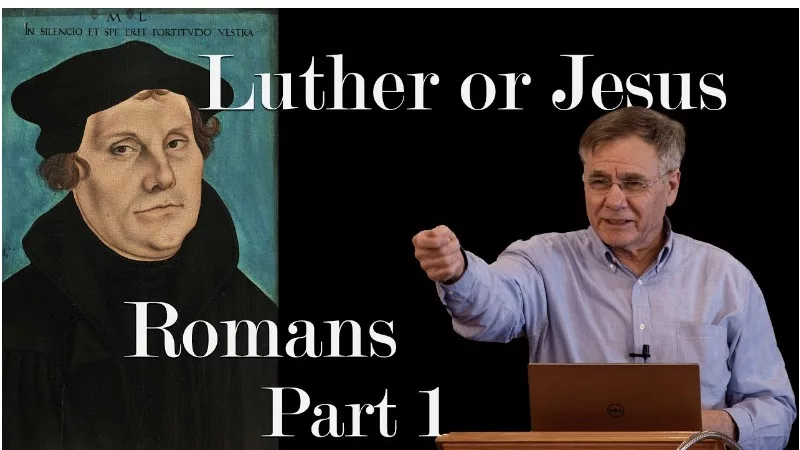 Course Lesson
Free Will and the Historical Background of Romans — Introduction (Part 2)
Open a related course lesson for more teaching connected with Free will.
Course Lesson
Free Will and the Historical Background of Romans — Introduction (Part 2)
Open a related course lesson for more teaching connected with Free will.
 Course Lesson
Predestination and Free Will
Open a related course lesson for more teaching connected with Free will.
Course Lesson
Predestination and Free Will
Open a related course lesson for more teaching connected with Free will.
 Site Page
Synergism and Free Will
Compare another early Christian topic page with related source quotations.
Site Page
The Foreknowledge of God and Free Will
Compare another early Christian topic page with related source quotations.
Site Page
Freedom of Religion and Christian Conscience
Compare another early Christian topic page with related source quotations.
Site Page
Synergism and Free Will
Compare another early Christian topic page with related source quotations.
Site Page
The Foreknowledge of God and Free Will
Compare another early Christian topic page with related source quotations.
Site Page
Freedom of Religion and Christian Conscience
Compare another early Christian topic page with related source quotations.