

Early Christian Views on Free Will and Grace
Early Christian writers taught that people can באמת choose good or evil, and that obedience to God matters. Justin Martyr, Irenaeus, Tatian, Tertullian, and Origen all speak clearly about human choice and responsibility. They also say God gives grace and help, so the Christian life is not self-salvation by willpower alone. The main question is not whether choice matters, but how human choice and God’s grace work together.
157 early-church witnesses · 282 source quotations · compared with Scripture
What did early Christians believe about synergism and Free Will?
Early Christian writers taught that people really have free will, and that obedience to God still matters in salvation and daily life. Justin Martyr, Irenaeus, Tatian, Tertullian, Origen, and others said humans choose good or evil, can obey or disobey, and are accountable for those choices. They also taught that God gives grace, freedom, and help, so the Christian life is not just raw human effort.
The evidence is broad and consistent on free choice, while the exact balance between grace and human action is more varied and should be read with care. Many more early Christian quotations, Bible passages, and source links are gathered below so you can study the evidence for yourself.
Key Takeaways
- Early Christians widely taught that humans can choose obedience or disobedience.
- Justin Martyr and Irenaeus tied moral responsibility to real free choice.
- Tertullian, Origen, and Tatian said freedom is real, but it must answer to God.
- Several writers also said grace and divine help are needed, so the topic is not only about willpower.
Questions Answered by the Sources
Did early Christians teach that people can choose obedience or disobedience?
The strongest sources say human beings are not forced into one outcome: they can choose obedience, disobedience, life, or death. These texts repeatedly frame moral life as a real choice for which people are accountable.
-
Justin Martyr, The First Apology Direct teaching
...esponsible for their actions. We demonstrate that both virtuous and flawed actions are made by free choice. We observe people switching between good and bad behaviors. If it were destined for someone to be either good or bad, they would not be capable of such changes. Moreover, not everyone would be good or bad, as this would make fate responsible for evil and contradict itself; or it would imply that neither virtue nor vice truly exists, and that things are considered good or evil merely by opinion, which the truth reveals as the greatest impiety and wickedness. However, we assert that it is inevitable fate that those who choose good receive worthy rewards, and those who choose the opposite receive due consequences. Unlike trees or animals that cannot act by choice, God created humans with the ability to choose. Thus, a person is deserving of reward or praise for freely choosing good, and is deserving of punishment for being evil by their own choice, rather than being inherently incapable of anything other than what they were made to be.
-
Tatian, Address to the Greeks Direct teaching
...f good, for that is with God alone. But in men it is brought to perfection through their freedom of choice. This is so that the bad man may be justly punished, since he became depraved through his own fault, while the just man may deservedly be praised for his virtuous deeds, since by the exercise of his free choice he refrained from transgressing the will of God. Such is the constitution of things in reference to angels and men. And the power of the Word, having in itself a faculty to foresee future events, foretold from time to time the issues of things to come. It did this not as if they were fated, but as things taking place by the choice of free agents. It also became a forbidder of wickedness by means of prohibitions, and the encomiast of those who remained good. And when men attached themselves to one who was more subtle than the rest, because he was the first-born, and declared him to be God, though he was resisting the law of God, then the power of the Word excluded the beginner of this folly and his adherents from all fellowship with itself. And so the one who was made in the likeness of God, since the more powerful spirit is separated from him, becomes mortal. But tha
-
Origen, De Principiis (On First Principles) Direct teaching
There are, indeed, innumerable passages in the Scriptures which establish with exceeding clearness the existence of freedom of will.
-
Archelaus, Disputation with Manes Direct teaching
and since this is brought clearly out, there can be no doubt that every individual, in the exercise of his own proper power of will, may shape his course in whatever direction he pleases.
-
Theophilus of Antioch, To Autolycus Direct teaching
For God made man free, and with power over himself.
More related quotations from this section 7 shown
-
Irenaeus, Against Heresies: Book V Supporting witness
...and separating the believing from the unbelieving, since those who believe do His will by their own choice, and the disobedient do not agree with His doctrine by their own choice, it is clear that His Father has made everyone in the same state, each person having a choice of their own and a free understanding, and that He cares for all things and oversees everything, “making His sun to rise on the evil and the good, and sending rain on the just and the unjust.”
-
Archelaus, Disputation with Manes Supporting witness
and He gave to every individual the sense of free-will, in accordance with which standard He also instituted the law of judgment.
-
Irenaeus, Against Heresies: Book IV Supporting witness
5. And not merely in works, but also in faith, has God preserved the will of man free and under his own control, saying, “According to thy faith be it unto thee;” thus showing that there is a faith specially belonging to man, since he has an opinion specially his own.
-
Irenaeus, Fragments from the Lost Writings of Irenæus Supporting witness
The will is the reason () of the intellectual soul, which [reason] is within us, inasmuch as it is the faculty belonging to it which is endowed with freedom of action.
-
Alexander of Alexandria, Epistles on the Arian Heresy Supporting witness
1. Natural will is the free faculty of every intelligent nature as having nothing involuntary which is in respect of its essence.
-
Apostolic Constitutions, Apostolic Constitutions Supporting witness
It does not impose a necessity, but gives leave to their own free liberty.
-
Ignatius, Epistle to the Magnesians (Long Version) Supporting witness
Seeing, then, all things have an end, and there is set before us life upon our observance [of God’s precepts], but death as the result of disobedience, and every one, according to the choice he makes, shall go to his own place, let us flee from death, and make choice of life.
Did early Christians say the human will is free or self-determining?
Several writers describe the human person as having free will, self-determination, or power over the will. They use that language to explain why evil is blameworthy and why people can be called to act rightly.
-
Irenaeus, Against Heresies: Book IV Supporting witness
But because man is possessed of free will from the beginning, and God is possessed of free will, in whose likeness man was created, advice is always given to him to keep fast the good, which thing is done by means of obedience to God.
-
Novatian, Treatise Concerning the Trinity Supporting witness
... breathing. And when He had given him all things for his service, He willed that he alone should be free. But lest unlimited freedom should again fall into danger, He laid down a command. In it, man was taught that there was no evil in the fruit of the tree, but he was warned beforehand that evil would arise if perhaps he should use his free will in contempt of the law that had been given. For on the one hand, it was necessary for him to be free, lest the image of God should unfittingly be in bondage. And on the other hand, a law had to be added, so that unrestrained liberty might not break out even into contempt of the Giver. In this way, he might receive both worthy rewards and deserved punishment, since by the direction of his mind either way, he had in his own power what he might choose to do. From this, therefore, through envy, mortality comes back upon him. Although he could have escaped it by obedience, he rushes into it by hurrying to be God under the influence of corrupt counsel. Still, nevertheless, God mercifully tempered his punishment by cursing not so much the man himself as his labors on the earth. And what is required is not hidden from man's knowledge. Rather, G
-
Tertullian, Against Marcion Supporting witness
Although our argument will be understood to say only this about man's free power over his will — that whatever happens to him should be charged to him, and not to God — still, I do not want you to object that he should not have been made this way, since his freedom and power of will might turn out to be harmful. So first I will argue that he was rightly made this way. Then I can speak more confidently in praise of both his actual constitution and the further fact that it was worthy of God. This will be clear when the reason for creating man with this constitution is shown to be the better one. Moreover, man, being made this way, will be defended both by the goodness of God and by His purpose, and in our God these two are always found together. For His purpose is not truly purpose without goodness, nor is His goodness truly goodness without purpose, unless perhaps we speak of Marcion's god, who is good without purpose, as we have shown. Well then, it was proper that God should be known. That was certainly good and reasonable. It was also proper that there should be something worthy of knowing God. And what could be found more worthy than the image and likeness of God? This too was c
-
Cyprian, Treatises Supporting witness
These things were declared and predicted to us beforehand. But we, forgetting the law and the obedience required of us, have acted in such a way by our sins that, while we despise the Lord's commandments, we have come to need harsher remedies for the correction of our sin and the testing of our faith. Nor, even in the end, have we been turned to the fear of the Lord so that we might patiently and courageously endure this correction and divine testing. At the very first words of the threatening enemy, most of the brothers betrayed their faith and were cast down. They were not thrown down by the attack of persecution, but threw themselves down by their own willing fall. What unheard-of thing, I ask you, what new thing had happened, that, as if unknown and unexpected events had occurred, the duty owed to Christ should be cast off with reckless haste? Had not the prophets before, and afterward the apostles, spoken of these things? Had they not, being full of the Holy Spirit, foretold the afflictions of the righteous and always the injuries done by the heathens? Does not Holy Scripture, which always arms our faith and strengthens God's servants with a voice from heaven, say, "You shall
-
Ignatius, Epistle to the Magnesians (Long Version) Supporting witness
...servance of God’s precepts, but death as the result of disobedience, and everyone, according to the choice they make, shall go to their own place, let us flee from death and choose life. For I note that among men there are two different characters—one true coin, the other false. The truly devout person is the right kind of coin, stamped by God Himself. The ungodly person, on the other hand, is false coin, unlawful, counterfeit, wrought not by God, but by the devil. I do not mean to say that there are two different human natures, but that there is one humanity, sometimes belonging to God, and sometimes to the devil. If anyone is truly religious, they are a person of God; but if they are irreligious, they are a person of the devil, made such, not by nature, but by their own choice. The unbelieving bear the image of the prince of wickedness. The believing possess the image of their Prince, God the Father, and Jesus Christ, through whom, if we are not ready to die for the truth in His passion, His life is not in us.
-
Joshua 24:15 Direct teaching
And if it seem evil unto you to serve the LORD, choose you this day whom ye will serve; whether the gods which your fathers served that were on the other side of the flood, or the gods of the Amorites, in whose land ye dwell: but as for me and my house, we will serve the LORD.
-
Deuteronomy 30:19 Direct teaching
I call heaven and earth to witness against you today, that I have set before you life and death, blessing and curse. Therefore choose life, that you and your offspring may live,
More related quotations from this section 10 shown
-
Tertullian, Against Marcion Supporting witness
...nt to happen, so that He might protect what He did want. For once He had allowed man, once for all, freedom of will and self-control, and, as we have shown, had rightly allowed it, then by His own authority as Creator He certainly permitted those gifts to be used. They were to be used, first, as far as depended on Him, in a way consistent with His own character as God, that is, for good, for who would permit anything hostile to himself? They were also to be used, as far as depended on man, according to the movements of his own freedom, for who, when giving something to another person to enjoy, does not also allow him to enjoy it with his whole heart and will? Therefore, the necessary result was that God had to keep separate from the freedom He had once for all given to man, that is, to hold back within Himself, both His foreknowledge and His power, by which He might have prevented man from falling into danger while wrongly trying to use his freedom. Now if He had stepped in, He would have taken back the freedom of man's will, which He had allowed deliberately and in goodness. But suppose God had stepped in. Suppose He had canceled man's freedom by warning him away from the tree
-
Cyprian, Treatises Supporting witness
nor does He impose the yoke of necessity, since the free choice of the will is left.
-
Clement of Alexandria, The Stromata (Miscellanies) Supporting witness
For, behold, it is said, I have set before your face death and life, that you may choose life.
-
Origen, De Principiis (On First Principles) Supporting witness
Moses also: I have placed before your face the way of life, and the way of death: choose what is good, and walk in it.
-
Irenaeus, Against Heresies: Book IV Supporting witness
And therefore Moses says to them again: “Choose life, that thou mayest live, and thy seed, to love the thy God, to hear His voice, to cleave unto Him;
-
Hippolytus, Refutation of All Heresies Supporting witness
...all men. And by Himself, in person, He might prove that God made nothing evil, and that man has the power of self-determination, since he is able both to will and not to will, and is given power to do both. We know that this Man was made from the compound of our humanity. For if He were not of the same nature as we are, then it is in vain that He commands us to imitate the Teacher. For if that Man happened to be of a different substance from us, why does He place on me, who was born weak, commands like those He Himself received? And how would this be the act of one who is good and just? However, so that He might not be thought different from us, He also underwent labor, and was willing to endure hunger, and did not refuse to feel thirst, and entered the stillness of sleep. He did not draw back from His Passion, but became obedient to death, and showed His resurrection. Now in all these acts, He offered up His own manhood as the firstfruits, so that you, when you are in tribulation, may not lose heart. Instead, confess that you are a man of like nature with the Redeemer, and live in expectation that you also will receive what the Father has granted to this Son.
-
Archelaus, Disputation with Manes Supporting witness
of your father you will do. And, in fine, when they are found to be actually doing his will, they are thus addressed: O generation of vipers, who has warned you to flee from the wrath to come?
-
Lactantius, On the Anger of God Supporting witness
For if any one is not aroused against one who is unwilling to obey, it will not be possible for him to be compelled to obedience.
-
Cyprian, Treatises Supporting witness
... prescribed everywhere in Holy Scripture, and the whole foundation of religion and faith comes from obedience and fear, what is more fitting for us to earnestly desire? What should we want more, and hold more firmly, than to stand with deep roots, and with our houses founded in a solid mass on the rock, unshaken by the storms and whirlwinds of the world, so that through the divine commands we may come to God's rewards? We should also consider and know that our bodies, after being cleansed from all the filth of the old corruption by the sanctification of the life-giving washing, are God's temples. They must not be violated or polluted, since the one who does violence to them injures himself. We are the worshippers and priests of those temples. Let us obey Him whose people we have already begun to be. Paul tells us in his epistles, in which he has shaped our way of life by divine teaching, "You are not your own, for you were bought with a great price; glorify and bear God in your body." 1 Corinthians 6:14 Let us glorify and bear God in a pure and chaste body, and with more complete obedience. And since we have been redeemed by the blood of Christ, let us obey and advance the rule
-
Cyprian, Epistles Supporting witness
But when anything is prescribed by the inspiration and command of God, it is necessary that a faithful servant should obey the Lord, acquitted by all of assuming anything arrogantly to himself, seeing that he is constrained to fear offending the Lord unless he does what he is commanded.
Did early Christians think grace works with human response?
The supplied sources do not present grace and human action as opposites. Instead, they show grace as God’s gift and power, while people are still urged to will, receive, obey, and persevere.
-
Origen, De Principiis (On First Principles) Supporting witness
But this power which is given us to enable us to conquer may be used, according to our faculty of free-will, either in a diligent manner, and then we prove victorious, or in a slothful manner, and then we are defeated.
-
Methodius, Concerning Free Will Direct teaching
Since certainly grace and truth came by Jesus Christ, John 1:17 whence also by grace we are saved, according to that word of the apostle, and that not of yourselves, nor of works, Jest any man should boast;
-
Tertullian, De Anima (On the Soul) Supporting witness
This will be the power of the grace of God, more potent indeed than nature, exercising its sway over the faculty that underlies itself within us — even the freedom of our will, which is described as αὐτεξούσιος (of independent authority);
-
Cyprian, Epistles Supporting witness
...he case with earthly benefits, any measure or limit in the giving of the heavenly gift. The Spirit, freely flowing forth, is restrained by no limits, and checked by no closed barriers within certain bounded spaces. It flows continually. It is abundant in its overflowing fullness. Let our heart only be thirsty, and ready to receive. In the degree in which we bring to it a faith broad enough to receive, in that measure we draw from it an overflowing grace. From there power is given, with modest chastity, with a sound mind, with a simple voice, with unblemished virtue, able to quench the virus of poisons for the healing of the sick, to purge out the stains of foolish souls by restored health, to command peace to those that are at enmity, rest to the violent, gentleness to the unruly; by startling threats to force the impure and vagrant spirits to confess themselves, spirits that have entered the bodies of men whom they intend to destroy; to drive them out with heavy blows; to stretch them out struggling, howling, groaning with the increase of constantly renewed pain; to beat them with scourges; to roast them with fire. The matter is carried on there, but is not seen. The blows infl
-
Origen, De Principiis (On First Principles) Supporting witness
... help of the Author and Creator Himself was required, to restore to the one group the discipline of obedience, which had been corrupted and profaned, and to the other group the discipline of rule. And so the only-begotten Son of God, who was the Word and the Wisdom of the Father, when He was in possession of that glory with the Father which He had before the world existed, laid it aside and, taking the form of a servant, became obedient unto death, so that He might teach obedience to those who could not obtain salvation except by obedience. He also restored the laws of rule and government that had been corrupted, by bringing all enemies under His feet, so that in this way, for it was necessary that He should reign until He had put all enemies under His feet and destroyed the last enemy, death, He might teach rulers themselves moderation in their government. Since He had come, then, to restore the discipline not only of government but also of obedience, as we have said, accomplishing in Himself first what He desired to be accomplished by others, He became obedient to the Father, not only to the death of the cross, but also, at the end of the world, by embracing in Himself all who
-
Philippians 2:13 Direct teaching
for it is God who works in you, both to will and to work for his good pleasure.
-
2 Corinthians 6:1 Direct teaching
Working together with him, then, we appeal to you not to receive the grace of God in vain.
-
1 Corinthians 15:10 Supporting witness
But by the grace of God I am what I am, and his grace toward me was not in vain. On the contrary, I worked harder than any of them, though it was not I, but the grace of God that is with me.
More related quotations from this section 4 shown
-
Tertullian, On Patience Supporting witness
...nsible servants shaping their conduct to fit their master's disposition; if the way to win favor is obedience, and the rule of obedience is willing submission, how much more should we be found with a character that agrees with our Lord. For we are servants of the living God. His judgment on His servants does not concern chains or a cap that marks freedom, but an eternity either of punishment or of salvation. To escape that severity or to seek that generosity, we need diligence in obedience as great as the threats spoken by that severity, or the promises freely made by that generosity. And yet we demand obedience not only from men, who bear the yoke of slavery under their chin, or who in some other legal way owe obedience, but even from cattle, even from brute beasts. For we understand that the Lord has provided and handed them over for our use. Shall the creatures God has made subject to us, then, be better than we are in the discipline of obedience? In the end, the creatures that obey acknowledge their masters. Do we hesitate to listen carefully to Him alone, to whom we are subject, that is, the Lord? But how unjust it is, and how ungrateful as well, not to repay from yourself
-
Early Liturgies, Divine Liturgy of St. Mark Supporting witness
who is everywhere present, and fills all things, freely working sanctification in whom He will with Your good pleasure;
-
Dionysius of Alexandria, Exegetical Fragments Supporting witness
For the words, If You be willing, were demonstrative of subjection and docility, not of ignorance or hesitancy.
-
Origen, De Principiis (On First Principles) Supporting witness
our freedom of will being preserved to us in either case.
Common Questions
Did early Christians believe people have free will?
Yes. Writers like Justin Martyr, Irenaeus, Tatian, Tertullian, and Origen say people really choose good or evil and are responsible for those choices.
Did early Christians think grace matters too?
Yes. Some texts say God gives grace, helps the believer, and makes salvation possible, so free choice was not treated as human power alone.
Did early Christians teach choice without God?
No. They usually connect human choice with God’s commands, grace, judgment, and help.
Source Index for Synergism and Free Will
The guided sections above show the strongest quotations. This compact index highlights 160 ranked source links from 282 compiled sources for deeper study.
Source index 160 ranked links shown
Early Christian Writings 80 shown of 157
Primary-source quotations from early Christian writers and church documents.
Bible Passages 80 shown of 125
Related Bible passages saved for comparison with the early Christian quotations.
Related Resources
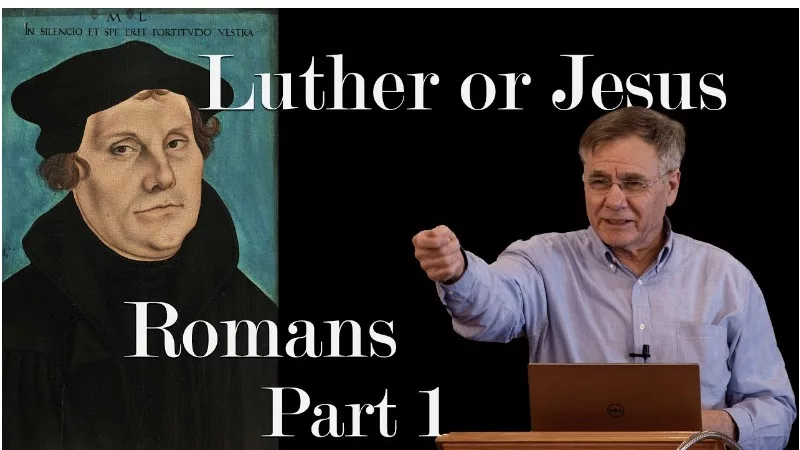 Course Lesson
Free Will and the Historical Background of Romans — Introduction (Part 2)
Open a related course lesson for more teaching connected with Synergism and Free Will.
Course Lesson
Free Will and the Historical Background of Romans — Introduction (Part 2)
Open a related course lesson for more teaching connected with Synergism and Free Will.
 Course Lesson
Predestination and Free Will
Open a related course lesson for more teaching connected with Synergism and Free Will.
Course Lesson
Predestination and Free Will
Open a related course lesson for more teaching connected with Synergism and Free Will.
 Site Page
Free will
Compare another early Christian topic page with related source quotations.
Site Page
The Foreknowledge of God and Free Will
Compare another early Christian topic page with related source quotations.
Site Page
Free will
Compare another early Christian topic page with related source quotations.
Site Page
The Foreknowledge of God and Free Will
Compare another early Christian topic page with related source quotations.