

Early Christian Beliefs About Being Born Again
Early Christians taught that being born again means real new life from God, not a mere symbol. Justin Martyr, Irenaeus, Clement of Alexandria, Cyprian, Tertullian, and Origen connect it to John 3, baptism, and the washing of regeneration. They also link it to repentance and a changed life. The strongest passages center on John 3:3-7, John 1:13, Titus 3:5, and 1 Peter 1:23.
121 early-church witnesses · 187 source quotations · compared with Scripture
What did early Christians believe about being Born Again?
Early Christian writers taught that being born again was real new birth, tied to water, the Spirit, repentance, and a changed life. Justin Martyr, Irenaeus, Clement of Alexandria, Cyprian, Tertullian, Origen, and others link it to John 3 and to baptism or the washing of regeneration. The teaching is broad across the 2nd and 3rd centuries, though some writers stress the spiritual meaning more than the rite itself.
Bible passages most often used were John 3:3-7, John 1:13, Titus 3:5, and 1 Peter 1:23. A few snippets are only loose word matches or refer to other kinds of birth, so they do not carry the main claim. Many more early Christian quotations, Bible passages, and source links are gathered below so you can study the evidence for yourself.
Key Takeaways
- Early Christians usually tied being born again to baptism, the Spirit, and a real change of life.
- John 3 was the main passage they used when speaking about new birth.
- Cyprian, Justin Martyr, Clement of Alexandria, and Origen all connect regeneration with water or the laver.
Questions Answered by the Sources
Did early Christians teach that being born again meant water and Spirit?
The strongest sources repeatedly quote John 3:5 and related verses to say that a person must be born of water and the Spirit to enter God's kingdom. Early writers use this as a direct teaching about regeneration, not just a metaphor.
-
Cyprian, Treatises Direct teaching
The new man, born again and restored to his God by His grace, says Father, in the first place because he has now begun to be a son.
-
Tertullian, De Anima (On the Soul) Direct teaching
Every soul, then, by reason of its birth, has its nature in Adam until it is born again in Christ;
-
Tertullian, Against Marcion Supporting witness
for His sons are they who are born again in Him.
More related quotations from this section 2 shown
-
Clement of Alexandria, The Instructor (Paedagogus) Supporting witness
that we may become a new, holy people by regeneration, and may keep the man undefiled.
-
John 1:13 Supporting witness
who were born, not of blood nor of the will of the flesh nor of the will of man, but of God.
Did early Christians connect being born again with baptism and regeneration?
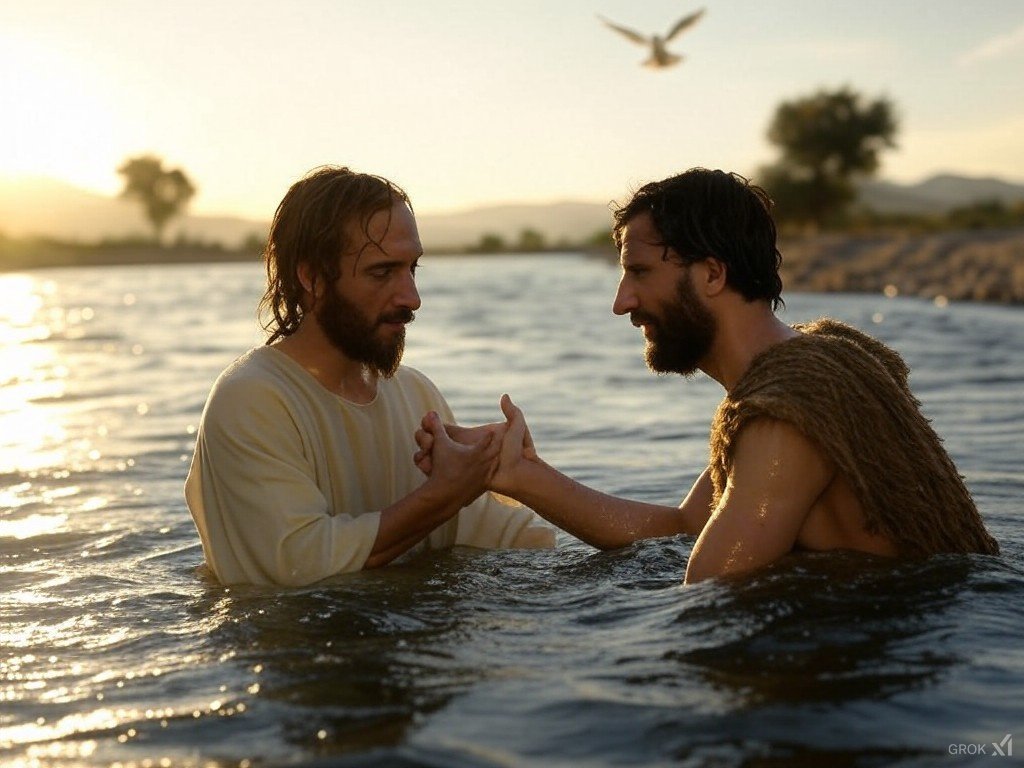
Several early writers describe baptism as the washing of regeneration or the laver in which the old man dies and the new man is born. The evidence is especially strong in Cyprian, Clement, Justin, Origen, and Novatian.
-
John 3:3 Direct teaching
Jesus answered and said unto him, Verily, verily, I say unto thee, Except a man be born again, he cannot see the kingdom of God.
-
John 3:6 Direct teaching
That which is born of the flesh is flesh; and that which is born of the Spirit is spirit.
-
Justin Martyr, The First Apology Direct teaching
For Christ also said, “Except ye be born again, ye shall not enter into the kingdom of heaven.” Now, that it is impossible for those who have once been born to enter into their mothers’ wombs, is manifest to all.
-
Irenaeus, Fragments from the Lost Writings of Irenæus Direct teaching
being spiritually regenerated as new-born babes, even as the Lord has declared: “Except a man be born again through water and the Spirit, he shall not enter into the kingdom of heaven.”
-
Anonymous, Treatise on Re-Baptism Direct teaching
3. And to these things you perchance, who art bringing in some novelty, may immediately and impatiently reply, as you are wont, that the Lord said in the Gospel: Unless a man be born again of water and of the Spirit, he cannot enter into the kingdom of heaven.
-
Tatian, The Diatessaron Direct teaching
...whom God is.” John 3:3 Jesus answered and said to him, “Truly, truly, I say to you, if a man is not born a second time, he cannot see the kingdom of God.” John 3:4 Nicodemus said to him, “How can a man who is old be born? Can he, do you think, return again to his mother’s womb a second time, to enter and be born?” John 3:5 Jesus answered and said to him, “Truly, truly, I say to you, if a man is not born of water and the Spirit, he cannot enter the kingdom of God. John 3:6 For he that is born of flesh is flesh, and he that is born of Spirit is spirit. John 3:7 Do not wonder that I said to you, ‘You must be born a second time.’ John 3:8 The wind blows where it wills, and you hear its voice, but you do not know from what place it comes, nor where it goes. So is every man that is born of the Spirit.” John 3:9 Nicodemus answered and said to him, “How can that be?” John 3:10 Jesus answered and said to him, “Are you teaching Israel, and yet do not know these things? John 3:11 Truly, truly, I say to you, what we know we say, and what we have seen we witness. And you do not receive our witness. John 3:12 If I said to you what is on earth, and you did not believe, how then, if I say to yo
-
Cyprian, Seventh Council of Carthage Supporting witness
And again, in the Gospel the Lord says: That which is born of the flesh is flesh, and that which is born of the Spirit is spirit;
Did early Christians say being born again made someone a new person?
The sources describe the born-again believer as a new man, a son, or a holy people, and say former works should be abandoned. This shows regeneration was understood as a real change of life and identity.
-
Justin Martyr, Connection to John 3:3 Direct teaching
in order that we may not remain the children of necessity and of ignorance, but may become the children of choice and knowledge, and may obtain in the water the remission of sins formerly committed, there is pronounced over him who chooses to be born again, and has repented of his sins, the name of God the Father and Lord of the universe; he who leads to the laver the person that is to be washed calling him by this name alone.
-
Cyprian, Epistles Direct teaching
... of God! For the blessed apostle declares and proves that baptism is where the old man dies and the new man is born, saying, "He saved us by the washing of regeneration," Titus 3:5. But if regeneration is in the washing, that is, in baptism, how can heresy, which is not the spouse of Christ, give birth to sons for God through Christ? For it is the Church alone which, joined and united with Christ, spiritually bears sons, as the same apostle again says, "Christ loved the Church, and gave Himself for it, that He might sanctify it, cleansing it with the washing of water," Ephesians 5:25-26. If, then, she is the beloved and spouse who alone is sanctified by Christ, and alone is cleansed by His washing, it is clear that heresy, which is not the spouse of Christ, and cannot be cleansed or sanctified by His washing, cannot bear sons to God.
-
Cyprian, Epistles Supporting witness
Moreover, it is silly to say, that although the second birth is spiritual, by which we are born in Christ through the layer of regeneration, one may be born spiritually among the heretics, where they say that the Spirit is not.
-
Novatian, Treatise Concerning the Trinity Supporting witness
He it is who effects with water the second birth as a certain seed of divine generation, and a consecration of a heavenly nativity, the pledge of a promised inheritance, and as it were a kind of handwriting of eternal salvation;
-
Justin Martyr, The First Apology Supporting witness
For, in the name of God, the Father and Lord of the universe, and of our Saviour Jesus Christ, and of the Holy Spirit, they then receive the washing with water.
More related quotations from this section 4 shown
-
John 3:5 Direct teaching
Jesus answered, Verily, verily, I say unto thee, Except a man be born of water and of the Spirit, he cannot enter into the kingdom of God.
-
Cyprian, Epistles Direct teaching
since it is written, Unless a man be born again of water, and of the Spirit, he cannot enter into the kingdom of God.
-
Origen, Commentary on Matthew Supporting witness
whether they received this commission to discharge concerning them, from what time by the laver of regeneration, Titus 3:5 through which they were born as new-born babes, they long for the reasonable milk which is without guile, 1 Peter 2:2 and no longer are in subjection to any wicked power;
-
Origen, Commentary on John Supporting witness
Regeneration did not take place with John, but with Jesus through His disciples it does so, and what is called the laver of regeneration takes place with renewal of the Spirit;
Did early Christians say being born again changes how you live?
Yes. Clement of Alexandria says the works of the former life must be abandoned, and Cyprian says the new man is born again and restored to God by grace. Clement also ties the new birth to living in the Spirit, not by blood or the will of the flesh.
-
Clement of Alexandria, The Stromata (Miscellanies) Direct teaching
For not only must the idols which he formerly held as gods, but the works also of his former life, be abandoned by him who has been born again, not of blood, nor of the will of the flesh, John 1:13 but in the Spirit;
More related quotations from this section 6 shown
-
Clement of Alexandria, The Stromata (Miscellanies) Supporting witness
...lso is holy. Therefore the Apostle leads this mystery to Christ and the Church. And just as what is born of flesh is flesh, so what is born of Spirit is spirit, John 3:6, not only in giving birth but also in learning. Now the children are holy, 1 Corinthians 7:14, and they are pleasing offspring to God, and the sayings of the Lord have betrothed the soul. Fornication and marriage, then, are separate, because the devil is far from God. “And you also were made dead to the law through the body of Christ, so that you might become another’s, of Him who rose from the dead,” Romans 7:4. And again, a ready hearing is near, if you are obedient, since even through the truth of the law we obey the same Lord, who gives command from afar. Does not the Spirit rightly say openly about such people, that “in later times some will fall away from the faith, paying attention to spirits of error and teachings of demons, through the hypocrisy of liars whose conscience is seared, forbidding marriage, and abstaining from foods which God created for sharing with thanksgiving by the faithful and by those who have known the truth, because every creature of God is good, and nothing is to be rejected if it
-
Lactantius, The Epitome of the Divine Institutes Supporting witness
But so that there may be no doubt in your mind about why we call Him Jesus Christ, who was born of God before the world and was born of man three hundred years ago, I will briefly explain the reason to you. The same person is the Son of God and the son of man. For He was born twice. First, He was born of God, in the spirit, before the beginning of the world. Afterward, He was born in human flesh, during the reign of Augustus. In this fact there is a great and glorious mystery. In it are contained the salvation of mankind, the religion of the Most High God, and all truth. For when the cursed and wicked worship of gods first crept in through the treachery of the demons, then the religion of God remained with the Hebrews alone. They observed the worship handed down to them through successive generations, not by any law, but according to the custom of their fathers, until the time when they went out of Egypt under the leadership of Moses, the first of all the prophets. Through him the law was given to them by God, and afterward they were called Jews. Therefore they served God, being bound by the chains of the law. But they too gradually went astray to profane rites. They took up the wo
-
Lactantius, The Epitome of the Divine Institutes Supporting witness
again, men are born, that they may acknowledge God as a Father, in whom is wisdom;
-
Hippolytus, Refutation of All Heresies Supporting witness
But revered, he says, is the generation that is spiritual, heavenly, from above, and potent is he that is so born.
-
Lactantius, The Epitome of the Divine Institutes Supporting witness
For He was twice born: first of God, in the spirit, before the origin of the world;
-
2 Corinthians 5:17 Supporting witness
Therefore if any man be in Christ, he is a new creature: old things are passed away; behold, all things are become new.
Common Questions
Did early Christians believe being born again was tied to baptism?
Yes. Writers like Justin Martyr, Cyprian, and the anonymous Treatise on Re-Baptism connect new birth with water, the Spirit, or the washing of regeneration.
Which Bible passage did early Christians use most about being born again?
John 3:3-7 was the main passage, along with John 1:13, Titus 3:5, and 1 Peter 1:23.
Did early Christians treat being born again as a real change?
Yes. Clement of Alexandria, Cyprian, and Tertullian speak of the old life ending and the new man or new life beginning.
Source Index for Being Born Again
The guided sections above show the strongest quotations. This compact index highlights 146 ranked source links from 187 compiled sources for deeper study.
Source index 146 ranked links shown
Early Christian Writings 80 shown of 121
Primary-source quotations from early Christian writers and church documents.
Bible Passages 66 included
Related Bible passages saved for comparison with the early Christian quotations.
Related Resources
 Course Lesson
Are You Saying That a Person Who Prays a Sinner's Prayer is Not Truly Born Again?
Open a related course lesson for more teaching connected with Being Born Again.
Course Lesson
Did the early church understand that you were not born again until you were baptized?
Open a related course lesson for more teaching connected with Being Born Again.
Course Lesson
Are You Saying That a Person Who Prays a Sinner's Prayer is Not Truly Born Again?
Open a related course lesson for more teaching connected with Being Born Again.
Course Lesson
Did the early church understand that you were not born again until you were baptized?
Open a related course lesson for more teaching connected with Being Born Again.