Skip to content

Add your phone number?

Optional. Nothing is sent unless you choose it.

The Historic Faith
Sign in

AD 30–325 · History, beliefs and writings

The Early Christians

in their own words — to read or to hear

Short answer

Who were the early Christians?

The early Christians were the followers of Jesus Christ in the first three centuries after His resurrection — from the apostles at Pentecost in Jerusalem (about AD 30) to the Council of Nicaea in AD 325. They began as Jews in Jerusalem, were first called “Christians” at Antioch, and spread across the Roman Empire through waves of persecution.

197 early Christian works156 you can listen to300+ hours of audio

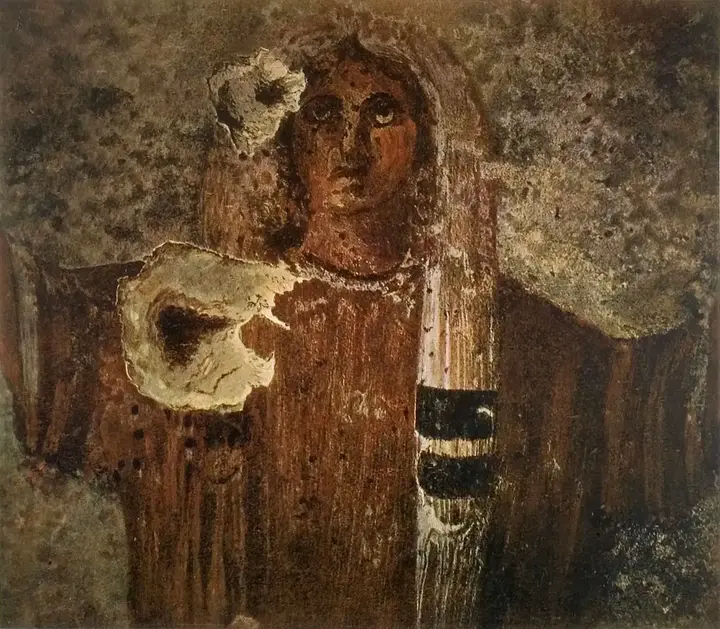
A Christian woman with her hands raised in prayer, painted on a catacomb wall in Rome in the 200s

“To sum up everything in one word—what the soul is in the body, that Christians are in the world.”

An unknown Christian of the 2nd century Read or listen: Letter to Diognetus, ch. 6 Painting: a woman at prayer, Catacomb of Priscilla, Rome, 3rd century.

Only on The Historic Faith

What no other site has

Other pages tell you about the early Christians. Here you can open what they wrote from any verse of the Bible, hear the writers in their own voices, follow commentaries built from their words, and read their own Greek, word by word.

9.9 millionlinks between the early Christians’ words and the Bible

Every verse, with what they wrote about it

36,865 Bible verses, each linked to what the early Christians wrote about it — their direct quotations, their references, and passages that speak to the same words. In the Audio Bible, right-click any verse (on a phone, tap and hold) and choose Early Church.

Many links were found by matching meaning, not only exact quotes, so open the verse and read the passages for yourself.

Open the Audio Bible Church fathers on the Bible

A voice for each writer

Everything is read aloud: 156 works you can listen to. The best-known writers each have their own narrator, and the same voice comes back wherever that writer speaks, so after a while you know who is talking. In one 19-minute recording, 33 of them introduce themselves: “My name is Clement…”

Hear 33 introductions · 19 min

A dictionary of early Christian belief

1,374 topics in the Topical Bible, each with its passages, Strong’s numbers, cross-references and a link to the early Christians’ own words — plus 766 belief topics answered from their writings.

Try one: Grace Communion Justification 766 belief topics

We know of no other site that has this

The early Christians’ own Greek, word by word

Their Greek with Strong’s numbers: 543,655 words in 37 works, 92% with a Strong’s number, each with its dictionary form, grammar and English meaning. Search it by word, by meaning or by Strong’s number. The original Latin sits beside the English too, for 44 works.

On the Bible side: every Greek New Testament and Hebrew Old Testament word with Strong’s, the Septuagint in Greek with Strong’s, and 14,307 Strong’s words spoken aloud (try ἀγάπη).

Search their Greek See it on Ignatius, To the Romans Bible interlinear

This page is the overview. For every belief topic one by one, see What Did the Early Christians Believe? For the books themselves, see Early Christian Writings.

What do you want to know?

All 38 questions on this page
  1. 1 · Who they were and when they lived
  2. Who were the early Christians?
  3. What were early Christians called?
  4. When was the early church period?
  5. Were the first Christians Jewish?
  6. Where did Christianity spread first?
  7. What happened to the apostles?
  8. What did Roman writers say about them?
  9. Who were the early church fathers?
  10. Who is the best-known early Christian?
  11. 2 · What they believed
  12. What did the early Christians believe?
  13. What was the rule of faith?
  14. Did they believe Jesus is God?
  15. Did they worship Jesus?
  16. What did they believe about Mary and the saints?
  17. What did they believe about salvation?
  18. What did they believe about baptism?
  19. What did they believe about the Lord’s Supper?
  20. What did they hope for after death?
  21. Which Scriptures did they read?
  22. Which teachings did they reject?
  23. 3 · How they worshipped and lived
  24. How did early Christians worship?
  25. Where did they meet?
  26. Were the catacombs secret churches?
  27. What was the love feast?
  28. Sunday or the Sabbath?
  29. How did they pray and fast?
  30. How was the church led?
  31. What symbols did they use?
  32. What were early Christians like?
  33. How did they treat the poor and the sick?
  34. Did they serve in the military?
  35. What did they teach about abortion?
  36. 4 · Persecution and martyrs
  37. Why were they persecuted?
  38. Which emperors persecuted them?
  39. Who were the famous martyrs?
  40. How did the persecution end?
  41. 5 · Then and now
  42. How were they different from Christians today?
  43. How can I read or listen to what they wrote?

New to the early Christians? Start here.

Pick a path. Every work is in modern English, and you can press play and listen instead of reading. The times are the real audio lengths.

Listening times are the chapter lengths shown on each work page, checked November 5, 2026. Prefer a guide? Watch How to start reading the early church (Dean Taylor).

Who they were and when they lived

From Pentecost in Jerusalem to the church fathers: names, dates and places.

What were early Christians called?

At first they called their faith “the Way” (Acts 9:2), and outsiders in Jerusalem called them the sect of the Nazarenes. The name “Christians” — “people of Christ” — was first used at Antioch in Syria, about AD 40 (Acts 11:26). Among themselves they said “brothers and sisters,” “saints” and “disciples.” By the second century martyrs on trial answered simply, “I am a Christian.”

Where the name “Christian” came from Listen to Acts 11

When was the early church period?

Most historians date it from Pentecost, about AD 30, to the Council of Nicaea in AD 325 — roughly the first 300 years. Some stop earlier, at the death of the last apostle (about AD 100). The writers in our library come from this whole span. Each dated row below opens the writing or topic it names.

The apostles AD 30–90

  1. Pentecost in Jerusalem; the church begins (Acts 2)
  2. Stephen becomes the first martyr (Stephen)
  3. Believers first called “Christians” at Antioch (the name)
  4. Council of Jerusalem welcomes Gentiles (Acts 15)
  5. Fire of Rome; Nero blames the Christians (Nero)
  6. The Romans destroy the Temple in Jerusalem

Their disciples AD 90–150

  1. Clement of Rome writes to Corinth (1 Clement)
  2. The Didache, a handbook of church life (the Didache)
  3. Ignatius writes seven letters on his way to Rome (To the Romans)
  4. Pliny asks Emperor Trajan what to do with Christians

The defenders AD 150–180

  1. Justin writes his First Apology to the emperor
  2. Polycarp burned at Smyrna (the eyewitness account)
  3. Justin beheaded in Rome (his trial)
  4. Martyrs of Lyons and Vienne in Gaul

The great teachers AD 180–250

  1. Irenaeus writes Against Heresies
  2. The Scillitan martyrs of North Africa (their trial record)
  3. Tertullian writes his Apology at Carthage
  4. Perpetua and Felicitas die at Carthage (their Passion)
  5. Origen answers the pagan critic Celsus (Origen)

Fire, then Nicaea AD 250–325

  1. Decius orders everyone to sacrifice (Decius)
  2. Cyprian beheaded at Carthage (his Life and Passion)
  3. The Great Persecution under Diocletian (Diocletian)
  4. Edict of Milan: Christians may worship freely (the edict)
  5. Council of Nicaea (church councils)

Full early Christianity timeline page planned Course: Bible and early church history

Were the first Christians Jewish?

Yes. Jesus, the twelve apostles and the first thousands of believers were Jews who worshipped at the Temple in Jerusalem. As non-Jews (Gentiles) came to faith, the apostles met in Jerusalem about AD 49 and agreed that Gentiles did not need to become Jews to follow Christ (Acts 15). By AD 100 most Christians were Gentiles.

Jewish Christianity James and the Jerusalem church Acts 15 study

Where did Christianity spread first?

From Jerusalem it spread north to Antioch, then along the roads and sea lanes Paul travelled: Asia Minor (today’s Turkey, with Ephesus and Smyrna), Greece (Corinth) and Rome. By AD 200 there were churches in Alexandria in Egypt, Carthage in North Africa and Lyons in Gaul, and east toward Syria and Mesopotamia. Clement of Rome, about AD 96, remembered Paul this way:

“After preaching in both the East and West, he earned the illustrious reputation that was deserved for his faith”

Clement of Rome on Paul · 1 Clement, ch. 5 · about AD 96Read or listen: 1 Clement, ch. 5
Simple map of the Mediterranean with the main early Christian cities MEDITERRANEAN SEABLACK SEA Jerusalem1 Antioch1 Ephesus1 Smyrna2 Corinth1 Rome1 Lyons3 Carthage4 Alexandria4 Nicaea5
A simple drawing, not to exact scale. The number on each city is the stop on “Walk the 300 years” (see the timeline) when that city’s church first speaks to us in writing.
The ten cities, and who wrote from each

What happened to the apostles?

Most of them died for their faith. Acts records that James, son of Zebedee, was killed by Herod (Acts 12). Peter and Paul died in Rome under Nero in the 60s, as the earliest Christian writers remember it. James the Just was killed in Jerusalem about AD 62. Early tradition says John lived to old age at Ephesus.

The apostles Peter Video: the church did not fall apart after the apostles

What did Roman writers say about the early Christians?

A few Roman writers mention them, mostly with scorn. The historian Tacitus says Nero blamed the Christians for the fire of Rome in AD 64, and that their founder, Christus, had been executed under Pontius Pilate. About AD 112 the governor Pliny wrote to Emperor Trajan that Christians met before dawn on a set day and sang hymns to Christ as to a god. The first history of the church was written by the Christian bishop Eusebius, about AD 325, and it keeps many older sources.

Nero and the Christians Rumours against Christians

Who were the early church fathers?

The church fathers are the Christian leaders and teachers whose writings survive from the early centuries. Those who wrote before AD 325 are called the Ante-Nicene Fathers. The earliest, who knew the apostles or their students, are the apostolic fathers; the second-century writers who defended the faith to Rome are the apologists. The best known are Clement of Rome, Ignatius, Polycarp, Justin Martyr, Irenaeus, Tertullian, Origen and Cyprian. Each name below opens that writer’s page in our library, where most of the works can be heard read aloud. Dates are approximate.

Early Christian writers before the Council of Nicaea
WriterLivedWhereKnown for
Apostolic fathers
Clement of Romewrote c. 96RomeLetter to the Corinthians, the oldest Christian writing outside the New Testament
The Didachec. 50–120Syria?Church handbook: the two ways, baptism, fasting, the Lord’s Day
Ignatius of Antiochdied c. 110AntiochSeven letters written on the road to martyrdom
Polycarpc. 69–155SmyrnaTaught by apostles; letter to the Philippians; martyr
Papiasc. 60–130HierapolisEarliest report on how the Gospels were written
Barnabas (letter)c. 100–130Alexandria?Reading the Old Testament through Christ
Hermas2nd centuryRomeThe Shepherd, visions on repentance
Mathetes2nd centuryunknownLetter to Diognetus: Christians are the soul of the world
Apologists and teachers, 2nd century
Aristideswrote c. 125AthensEarly defence describing Christian life
Justin Martyrc. 100–165Samaria, RomeFirst Apology; Dialogue with Trypho; Sunday worship described
Tatianc. 120–180Syria, RomeAddress to the Greeks; joined the four Gospels into one
Athenagoraswrote c. 177AthensA Plea for the Christians; on the resurrection
Theophilusdied c. 185AntiochFirst known writer to use the Greek word for “Trinity”
Irenaeusc. 130–202Smyrna, LyonsAgainst Heresies; heard Polycarp as a boy
Third century to Nicaea
Clement of Alexandriac. 150–215AlexandriaTeacher of educated converts; The Instructor
Tertullianc. 155–220CarthageFirst great Latin Christian writer; Apology
Minucius Felixwrote c. 200RomeOctavius, a friendly debate with a pagan
Hippolytusc. 170–235RomeRefutation of All Heresies; Bible commentary
Origenc. 185–254Alexandria, CaesareaThe great Bible scholar; Against Celsus
Cyprianc. 200–258CarthageBishop in the Decian persecution; On the Unity of the Church
Novatianc. 200–258RomeOn the Trinity; split over the lapsed
Gregory the Wonderworkerc. 213–270NeocaesareaStudent of Origen; missionary bishop in Pontus
Methodiusdied c. 311Olympus, LyciaThe Banquet of the Ten Virgins
Lactantiusc. 250–325Nicomedia, GaulDivine Institutes; lived through the Great Persecution

Two handshakes from the apostles

The faith was passed hand to hand. Irenaeus, bishop of Lyons about AD 180, says he saw Polycarp in his youth — and Polycarp had been taught by apostles; by early tradition, by John himself.

  1. The apostle JohnEphesus · died about AD 100The apostles
  2. PolycarpSmyrna · about AD 69–155Polycarp’s writings
  3. IrenaeusSmyrna, then Lyons · about AD 130–202Irenaeus’ writings
  4. YouRead or hear them today, in plain EnglishOpen the library

“Polycarp was not only taught by the apostles and spoke with many who had seen Christ, but he was also appointed by apostles in Asia to be the bishop of the Church in Smyrna. I saw him in my early youth …”

Irenaeus · Against Heresies, Book 3, ch. 3 · about AD 180Read or listen: Against Heresies 3.3
All 45 author pages in our library, by era

Who were the Ante-Nicene Fathers? Lesson: who’s who in the early church The apologists The Early Church Fathers new page · sample built

Who is the best-known early Christian?

Apart from Jesus, the best known is the apostle Paul, who wrote much of the New Testament. After the apostles, the best-known names are Ignatius of Antioch, Polycarp of Smyrna and Justin Martyr. All three died for their faith, and all three left writings you can still read and hear.

Ignatius Polycarp Justin Martyr

What they believed

The short version: God, Jesus, salvation, baptism, the Lord’s Supper and the Scriptures. Where Christians today disagree, we show what the early writers said and say so plainly.

What did the early Christians believe?

In short, they believed:

  • There is one God, the Father, who made all things.
  • Jesus Christ is His Son, God come in the flesh, who truly died and rose again.
  • The Holy Spirit spoke through the prophets and lives in the church.
  • New believers are baptized and share the Lord’s Supper.
  • Christians must obey Christ’s teaching and live holy lives.
  • The dead will be raised, and Christ will come again to judge.

“The Church, although spread throughout the whole world, even to the ends of the earth, has received from the apostles and their disciples this faith”

Irenaeus · Against Heresies, Book 1, ch. 10 · about AD 180Read or listen: Against Heresies 1.10
766belief topics, each answered from the sourcesWhat Did the Early Christians Believe? →

Early creeds and the rule of faith What did Christians believe before Constantine?

What was the rule of faith?

Before the later creeds were written down, every church taught new believers a short summary of the faith it had received from the apostles. Irenaeus and Tertullian call it the rule of faith. It confessed one God the Father, Maker of all; one Lord Jesus Christ, His Son, born of the virgin, who suffered, rose and will come again; and the Holy Spirit, who spoke through the prophets. Church leaders used it to test teaching, to prepare people for baptism and to keep the churches united. It has the same shape as the later Apostles’ Creed, though that exact wording comes later.

“She believes in one God, the Father Almighty, Maker of heaven, earth, and the sea, and all things within them; and in one Christ Jesus, the Son of God, who became incarnate for our salvation; and in the Holy Spirit”

Irenaeus, on the faith the Church received · Against Heresies, Book 1, ch. 10 · about AD 180Read or listen: Against Heresies 1.10

The rule of faith Did they know the Apostles’ Creed? Course: Early Church Doctrine

Did the early Christians believe Jesus is God?

Yes. From the earliest writings after the New Testament, Christians called Jesus God, while also calling Him the Son of the Father. Ignatius, writing about AD 110, says it in passing, as something his readers already believed. The exact wording about the Trinity was settled later, at Nicaea.

“For our God, Jesus Christ, was, according to God's appointment, conceived in the womb by Mary”

Ignatius of Antioch · To the Ephesians, ch. 18 · about AD 110Read or listen: To the Ephesians, ch. 18

Did they believe Jesus is God? The Trinity The Holy Spirit

Did the early Christians worship Jesus?

Yes. They prayed to Him, sang hymns to Him and died rather than deny Him. When Polycarp was martyred, his church explained the difference: they worship Christ, but they love and honour the martyrs as His disciples.

“For indeed, as the Son of God, we adore Him”

The church at Smyrna · Martyrdom of Polycarp, ch. 17 · about AD 155Read or listen: Martyrdom of Polycarp, ch. 17

Worship Hymns

What did they believe about Mary and the saints?

They honoured Mary as the virgin mother of Jesus, blessed among women. Justin, Irenaeus, Tertullian and Origen all tie her to the virgin birth, and Irenaeus sets her obedience against Eve’s disobedience. Some third-century liturgies use stronger titles, such as God-Mother and Ever-Virgin, but that language is later and less uniform.

On the saints, the writings are clear that Christians prayed for the whole church, asked living believers to pray for them, and honoured the martyrs and remembered the dead. The clearest early writings do not give a settled rule for praying to departed saints; some later liturgies come closer to that language. Christians today read this evidence differently, and both topic pages set it out source by source.

“Likewise did Mary, having a man engaged to her, and being nevertheless a virgin, by being obedient, become the cause of salvation for both herself and the whole human race.”

Irenaeus, comparing Mary with Eve · Against Heresies, Book 3, ch. 22 · about AD 180Read or listen: Against Heresies 3.22

Early Christian views of Mary Did the early church pray to saints? The intercession of saints

What did the early Christians believe about salvation?

They taught that we are saved by God’s mercy through Jesus Christ, received by faith and repentance and sealed in baptism — and that a believer must go on obeying Christ to the end. Christians today read these writers differently on faith and works; the texts are here to read.

“Let us then continually persevere in our hope and the earnest of our righteousness, which is Jesus Christ”

Polycarp · To the Philippians, ch. 8 · about AD 110–140Read or listen: To the Philippians, ch. 8

Salvation Did they believe in faith alone?

What did the early Christians believe about baptism?

Baptism was how a person entered the church. New believers, called catechumens, were taught, fasted and prayed, and were then baptized in water in the name of the Father, the Son and the Holy Spirit. The Didache, ch. 7, prefers running (“living”) water but allows pouring when needed. Justin describes it as being born again. Christians today differ on what baptism does and on baptizing infants; both topics are linked below.

“they are brought by us to water and are regenerated in the same way we were.”

Justin Martyr · First Apology, ch. 61 · about AD 155Read or listen: First Apology, ch. 61

Baptism Infant baptism Catechumens Q&A: early Christians on baptism

What did the early Christians believe about the Lord’s Supper?

Every Sunday they shared bread and wine, called the Eucharist (“thanksgiving”). Only baptized believers took part. Justin says it was not ordinary food but the flesh and blood of Jesus, and Ignatius calls the bread “the medicine of immortality.” Christians today understand these words in different ways; here is what they wrote.

“We do not receive these as common bread and drink”

Justin Martyr · First Apology, ch. 66 · about AD 155Read or listen: First Apology, ch. 66

“breaking one and the same bread, which is the medicine of immortality”

Ignatius of Antioch · To the Ephesians, ch. 20Read or listen: To the Ephesians, ch. 20

The Eucharist The Lord’s Supper Communion in the Bible

What did the early Christians hope for after death?

They hoped for the resurrection of the body and for Christ’s return to judge the living and the dead. Death was “falling asleep,” and the goal of life was to see God. That hope is why they buried their dead with care and painted their tombs with pictures of the Good Shepherd and of rescue.

“For the glory of God is a living human; and the life of a human consists in beholding God.”

Irenaeus · Against Heresies, Book 4, ch. 20 · about AD 180Read or listen: Against Heresies 4.20

Heaven The second coming Salvation

Which Scriptures did the early Christians read?

Their first Bible was the Old Testament, usually in Greek (the Septuagint). By the early 100s they were also reading the four Gospels and Paul’s letters in church. A few books, such as Hebrews and Revelation, were discussed longer. The first list that matches today’s 27 New Testament books comes from AD 367.

The New Testament canon Read the Septuagint What they said on 37,265 Bible verses

Which teachings did the early church reject?

The biggest were the Gnostics, such as Valentinus, who taught secret knowledge and that the physical world is evil, and Marcion, who rejected the God of the Old Testament and cut down the Bible. Writers like Irenaeus answered them by pointing to the faith the churches had received from the apostles. Later, Arius was rejected at Nicaea.

“a more steadfast witness of truth than Valentinus, Marcion, and the other heretics.”

Irenaeus on Polycarp · Against Heresies, Book 3, ch. 3Read or listen: Against Heresies 3.3

Heresies and heretics Gnosticism Marcion Arianism

How they worshipped and lived

Sunday gatherings, prayer and fasting, leaders, symbols, care for the poor and the way they lived.

How did early Christians worship?

About AD 155 Justin Martyr described a Sunday service to the emperor. It had seven simple steps:

  1. They gather on Sunday, from town and country, in one place.
  2. Scripture is read — the Gospels and the prophets — “as long as time permits.”
  3. The leader teaches and urges them to live out what was read.
  4. All stand and pray together.
  5. Bread, wine and water are brought; the leader gives thanks and the people answer “Amen.”
  6. All receive, and deacons carry a portion to those who are absent.
  7. A gift is collected for orphans, widows, the sick, prisoners and strangers.

“On the day called Sunday, everyone who lives in cities or in the country gathers together in one place.”

Justin Martyr · First Apology, ch. 67 · about AD 155Read or listen: First Apology, ch. 67

Early Christian worship Liturgy Singing

Where did early Christians meet?

Mostly in homes. Paul greets “the church that is in their house” (Romans 16:5), and a house church from about AD 240 has been found at Dura-Europos in Syria. The early writers also speak of the whole church gathering together, so homes were the usual place, not the only one. Halls built for worship became common only later.

House churches Were the catacombs secret churches?

Were the catacombs secret churches?

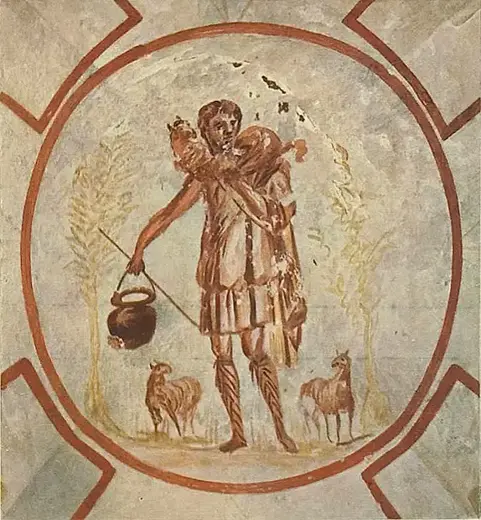
No. The catacombs of Rome were underground cemeteries, dug outside the city walls, where Roman law required the dead to be buried. Christians went there to bury their dead, to hold funerals and to remember the martyrs — not to hide for their Sunday worship, which met mostly in homes. Burial mattered to them because they hoped in the resurrection of the body. The picture of a whole church living in hiding underground comes mostly from later stories. What the catacombs do keep are the oldest Christian paintings: the woman praying at the top of this page and the Good Shepherd further down both come from the Catacomb of Priscilla.

Burial and funerals House churches Martyrs

What was the love feast?

The love feast (in Greek, agape, “love”) was a shared church meal marked by prayer, order and care for the poor. Tertullian, writing about AD 197, explains it to Rome: it began with prayer; they ate only as much as satisfied hunger; after the lamps were lit, each person could stand and sing a hymn to God; and it ended with prayer. The food helped the needy. Ignatius ties the love feast to the bishop’s oversight.

“Our feast explains itself by its name. The Greeks call it agape, that is, affection.”

Tertullian · Apology, ch. 39 · AD 197Read or listen: Tertullian, Apology, ch. 39

Agape and the love feast The love feast and fellowship

Did early Christians worship on Sunday or the Sabbath?

By the early 100s, the churches whose writings survive met on Sunday, “the Lord’s Day,” because Jesus rose on the first day of the week. Some Jewish believers also kept the Sabbath for a time. Christians today still read this history differently.

“no longer observing the Sabbath, but living in observance of the Lord’s Day”

Ignatius of Antioch · To the Magnesians, ch. 9 · about AD 110Read or listen: To the Magnesians, ch. 9

Sunday worship The Lord’s Day The Sabbath

How did the early Christians pray and fast?

The Didache tells believers to pray the Lord’s Prayer three times a day and to fast on Wednesdays and Fridays. Later writers mention set hours of prayer, morning and evening, and standing to pray on Sundays.

“But you should fast on the fourth day and on the Preparation (Friday).”

The Didache · ch. 8, “Concerning Fasting and Prayer” · about AD 100Read or listen: Didache, ch. 8

Prayer Set times of prayer Wednesday and Friday fasting

How was the early church led?

Each city’s church had elders (presbyters) and deacons. By Ignatius’ time, about AD 110, many churches were led by one bishop with elders and deacons under him. Ignatius is also the first writer we know of to call the whole church “catholic.” The word means “universal” or “whole” here, not a later denomination.

“wherever Jesus Christ is, there is the Catholic Church.”

Ignatius of Antioch · To the Smyrnaeans, ch. 8 · about AD 110Read or listen: To the Smyrnaeans, ch. 8

Bishops Elders Deacons Apostolic succession

What symbols did the early Christians use?

Wall painting of Jesus as the Good Shepherd carrying a sheep, Catacomb of Priscilla, Rome
The Good Shepherd, Catacomb of Priscilla, Rome, 3rd century.

The best known is the fish. Its Greek name, ichthys, spells the first letters of “Jesus Christ, God’s Son, Saviour.” They also used the anchor (hope), the dove (peace) and the Good Shepherd carrying a lamb, painted on tomb walls. Tertullian says Christians traced the sign of the cross on their foreheads in daily life, and they greeted one another in worship with the holy kiss. The cross as a public emblem and the Chi-Rho became common only after Constantine.

The fish symbol The sign of the cross The holy kiss

What were early Christians like?

Outsiders noticed how they lived. They were ordinary people — slaves and free, men and women — who dressed and worked like their neighbours. But they shared with the poor, kept their marriages, took in abandoned babies, stayed away from the bloody games and would not worship idols. An unknown Christian of the second century put it this way:

“To sum up everything in one word—what the soul is in the body, that Christians are in the world.”

An unknown Christian · Letter to Diognetus, ch. 6 · 2nd centuryRead or listen: Letter to Diognetus, ch. 6

“They marry, like everyone else; they have children, but they do not destroy their offspring.”

Letter to Diognetus · ch. 5Read or listen: Letter to Diognetus, ch. 5

“We who bear wisdom not in our dress, but in our mind, do not speak great things, but live them.”

Minucius Felix · Octavius, ch. 38 (our Chapter 24) · about AD 200Read or listen: Octavius, ch. 38

How the early Christians lived Course: the life of the early Christians

How did the early Christians treat the poor, widows and the sick?

Caring for them was part of church life. Money given each week fed widows and orphans, buried the poor and helped prisoners. Ignatius said false teachers could be spotted because they had “no care for the widow, or the orphan” (To the Smyrnaeans, ch. 6). Even pagans remarked on it, Tertullian reports:

"See," they say, "how they love one another,"

Tertullian · Apology, ch. 39 · AD 197Read or listen: Tertullian, Apology, ch. 39

Orphans, widows and care Riches and the poor

Did early Christians serve in the military?

Most early writers who discuss it, such as Tertullian and Origen, taught that Christians should not take human life and discouraged joining the army. Yet by about AD 200 some Christians were serving as soldiers. Christians today weigh this history differently; the writers’ own words are on the topic pages.

“We who once killed one another not only refrain from warring against our enemies, but we also willingly die confessing Christ”

Justin Martyr · First Apology, ch. 39 · about AD 155Read or listen: First Apology, ch. 39

Pacifism and military service Military service

What did early Christians teach about abortion?

They taught clearly that abortion and abandoning babies were wrong. In Rome, unwanted infants were often left outside to die. Christians refused to do this and sometimes took such children in.

“You shall not murder a child by abortion, nor kill the child that has been conceived.”

The Didache · ch. 2 · about AD 100Read or listen: Didache, ch. 2

Abortion Abandoning infants

Persecution and martyrs

Why Rome turned on them, which emperors, the martyrs, and how it ended.

Why were early Christians persecuted?

They would not sacrifice to the Roman gods or the emperor, so they were called “atheists” and seen as a danger to the empire. Rumours spread that they ate flesh (from talk of eating Christ’s body) and met in secret. When disaster struck, they were easy to blame.

If the Tiber rises as high as the city walls, if the Nile does not spread its waters over the fields, if the sky gives no rain, if there is an earthquake, if there is famine or plague, at once the cry is, "Away with the Christians to the lion!"

Tertullian · Apology, ch. 40 · AD 197Read or listen: Tertullian, Apology, ch. 40

Persecution Rumours against Christians

Which Roman emperors persecuted Christians?

For two centuries persecution came in waves and was mostly local. It was ordered across the whole empire only under Decius (250), Valerian (257–260) and Diocletian (303–311).

Roman emperors and the Christians
EmperorWhenWhat happened
Nero64Blamed Christians for the fire of Rome; tradition places the deaths of Peter and Paul here
Domitianc. 95Remembered by later Christians as a persecutor; by tradition John was exiled to Patmos
Trajanc. 112Told Pliny: do not hunt Christians, but punish those accused who will not sacrifice; Ignatius martyred
Hadrian117–138Kept the same rule; the first written defences of the faith
Antoninus Piusc. 155Polycarp burned at Smyrna
Marcus Aurelius161–180Justin beheaded in Rome; martyrs of Lyons and Vienne (177)
Septimius Severusc. 202–203Perpetua and Felicitas killed at Carthage
Decius250–251Everyone ordered to sacrifice and carry a certificate (libellus); the first empire-wide persecution
Valerian257–260Clergy executed and meetings banned; Cyprian beheaded (258)
Diocletian and Galerius303–311The Great Persecution: churches destroyed, Scriptures burned, many killed in the East
Constantine and Licinius313Edict of Milan: freedom of worship, church property returned

Those who gave in (the lapsed) Persecution of the Early Christians new page · sample built

Who were the famous early Christian martyrs?

Among the best known are Stephen (Jerusalem, about 34), Ignatius (Rome, about 110), Polycarp (Smyrna, about 155), Justin (Rome, about 165), the Scillitan martyrs (North Africa, 180), Perpetua and Felicitas (Carthage, 203) and Cyprian (Carthage, 258). For most of them we still have the accounts written by fellow believers, and you can hear them read aloud.

Three who did not deny Him

“I am the wheat of God, and let me be ground by the teeth of the wild beasts, so I may become the pure bread of Christ.”

Ignatius of Antioch · To the Romans, ch. 4 · on his way to dieRead or listen: To the Romans, ch. 4

“For eighty-six years I have served Him, and He never did me any harm: how then can I blaspheme my King and my Saviour?”

Polycarp, at his trial · Martyrdom of Polycarp, ch. 9Read or listen: Martyrdom of Polycarp, ch. 9

“Neither can I call myself anything else than what I am, a Christian.”

Perpetua, a young mother, to her father · Passion, ch. 1Read or listen: Passion of Perpetua, ch. 1

Martyrs Confessors

How did the persecution of Christians end?

The Great Persecution failed. In 311 the emperor Galerius allowed Christians to worship, and in 313 the Edict of Milan, issued by Constantine and Licinius, gave all religions freedom. In 325 Constantine called the Council of Nicaea. That is where the early church period is usually said to end.

“The oftener we are mown down by you, the more in number we grow. The blood of Christians is seed.”

Tertullian · Apology, ch. 50 · AD 197Read or listen: Tertullian, Apology, ch. 50

The Edict of Milan Constantine and the church Church councils

Then and now

How they compare with churches today, and how to read and hear them yourself.

How were the early Christians different from Christians today?

Their core faith — one God, Jesus as Lord, the cross and the resurrection — is the faith Christians still confess. What stands out is how they lived it: small gatherings, regular fasting, shared money and a costly break with the world around them. Churches today differ from one another, so the right-hand column is a general picture, not a verdict.

The early church and common practice today
TopicEarly Christians (AD 30–325)Many churches today
Where they metHomes, later simple hallsChurch buildings
Lord’s SupperEvery Sunday, baptized believers onlyWeekly, monthly or a few times a year
JoiningOften months or years of teaching before baptismOften a short class
FastingEvery Wednesday and FridaySeasonal or personal
PrayerSet times through the dayMostly personal choice
MoneyA weekly fund for widows, orphans and prisonersChurch budgets and many kinds of giving
ViolenceMost writers forbid taking lifeViews differ widely
MarriageFor life; remarriage after divorce rejected by mostViews differ widely
Worship dressWomen covered their heads in prayerKept by some churches
CostCould mean loss of goods, job or lifeVaries greatly by country

“There are two ways: one of life and one of death.”

The Didache · ch. 1 · about AD 100Read or listen: Didache, ch. 1

Daily discipleship Then and now, topic by topic page planned

How can I read or listen to what the early Christians wrote?

Their writings are free in our library: 197 early Christian works, 161 of them from before Nicaea, in modern English with the 1885 translation one tap away. 156 works can be played aloud, chapter by chapter — over 300 hours in all. The 36 works of John Chrysostom (about AD 400) are text only for now. Start with one of these:

What they said on 37,265 Bible verses Search their Greek: 37 works, word by word John Chrysostom (text) 76 courses, 825 lessons

Go deeper into the early Christians

New pages on the way (not links yet)

The Early Church Fathers (45 author pages) new page · sample built Early Christianity timeline planned Persecution of the Early Christians new page · sample built Worship and daily life planned Then and now planned

How we answered these questions

  • From the sources. Every quotation on this page is copied from a writing in our library, and each one links to the exact chapter, where you can read it or press play.
  • In plain English. Quotations use The Historic Faith’s modern-English edition of the Ante-Nicene Fathers (Roberts and Donaldson, 1885). The 1885 wording sits beside it on the same page. Bible references open the Audio Bible (KJV).
  • Fair to every reader. Where Christians today disagree, we show the text and say so, rather than argue.
  • Careful with dates. General dates follow the standard histories. “c.” means “about”; martyr dates are approximate. Listening times were checked on each work page on November 5, 2026.

Where the 33 quotations on this page come from

  1. Letter to Diognetus, ch. 6 and ch. 5
  2. Clement of Rome, 1 Clement, ch. 5
  3. Irenaeus, Against Heresies 1.10, 3.3, 3.22 and 4.20
  4. Ignatius, To the Ephesians, ch. 18 and ch. 20
  5. Ignatius, To the Magnesians, ch. 9
  6. Ignatius, To the Smyrnaeans, ch. 6 and ch. 8
  7. Ignatius, To the Romans, ch. 4
  8. Polycarp, To the Philippians, ch. 8
  9. Martyrdom of Polycarp, ch. 9 and ch. 17
  10. Justin Martyr, First Apology, ch. 39, 61, 66 and 67
  11. The Didache, ch. 1, 2, 7 and 8
  12. Tertullian, Apology, ch. 39, 40 and 50
  13. Passion of Perpetua and Felicitas, ch. 1
  14. Hermas, The Shepherd, Vision 3 and Similitude 9
  15. Minucius Felix, Octavius, ch. 38 (our heading: Chapter 24)
  16. The Bible (KJV): Acts 2, 7, 9, 11; Romans 16
  17. Pictures: a woman at prayer and the Good Shepherd, Catacomb of Priscilla, Rome, 3rd century, from J. Wilpert, Die Malereien der Katakomben Roms (1903) — public domain, via Wikimedia Commons.

Cite this page

“The Early Christians.” The Historic Faith, updated November 5, 2026. https://thehistoricfaith.com/early-christians

Hear them for yourself

Start with the Didache. It takes 17 minutes, and it is the oldest handbook of church life we have.

Questions