

Is baptism necessary?
Early Christian writings usually treat baptism as part of receiving forgiveness, new birth, and salvation. Justin Martyr, Tertullian, Cyprian, Origen, Hippolytus, and the Apostolic Constitutions all speak this way, and Bible passages like Acts 2:38 and John 3:5 are central. Some writers also tie baptism to repentance and faith, so they do not present it as a bare ritual. The main question for readers is not whether baptism matters, but how these writers connect it to salvation.
115 early-church witnesses · 222 source quotations · compared with Scripture
What did early Christians believe about the necessity of baptism?
Early Christian writers widely taught that baptism is tied to forgiveness, new birth, and salvation. Justin Martyr, Irenaeus, Tertullian, Cyprian, Origen, Hippolytus, the Didache, and the Apostolic Constitutions all connect baptism with remission of sins, regeneration, or entry into the kingdom of God. The clearest Bible passages behind this teaching are Acts 2:38, John 3:5, Titus 3:5, Mark 16:16, Romans 6:3-4, and 1 Peter 3:21.
The evidence is broad and early, though some writers also stress repentance, faith, and the Holy Spirit alongside the water rite, so baptism is not treated as a bare outward act. Many more early Christian quotations, Bible passages, and source links are gathered below so you can study the evidence for yourself.
Key Takeaways
- Many early Christians linked baptism with forgiveness of sins and new life.
- Justin Martyr, Tertullian, Cyprian, Origen, and Hippolytus speak of baptism as regeneration or remission.
- Key passages used in the early church include Acts 2:38, John 3:5, Titus 3:5, Mark 16:16, and 1 Peter 3:21.
- Several writers also stress repentance, faith, and the Holy Spirit, so baptism is not treated as a magic act.
Questions Answered by the Sources
Did early Christians teach that baptism brings forgiveness of sins?
The strongest sources repeatedly describe baptism as connected with remission or washing away of sins. Several writers also say baptism is given for forgiveness, not merely as a symbol.
-
Tertullian, On Baptism Direct teaching
The Lord Himself, though no repentance was due from Him, was baptized: was baptism not necessary for sinners?
-
Archelaus, Disputation with Manes Direct teaching
...f He is not a man, then He was not seized. If He was not seized, then He did not suffer, nor was He baptized. If He was not baptized, then none of us is baptized. But if there is no baptism, then there will be no remission of sins, and every man will die in his own sins." Manes said: "Is baptism, then, given on account of the remission of sins?" Archelaus said: "Certainly." Manes said: "Does it not follow, then, that Christ sinned, since He was baptized?" Archelaus said: "God forbid! No, rather, He was made sin for us, taking our sins upon Himself. For this reason He was born of a woman, and for this reason also He came to the rite of baptism, so that He might receive the purification of this part, and so that the body which He had taken to Himself might be able to bear the Spirit, who had descended in the form of a dove."
-
Archelaus, Disputation with Manes Direct teaching
But if there is no baptism, neither will there be any remission of sins, but every man will die in his own sins.
-
Tertullian, On Baptism Supporting witness
... the same nature. Otherwise, if it had been celestial, it would have given both the Holy Spirit and remission of sins. But no one either pardons sins or freely grants the Spirit except God only. Even the Lord Himself said that the Spirit would not descend on any other condition, except that He should first ascend to the Father, John 16:6-7. What the Lord was not yet conferring, of course the servant could not furnish. Accordingly, in the Acts of the Apostles, we find that men who had John's baptism had not received the Holy Spirit, whom they had not even known by hearing. That, then, was no celestial thing which furnished no celestial endowments. On the other hand, the very thing in John which was celestial, the Spirit of prophecy, so completely failed, after the transfer of the whole Spirit to the Lord, that he soon sent to ask whether He whom he himself had preached, whom he had pointed out when coming to him, were HE. And so the baptism of repentance, Acts 19:4, was treated as if it were a candidate for the remission and sanctification soon about to follow in Christ. For when John used to preach baptism for the remission of sins, Mark 1:4, the declaration was made with refere
-
Novatian, Treatise Concerning the Trinity Supporting witness
He it is who effects with water the second birth as a certain seed of divine generation, and a consecration of a heavenly nativity, the pledge of a promised inheritance, and as it were a kind of handwriting of eternal salvation;
-
Novatian, Treatise Concerning the Trinity Supporting witness
...e of His.” And, “Where the Spirit of the Lord is, there is liberty.” He is the One who effects with water the second birth, as a certain seed of divine generation, and a consecration of a heavenly birth, the pledge of a promised inheritance, and as it were a kind of handwriting of eternal salvation. He can make us God's temple, and fit us for His house. He asks for divine hearing on our behalf with groanings that cannot be uttered, filling the offices of advocacy and showing the duties of our defense—an inhabitant given to dwell in our bodies and an effector of their holiness. Working in us for eternity, He can also bring forth our bodies in the resurrection of immortality, accustoming them to be associated in Himself with heavenly power, and to be allied with the divine eternity of the Holy Spirit. For our bodies are trained both in Him and by Him to advance to immortality, by learning to govern themselves with moderation according to His decrees. For this is He who desires against the flesh, because the flesh resists against the Spirit. This is He who restrains insatiable desires, controls immoderate lusts, quenches unlawful fires, conquers reckless impulses, repels drunkennes
-
Victorinus, Commentary on the Apocalypse Supporting witness
...s none of His.” And, “Where the Spirit of the Lord is, there is liberty.” He it is who effects with water the second birth, as a certain seed of divine generation, and a consecration of a heavenly birth, the pledge of a promised inheritance, and as it were a kind of handwriting of eternal salvation. He can make us God’s temple, and fit us for His house. He pleads for us before the divine hearing with groanings that cannot be uttered, filling the offices of advocacy and showing the duties of our defense—an inhabitant given for our bodies and an effector of their holiness. Working in us for eternity, He can also raise up our bodies in the resurrection of immortality, accustoming them to be joined in Himself with heavenly power, and to be allied with the divine eternity of the Holy Spirit. For our bodies are trained both in Him and by Him to advance to immortality, by learning to govern themselves with moderation according to His decrees. For this is He who desires against the flesh, because the flesh resists against the Spirit. This is He who restrains insatiable desires, controls immoderate lusts, quenches unlawful fires, conquers reckless impulses, repels drunkenness, checks ava
-
Apostolic Constitutions, Apostolic Constitutions Supporting witness
John 3:5 And again: He that believes and is baptized shall be saved;
-
Mark 16:16 Direct teaching
Whoever believes and is baptized will be saved, but whoever does not believe will be condemned.
-
1 Peter 3:21 Direct teaching
Baptism, which corresponds to this, now saves you, not as a removal of dirt from the body but as an appeal to God for a good conscience, through the resurrection of Jesus Christ,
Did early Christians believe baptism was the new birth?
Multiple early writers describe baptism as regeneration, the laver of regeneration, or being born again through water and the Spirit. The Bible texts most directly used for this are John 3:5 and Titus 3:5.
-
Cyprian, Epistles Supporting witness
For the blessed apostle sets forth and proves that baptism is that wherein the old man dies and the new man is born, saying, He saved us by the washing of regeneration.
-
Cyprian, Epistles Supporting witness
Titus 3:5 But if regeneration is in the washing, that is, in baptism, how can heresy, which is not the spouse of Christ, generate sons to God by Christ?
-
Justin Martyr, The First Apology Supporting witness
in order that we may not remain the children of necessity and of ignorance, but may become the children of choice and knowledge, and may obtain in the water the remission of sins formerly committed, there is pronounced over him who chooses to be born again, and has repented of his sins, the name of God the Father and Lord of the universe;
-
Theophilus of Antioch, To Autolycus Supporting witness
Moreover, the things proceeding from the waters were blessed by God, that this also might be a sign of men's being destined to receive repentance and remission of sins, through the water and laver of regeneration — as many as come to the truth, and are born again, and receive blessing from God.
-
Irenaeus, Against Heresies: Book V Supporting witness
And inasmuch as man, with respect to that formation which, was after Adam, having fallen into transgression, needed the laver of regeneration, [the Lord] said to him [upon whom He had conferred sight], after He had smeared his eyes with the clay, “Go to Siloam, and wash;” thus restoring to him both [his perfect] confirmation, and that regeneration which takes place by means of the laver.
-
Tertullian, On Baptism Supporting witness
When, however, the prescript is laid down that without baptism, salvation is attainable by none (chiefly on the ground of that declaration of the Lord, who says, Unless one be born of water, he has not life ), there arise immediately scrupulous, nay rather audacious, doubts on the part of some, how, in accordance with that prescript, salvation is attainable by the apostles, whom — Paul excepted — we do not find baptized in the Lord?
-
Tertullian, On Baptism Supporting witness
And so the baptism of repentance Acts 19:4 was dealt with as if it were a candidate for the remission and sanctification shortly about to follow in Christ: for in that John used to preach baptism for the remission of sins, Mark 1:4 the declaration was made with reference to future remission;
-
Irenaeus, Against Heresies: Book I Supporting witness
For the baptism instituted by the visible Jesus was for the remission of sins, but the redemption brought in by that Christ who descended upon Him, was for perfection;
-
Acts 2:38 Direct teaching
Then Peter said to them, “Repent, and let every one of you be baptized in the name of Jesus Christ for the remission of sins; and you shall receive the gift of the Holy Spirit.
-
Acts 22:16 Direct teaching
And now why tarriest thou? arise, and be baptized, and wash away thy sins, calling on the name of the Lord.
-
Titus 3:5 Direct teaching
he saved us, not because of works done by us in righteousness, but according to his own mercy, by the washing of regeneration and renewal of the Holy Spirit,
-
Romans 6:3 Direct teaching
Or do you not know that as many of us as were baptized into Christ Jesus were baptized into His death?
More related quotations from this section 1 shown
-
Romans 6:4 Direct teaching
Therefore we are buried with him by baptism into death: that like as Christ was raised up from the dead by the glory of the Father, even so we also should walk in newness of life.
Did early Christians think baptism had to be one and within the Church?
Several sources insist there is one baptism and reject repeat baptisms or baptisms from heretical groups. The emphasis is not just on water, but on proper baptism in the Church’s faith and ministry.
-
Justin Martyr, Connection to John 3:5 Direct teaching
Then they are brought by us where there is water, and are regenerated in the same manner in which we were ourselves regenerated. For, in the name of God, the Father and Lord of the universe, and of our Saviour Jesus Christ, and of the Holy Spirit, they then receive the washing with water. For Christ also said, "Except ye be born again, ye shall not enter into the kingdom of heaven."
-
Justin Martyr, Connection to John 3:3 Supporting witness
in order that we may not remain the children of necessity and of ignorance, but may become the children of choice and knowledge, and may obtain in the water the remission of sins formerly committed, there is pronounced over him who chooses to be born again, and has repented of his sins, the name of God the Father and Lord of the universe; he who leads to the laver the person that is to be washed calling him by this name alone.
-
Clement of Alexandria, The Stromata (Miscellanies) Supporting witness
...ack, to become like children again, knowing Him who truly is Father, having been born again through water, since this is another sowing in creation. But, he says, “He who is unmarried cares for the things of the Lord; but he who has taken a wife, how he will please his wife.” What then? Is it not also allowed that those who please a wife according to God may give thanks to God? Is it not even permitted that the man who has taken a wife may, together with marriage, also be concerned for the things of the Lord? But just as she who has not married is concerned for the things of the Lord, that she may be holy in body and spirit, so also she who has married is concerned, in the Lord, both for the things of her husband and for the things of the Lord, that she may be holy in body and spirit. For both are holy in the Lord: this one as a wife, and that one as a virgin. And to put to shame and restrain those who are inclined to second marriages, the Apostle fittingly speaks in a lofty tone. For he says, “Look, every sin is outside the body; but he who commits fornication sins against his own body,” 1 Corinthians 6:18. But if anyone dares to call marriage fornication, he again attacks the
-
Clement of Alexandria, The Instructor (Paedagogus) Supporting witness
... by human faith and divine grace, our transgressions being taken away by one Paeonian medicine, the baptism of the Word. We are washed from all our sins and are no longer entangled in evil. This is the one grace of illumination, that our characters are not the same as before our washing. And since knowledge rises up with illumination, shedding its beams around the mind, the moment we hear, we who were untaught become disciples. Does this, I ask, happen at the coming of this instruction? You cannot tell the time. For instruction leads to faith, and faith with baptism is trained by the Holy Spirit. That this faith is the one universal salvation of humanity, and that there is the same equality before the righteous and loving God, and the same fellowship between Him and all, the apostle showed most clearly when he spoke in this way: "Before faith came, we were kept under the law, shut up to the faith which should afterwards be revealed, so that the law became our schoolmaster to bring us to Christ, that we might be justified by faith; but after that faith has come, we are no longer under a schoolmaster." Do you not hear that we are no longer under that law which came with fear, but
-
Irenaeus, Fragments from the Lost Writings of Irenæus Supporting witness
being spiritually regenerated as new-born babes, even as the Lord has declared: “Except a man be born again through water and the Spirit, he shall not enter into the kingdom of heaven.”
-
Irenaeus, Connection to Romans 6:3 Supporting witness
Do you not know, that so many of us as were baptized in Christ Jesus were baptized in His death? That like as Christ rose from the dead, so should we also walk in newness of life.
-
Origen, Commentary on John Supporting witness
...ness. And he came into all the region around the Jordan preaching the baptism of repentance for the remission of sins; as it is written in the book of the words of Isaiah the prophet, The voice of one crying in the wilderness, Prepare the way of the Lord, make His paths straight.” Luke, however, adds the continuation of the prophecy: “Every valley shall be filled, and every mountain and hill shall be brought low, and the crooked shall become straight, and the rough ways smooth, and all flesh shall see the salvation of God.” He writes, like Mark, “Make His ways straight,” shortening, as we saw before, the text, “Make straight the ways of our God.” In the phrase, “And all the crooked shall become straight,” he leaves out the word “all,” and changes the word “straight” from plural to singular. Also, instead of the phrase, “The rough land into a plain,” he gives, “The rough ways into smooth ways.” And he leaves out, “And the glory of the Lord shall be revealed,” and gives what follows, “And all flesh shall see the salvation of God.” These observations are useful because they show how the evangelists are accustomed to shorten the sayings of the prophets. It must also be observed that
-
Origen, Commentary on John Supporting witness
And he came into all the region round about Jordan preaching the baptism of repentance unto remission of sins;
-
Origen, Commentary on John Supporting witness
...“to repentance,” teaching that the benefit of baptism is connected with the intention of the person baptized. To him who repents it is salutary, but to him who comes to it without repentance it will turn to greater condemnation. And here we must note that the wonderful works done by the Savior in the cures He performed, which are symbolic of those who at any time are set free by the word of God from any sickness or disease, though they were done to the body and brought bodily relief, yet also called those who were benefited by them to an exercise of faith. So also the washing with water, which is symbolic of the soul cleansing herself from every stain of wickedness, is no less in itself to him who yields himself to the divine power of the invocation of the Adorable Trinity, the beginning and source of divine gifts. For there are diversities of gifts. This view receives confirmation from the narrative recorded in the Acts of the Apostles, which shows the Spirit to have descended so plainly on those who receive baptism, after the water had prepared the way for Him in those who properly approached the rite. Simon Magus, astonished at what he saw, desired to receive this gift from P
-
Origen, Commentary on John Supporting witness
Regeneration did not take place with John, but with Jesus through His disciples it does so, and what is called the laver of regeneration takes place with renewal of the Spirit;
-
Hippolytus, Refutation of All Heresies Supporting witness
This is, says (the Docetic), what the Saviour affirms: Unless a man be born of water and spirit, be will not enter into the kingdom of heaven, because that which is born of the flesh is flesh.
-
Hippolytus, Refutation of All Heresies Supporting witness
For Jeremiah likewise, he says, was aware of the Perfect Man, of him that is born again — of water and the Spirit not carnal.
More related quotations from this section 11 shown
-
Tatian, The Diatessaron Direct teaching
...whom God is.” John 3:3 Jesus answered and said to him, “Truly, truly, I say to you, if a man is not born a second time, he cannot see the kingdom of God.” John 3:4 Nicodemus said to him, “How can a man who is old be born? Can he, do you think, return again to his mother’s womb a second time, to enter and be born?” John 3:5 Jesus answered and said to him, “Truly, truly, I say to you, if a man is not born of water and the Spirit, he cannot enter the kingdom of God. John 3:6 For he that is born of flesh is flesh, and he that is born of Spirit is spirit. John 3:7 Do not wonder that I said to you, ‘You must be born a second time.’ John 3:8 The wind blows where it wills, and you hear its voice, but you do not know from what place it comes, nor where it goes. So is every man that is born of the Spirit.” John 3:9 Nicodemus answered and said to him, “How can that be?” John 3:10 Jesus answered and said to him, “Are you teaching Israel, and yet do not know these things? John 3:11 Truly, truly, I say to you, what we know we say, and what we have seen we witness. And you do not receive our witness. John 3:12 If I said to you what is on earth, and you did not believe, how then, if I say to yo
-
Tatian, The Diatessaron Direct teaching
John 3:5 Jesus answered and said to him, Verily, verily, I say unto you, If a man be not born of water and the Spirit, 32 he cannot enter the kingdom of God.
-
John 3:5 Direct teaching
Jesus answered, Verily, verily, I say unto thee, Except a man be born of water and of the Spirit, he cannot enter into the kingdom of God.
-
Hippolytus, Discourse on the Holy Theophany Supporting witness
...o the world. He came to man in order to wash him with water and the Spirit. And by causing us to be born again to incorruption in soul and body, He breathed into us the breath, that is, the spirit, of life, and clothed us with an incorruptible full armor. If, therefore, man has become immortal, he will also be God. And if he is made God by water and the Holy Spirit after the regeneration of the laver, he is found to be also a joint heir with Christ after the resurrection from the dead. Therefore I preach this message: Come, all you families of the nations, to the immortality of baptism. I bring you good news of life, you who remain in the darkness of ignorance. Come into liberty from slavery, into a kingdom from tyranny, into incorruption from corruption. And someone says, "How shall we come? How?" By water and the Holy Spirit. This is the water joined with the Spirit, by which paradise is watered, by which the earth is enriched, by which plants grow, by which animals multiply, and, to say it all in one word, by which man is born again and clothed with life. In this water also Christ was baptized, and in it the Spirit descended in the form of a dove.
-
Hippolytus, Discourse on the Holy Theophany Supporting witness
By water and the Holy Ghost. This is the water in conjunction with the Spirit, by which paradise is watered, by which the earth is enriched, by which plants grow, by which animals multiply, and (to sum up the whole in a single word) by which man is begotten again and endued with life, in which also Christ was baptized, and in which the Spirit descended in the form of a dove.
-
Anonymous, Treatise on Re-Baptism Supporting witness
3. And to these things you perchance, who art bringing in some novelty, may immediately and impatiently reply, as you are wont, that the Lord said in the Gospel: Unless a man be born again of water and of the Spirit, he cannot enter into the kingdom of heaven.
-
Clement of Rome, Connection to John 3:5 Supporting witness
For thus the prophet has sworn to us, saying, "Verily I say to you, Unless ye be regenerated by living water into the name of Father, Son, and Holy Spirit, you shall not enter the kingdom of heaven.
-
Cyprian, Epistles Supporting witness
since it is written, Unless a man be born again of water, and of the Spirit, he cannot enter into the kingdom of God.
-
Apostolic Constitutions, Apostolic Constitutions Supporting witness
Now concerning baptism, O bishop or presbyter, we have already given instruction, and now we say this: you shall baptize as the Lord commanded us, saying, “Go and teach all nations, baptizing them in the name of the Father and of the Son and of the Holy Spirit, teaching them to observe all things whatever I have commanded you,” Matthew 28:19. Baptize in the name of the Father who sent, of Christ who came, and of the Comforter who testified. But first you shall anoint the person with the holy oil, and afterward baptize him with water, and at the end you shall seal him with the ointment. In this way, the anointing with oil may be the participation of the Holy Spirit, the water the symbol of the death of Christ, and the ointment the seal of the covenants. But if there is neither oil nor ointment, water is enough for the anointing, for the seal, and for the confession of Him who is dead, or rather of the one dying together with Christ. But before baptism, let him who is to be baptized fast. For even the Lord, when He was first baptized by John and remained in the wilderness, afterward fasted forty days and forty nights. But He was baptized and then fasted, because He Himself had no nee
-
Apostolic Constitutions, Apostolic Constitutions Supporting witness
vouchsafe them the laver of regeneration, and the garment of incorruption, which is the true life;
-
John 3:8 Background
The wind blows where it wishes, and you hear its sound, but you do not know where it comes from or where it goes. So it is with everyone who is born of the Spirit.”
How did early Christians explain Christ’s baptism and command to baptize?
These sources show early Christians reading Jesus’ own baptism and the Great Commission as grounding Christian baptism. They also stress the names and words used in baptism, especially Matthew 28:19 and related passages.
-
Ignatius of Antioch, Connection to Ephesians 4:5 Direct teaching
and one Comforter, the Spirit of truth; and also one preaching, and one faith, and one baptism; and one Church which the holy apostles established from one end of the earth to the other by the blood of Christ, and by their own sweat and toil;
-
Cyprian, Epistles Direct teaching
...een immersed by heretics should not be baptized when they come to us, because they say there is one baptism, which is one for this reason: the Church is one, and there cannot be any baptism outside the Church. For since there cannot be two baptisms, if heretics truly baptize, then they themselves have this baptism. And anyone who, by his own authority, grants this advantage to them gives in to them and agrees with them, so that the enemy and adversary of Christ seems to have the power to wash, purify, and sanctify a man. But we say that those who come from there are not re-baptized among us, but baptized. For in fact they receive nothing there, where there is nothing. But they come to us so that here they may receive where there are both grace and all truth, because grace and truth are one. But again, some of our colleagues would rather give honor to heretics than agree with us. And while by insisting on one baptism they are unwilling to baptize those who come, they thus either make two baptisms themselves by saying that there is a baptism among heretics; or else, which is even more serious, they try to set the filthy and profane washing of heretics before, and prefer it to, the
-
Cyprian, Epistles Supporting witness
...who are not born in the Church can be sons of God! For the blessed apostle declares and proves that baptism is where the old man dies and the new man is born, saying, "He saved us by the washing of regeneration," Titus 3:5. But if regeneration is in the washing, that is, in baptism, how can heresy, which is not the spouse of Christ, give birth to sons for God through Christ? For it is the Church alone which, joined and united with Christ, spiritually bears sons, as the same apostle again says, "Christ loved the Church, and gave Himself for it, that He might sanctify it, cleansing it with the washing of water," Ephesians 5:25-26. If, then, she is the beloved and spouse who alone is sanctified by Christ, and alone is cleansed by His washing, it is clear that heresy, which is not the spouse of Christ, and cannot be cleansed or sanctified by His washing, cannot bear sons to God.
-
Cyprian, Epistles Supporting witness
11. Since in baptism each person has his own sins forgiven, the Lord proves and declares in His Gospel that sins can be taken away only by those who have the Holy Spirit. For after His resurrection, when He sent out His disciples, He spoke to them and said, "As the Father has sent Me, even so I send you." And when He had said this, He breathed on them and said to them, "Receive the Holy Spirit. If you forgive anyone's sins, they will be forgiven; if you retain anyone's sins, they will be retained." John 20:21-23 In this place He shows that only the one who has the Holy Spirit can baptize and give forgiveness of sins. Moreover, John, who was to baptize Christ our Lord Himself, received the Holy Spirit beforehand while he was still in his mother's womb, so that it might be certain and clear that no one can baptize except those who have the Holy Spirit. Therefore those who support heretics or schismatics must answer us whether they have the Holy Spirit or not. If they have Him, why are hands laid on those who were baptized among them when they come to us, so that they may receive the Holy Spirit, since He must surely have been received there, where, if He was there, He could also be g
-
Cyprian, Epistles Supporting witness
... Lord and His God is rewarded by Christ, and receives forgiveness of sins and the sanctification of baptism! But by what power can the one who denies God the Creator, the Father of Christ, receive in baptism the forgiveness of sins, since Christ received that very power, by which we are baptized and sanctified, from that same Father? He called the Father greater than Himself. He asked to be glorified by Him. He fulfilled His will even to obeying by drinking the cup and undergoing death. What else is this, then, except becoming a partner with blaspheming heretics, to wish to maintain and insist that one who blasphemes and sins seriously against the Father and the Lord and God of Christ can receive forgiveness of sins in the name of Christ? Moreover, what is this, and what kind of teaching is it, that the one who denies the Son of God does not have the Father, but the one who denies the Father should be thought to have the Son, although the Son Himself testifies and says, "No man can come to me except it were given to him of my Father." John 6:65 So it is clear that no forgiveness of sins can be received in baptism from the Son unless it is plain that the Father has granted it. Es
-
Cyprian, Epistles Supporting witness
5. Or if they say that the power of baptism comes from the greatness of the name, so that those who are baptized anywhere and in any way, in the name of Jesus Christ, are considered renewed and sanctified, then why are the baptized among them not also given the laying on of hands, in the name of that same Christ, to receive the Holy Spirit? Why does the same greatness of the same name not have power in the laying on of hands, if, as they claim, it had power in the sanctifying of baptism? For if someone born outside the Church can become God's temple, why can the Holy Spirit not also be poured out on that temple? For the one who has been sanctified, with his sins taken away in baptism, and has been spiritually remade into a new man, has become fit to receive the Holy Spirit, since the apostle says, "As many of you as have been baptized into Christ have put on Christ." Galatians 3:27. He who, after being baptized among the heretics, is able to put on Christ, can much more receive the Holy Spirit whom Christ sent. Otherwise, the One who is sent would be greater than the One who sends, so that a person baptized outside may indeed begin to put on Christ, but not be able to receive the H
-
Apostolic Constitutions, Apostolic Constitutions Direct teaching
Likewise, be satisfied with one baptism only, the one into the death of the Lord; not the one given by wicked heretics, but the one given by blameless priests, in the name of the Father, and of the Son, and of the Holy Spirit, Matthew 28:19. Do not accept what comes from the ungodly, and do not let what is done by the godly be canceled by a second baptism. For as there is one God, one Christ, one Comforter, and one death of the Lord in the body, so let the baptism into Him also be one. But those who receive polluted baptism from the ungodly will become partners in their opinions. For they are not priests. For God says to them, "Because you have rejected knowledge, I will also reject you from serving as priest to me." Nor are those baptized by them truly initiated; rather, they are polluted, receiving not the remission of sins, but the bond of impiety. Besides this, those who try to baptize people who have already been initiated crucify the Lord again, kill Him a second time, mock divine things and ridicule holy things, insult the Spirit, dishonor the sacred blood of Christ as though it were common blood, and act impiously toward Him who sent, Him who suffered, and Him who bore witn
-
Anonymous, Treatise on Re-Baptism Supporting witness
...means that are written, and let it be administered with nothing disconnected from it. Or if, by the necessity of the case, it should be administered by a lower cleric, let us wait for the result, so that it may either be supplied by us, or reserved to be supplied by the Lord. If, however, it should have been administered by those outside the Church, let this matter be amended as it can be and as it allows. Because outside the Church there is no Holy Spirit, and sound faith also cannot exist, not only among heretics, but even among those who are established in schism. And for that reason, those who repent and are amended by the teaching of the truth, and by their own faith, which afterward has been improved by the purification of their heart, ought to be aided only by spiritual baptism, that is, by the laying on of the bishop's hands, and by the working of the Holy Spirit. Moreover, the perfect seal of faith has rightly been accustomed to be given in this way and on this principle in the Church. So that the invocation of the name of Jesus, which cannot be done away with, may not seem to be held in disrespect by us, which certainly is not fitting. Although such an invocation, if n
-
Anonymous, Treatise on Re-Baptism Supporting witness
14. And even up to this point, that whole heretical baptism may be amended, after some time has passed, if a man should survive and amend his faith. For our God, in the Gospel according to Luke, spoke to His disciples, saying, "But I have another baptism to be baptized with" (Luke 12:50). Also, according to Mark, He said with the same purpose to the sons of Zebedee, "Are you able to drink of the cup which I drink of, or to be baptized with the baptism with which I am baptized?" (Mark 10:38). For He knew that those men had to be baptized not only with water, but also in their own blood. So, being well baptized in this baptism only, they might attain the sound faith and the simple love of the laver. And, baptized in both ways, they might likewise, to the same extent, attain the baptism of salvation and glory. For what was said by the Lord, "I have another baptism to be baptized with," does not mean in this place a second baptism, as if there were two baptisms. Rather, it shows that there is also a baptism of another kind given to us, concurring to the same salvation. And it was fitting that both these kinds should first of all be initiated and sanctified by our Lord Himself, so that
-
Anonymous, Treatise on Re-Baptism Supporting witness
... them. Although they were already righteous and, as we have said, had been baptized with the Lord's baptism, just as the apostles themselves had been, yet on the night when He was arrested they are found to have all deserted Him. Even Peter himself, who had boasted that he would remain firm in his faith, and had most stubbornly resisted the prediction of the Lord Himself, still at last denied Him. This was so that it might be shown to us that whatever sins they had contracted in the meantime, and in whatever way, those same sins were without doubt put away by the baptism of the Holy Spirit, since afterward their faith was shown to be sincere. Nor, as I think, was it for any other reason that the apostles charged those whom they addressed in the Holy Spirit to be baptized in the name of Christ Jesus, except that the power of the name of Jesus, invoked upon any man in baptism, might give no small advantage toward obtaining salvation for the one being baptized, as Peter says in the Acts of the Apostles: "For there is no other name under heaven given among men by which we must be saved," Acts 4:12. The Apostle Paul also explains this, showing that God has exalted our Lord Jesus and
-
Anonymous, Treatise on Re-Baptism Supporting witness
so that, as well baptized in this baptism only, they might attain the sound faith and the simple love of the laver, and, baptized in both ways, they might in like manner to the same extent attain the baptism of salvation and glory.
-
Cyprian, Treatises Supporting witness
In the baptism of water is received the remission of sins, in the baptism of blood the crown of virtues.
More related quotations from this section 4 shown
-
Ephesians 4:5 Supporting witness
one Lord, one faith, one baptism;
-
Cyprian, Treatises Supporting witness
urging and teaching that this is a baptism greater in grace, more lofty in power, more precious in honour— a baptism wherein angels baptize— a baptism in which God and His Christ exult — a baptism after which no one sins any more — a baptism which completes the increase of our faith— a baptism which, as we withdraw from the world, immediately associates us with God.
-
Apostolic Constitutions, Apostolic Constitutions Supporting witness
XLII. Now this is blessed by the high priest for the remission of sins, and the first preparation for baptism.
-
Apostolic Constitutions, Apostolic Constitutions Background
But before baptism, let him that is to be baptized fast;
Common Questions
Did the early Christians think baptism was necessary for salvation?
Many of them did. Justin Martyr, Tertullian, Cyprian, Origen, Hippolytus, and the Apostolic Constitutions connect baptism with new birth, forgiveness, or salvation.
Which Bible verses did early Christians use for baptism?
Common passages were Acts 2:38, John 3:5, Titus 3:5, Mark 16:16, Romans 6:3-4, and 1 Peter 3:21.
Source Index for the necessity of baptism
The guided sections above show the strongest quotations. This compact index highlights 160 ranked source links from 222 compiled sources for deeper study.
Source index 160 ranked links shown
Early Christian Writings 80 shown of 115
Primary-source quotations from early Christian writers and church documents.
Bible Passages 80 shown of 107
Related Bible passages saved for comparison with the early Christian quotations.
Related Resources
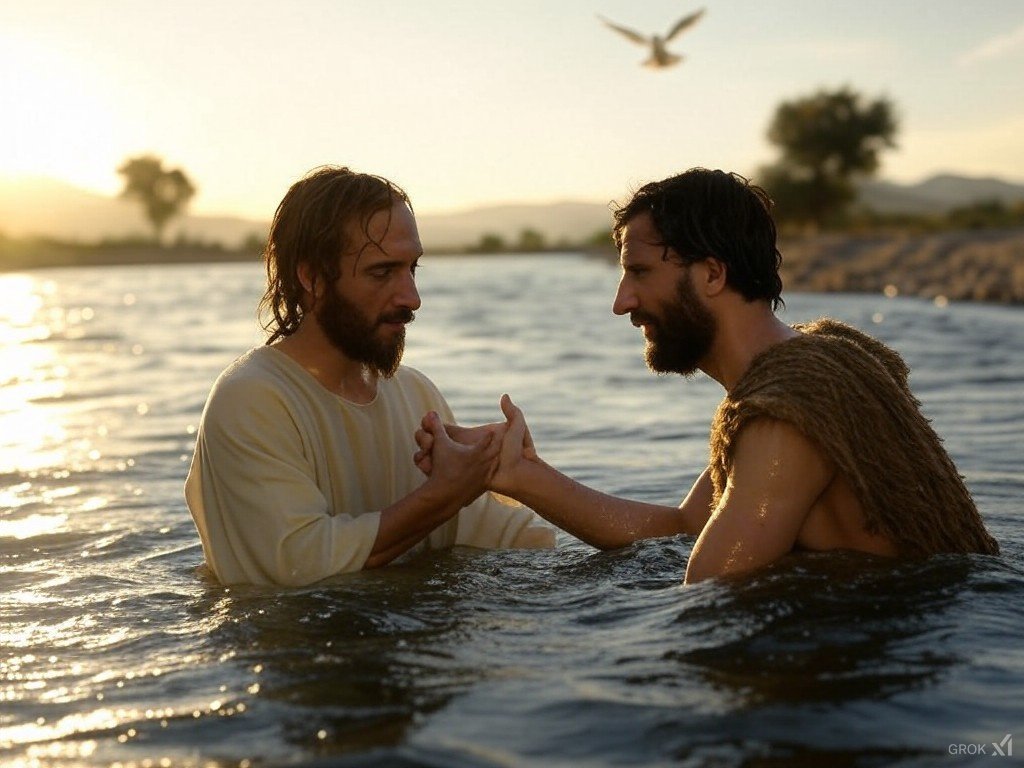 Course Lesson
Are Vows Made at Baptism to a Specific Church Binding If I Didn’t Understand Them?
Open a related course lesson for more teaching connected with The necessity of baptism.
Course Lesson
Are Vows Made at Baptism to a Specific Church Binding If I Didn’t Understand Them?
Open a related course lesson for more teaching connected with The necessity of baptism.
 Course Lesson
Baptism
Open a related course lesson for more teaching connected with The necessity of baptism.
Course Lesson
Baptism
Open a related course lesson for more teaching connected with The necessity of baptism.
 Site Page
Anointing after baptism
Compare another early Christian topic page with related source quotations.
Site Page
Baptism
Compare another early Christian topic page with related source quotations.
Site Page
Baptism in the Holy Spirit
Compare another early Christian topic page with related source quotations.
Site Page
Anointing after baptism
Compare another early Christian topic page with related source quotations.
Site Page
Baptism
Compare another early Christian topic page with related source quotations.
Site Page
Baptism in the Holy Spirit
Compare another early Christian topic page with related source quotations.