

Anointing After Baptism in Early Christianity
Early Christian writings support anointing after baptism, often with oil, sealing, or the gift of the Holy Spirit. Tertullian, Cyprian, Hippolytus, and the Apostolic Constitutions all give closely related language or practice. Some Bible passages speak more directly about baptism and the Spirit than about the later anointing rite, so they work best as background and support.
110 early-church witnesses · 204 source quotations · compared with Scripture
What did early Christians believe about anointing after baptism?
Early Christian writings do support anointing after baptism, and they usually connect it with the Holy Spirit, sealing, or consecration. Tertullian says believers are anointed after they come up from the water, and the Apostolic Constitutions also place anointing after baptism and tie the oil to the Spirit. Cyprian adds the laying on of hands and the Spirit after baptism, while Hippolytus and other writers use the same order of washing and anointing in their teaching.
The evidence is broad across the 2nd and 3rd centuries, though some passages are more about baptism, the Spirit, or priestly oil in general than about the exact post-baptism rite itself. Many more early Christian quotations, Bible passages, and source links are gathered below so you can study the evidence for yourself.
Key Takeaways
- Tertullian says believers are anointed after they come up from the baptismal water.
- Cyprian links baptism, laying on of hands, and receiving the Holy Spirit.
- The Apostolic Constitutions place anointing after baptism and say the oil points to the Holy Spirit.
Questions Answered by the Sources
Did early Christians anoint people after baptism?
Multiple early Christian sources describe anointing with oil or ointment after baptism. They present it as part of the baptismal sequence and not merely as a loose metaphor.
-
Tertullian, On Baptism Direct teaching
After this, when we come up from the baptismal water, we are thoroughly anointed with a blessed oil. This practice comes from the old order, in which men entering the priesthood used to be anointed with oil from a horn, ever since Aaron was anointed by Moses. For this reason Aaron is called Christ, from the chrism, which is the anointing. When this was made spiritual, it gave a fitting name to the Lord, because He was anointed with the Spirit by God the Father, as it is written in Acts: "For truly they were gathered together in this city against Your holy Son whom You have anointed." In the same way, in our case, the anointing is applied physically, that is, on the body, but it benefits us spiritually. It is just like the act of baptism itself. It is physical in that we are plunged into water, but its effect is spiritual, in that we are freed from sins.
-
Apostolic Constitutions, Apostolic Constitutions Direct teaching
Now concerning baptism, O bishop or presbyter, we have already given instruction, and now we say this: you shall baptize as the Lord commanded us, saying, “Go and teach all nations, baptizing them in the name of the Father and of the Son and of the Holy Spirit, teaching them to observe all things whatever I have commanded you,” Matthew 28:19. Baptize in the name of the Father who sent, of Christ who came, and of the Comforter who testified. But first you shall anoint the person with the holy oil, and afterward baptize him with water, and at the end you shall seal him with the ointment. In this way, the anointing with oil may be the participation of the Holy Spirit, the water the symbol of the death of Christ, and the ointment the seal of the covenants. But if there is neither oil nor ointment, water is enough for the anointing, for the seal, and for the confession of Him who is dead, or rather of the one dying together with Christ. But before baptism, let him who is to be baptized fast. For even the Lord, when He was first baptized by John and remained in the wilderness, afterward fasted forty days and forty nights. But He was baptized and then fasted, because He Himself had no nee
-
Cyprian, Epistles Supporting witness
...at the person who is baptized should be anointed, so that, after receiving the chrism, that is, the anointing, he may be anointed by God and have in himself the grace of Christ. Further, it is from the Eucharist that the baptized are anointed with the oil sanctified on the altar. But one who has neither an altar nor a church cannot sanctify the created thing of oil. Therefore there also can be no spiritual anointing among heretics, since it is clear that among them the oil cannot be sanctified nor the Eucharist celebrated at all. But we ought to know and remember that it is written, “Let not the oil of a sinner anoint my head,” which the Holy Spirit warned about beforehand in the Psalms, lest anyone who has gone out of the way and wandered from the path of truth should be anointed by heretics and adversaries of Christ. Besides, what prayer can a priest who is impious and a sinner offer for a baptized person? Since it is written, “God does not hear a sinner; but if any man is a worshiper of God and does His will, him He hears.” John 9:31 Moreover, who can give what he himself does not have? Or how can he carry out spiritual acts when he himself has lost the Holy Spirit? And there
-
Cyprian, Epistles Supporting witness
so that, having received the chrism, that is, the anointing, he may be anointed of God, and have in him the grace of Christ.
-
Tertullian, On Baptism Supporting witness
In the next place the hand is laid on us, invoking and inviting the Holy Spirit through benediction.
-
Tertullian, On Baptism Supporting witness
After this, when we have issued from the font, we are thoroughly anointed with a blessed unction, — (a practice derived) from the old discipline, wherein on entering the priesthood, men were wont to be anointed with oil from a horn, ever since Aaron was anointed by Moses.
-
Apostolic Constitutions, Apostolic Constitutions Supporting witness
...orter, who worked in all the saints from the beginning of the world, but was afterward sent to the apostles by the Father, according to the promise of our Savior and Lord, Jesus Christ; and after the apostles, to all those who believe in the Holy Catholic Church; into the resurrection of the flesh, and into the remission of sins, and into the kingdom of heaven, and into the life of the world to come.” And after this vow, he comes next to the anointing with oil.
-
Apostolic Constitutions, Apostolic Constitutions Supporting witness
Concerning the water and the oil, I, Matthias, make this rule. Let the bishop bless the water or the oil. But if he is not there, let the presbyter bless it, with the deacon standing by. But if the bishop is present, let the presbyter and deacon stand by, and let him say this: O Lord of hosts, the God of powers, the creator of the waters, and the supplier of oil, who are compassionate and a lover of mankind, who have given water for drinking and for cleansing, and oil to give man a cheerful and joyful countenance, do You now also sanctify this water and this oil through Your Christ, in the name of him or her who has offered them, and grant them power to restore health, to drive away diseases, to banish demons, and to scatter all snares, through Christ our hope. With Him, glory, honor, and worship be to You, and to the Holy Spirit, forever. Amen.
-
Apostolic Constitutions, Apostolic Constitutions Supporting witness
And after this vow, he comes in order to the anointing with oil.
-
Apostolic Constitutions, Apostolic Constitutions Supporting witness
A Thanksgiving Concerning the Anointing with the Mystical Oil.
Did early Christians connect anointing after baptism with the Holy Spirit?
Several sources explain the oil as a sign or participation of the Holy Spirit, and they connect baptismal washing with receiving spiritual power, grace, or renewal. The Bible passages mainly support the baptism-and-Spirit pattern that these writers are using.
-
Apostolic Constitutions, Apostolic Constitutions Direct teaching
that the anointing with oil may be the participation of the Holy Spirit, and the water the symbol of the death of Christ, and the ointment the seal of the covenants.
-
Hippolytus, Exegetical Fragments Supporting witness
...nd ointments for those who are washed. But what were these ointments except the commandments of the holy Word? And what was the oil except the power of the Holy Spirit, by which believers are anointed like ointment after the washing? All these things were shown in figure in the blessed Susannah, for our sake. This was so that we who now believe in God would not think the things now done in the Church are strange, but would believe that all of them were set forth beforehand in figure by the patriarchs of old, as the apostle also says: "Now these things happened to them as examples, and they were written for our instruction, on whom the ends of the world have come."
-
Hippolytus, Exegetical Fragments Supporting witness
And what was the oil, but the power of the Holy Spirit, with which believers are anointed as with ointment after the layer of washing?
-
Apostolic Constitutions, Apostolic Constitutions Supporting witness
and that imposition of hands shall be to him instead of baptism: for by the laying on of our hands the Holy Ghost was given to believers.
-
Tertullian, On Baptism Supporting witness
Luke 1:76 Thus, too, does the angel, the witness of baptism, make the paths straight for the Holy Spirit, who is about to come upon us, by the washing away of sins, which faith, sealed in (the name of) the Father, and the Son, and the Holy Spirit, obtains.
-
Anonymous, Treatise on Re-Baptism Supporting witness
.... Further, as you are not ignorant, the Holy Spirit is found to have been given by the Lord without baptism of water to men who believe, as it is written in Acts of the Apostles in this way: “While Peter was still speaking these words, the Holy Spirit fell on all who heard the word. And those of the circumcision who believed were astonished, as many as came with Peter, because the gift of the Holy Spirit had also been poured out on the Gentiles. For they heard them speak in tongues, and they magnified God. Then Peter answered, ‘Can any man forbid water, that these should not be baptized, who have received the Holy Spirit as well as we?’ And he commanded them to be baptized in the name of Jesus Christ.” Acts 10:44-48 Peter also later taught us very fully about these same Gentiles, saying: “And He made no difference between us and them, purifying their hearts by faith.” Acts 15:9 And so there will be no doubt that men may be baptized with the Holy Spirit without water, since you see that these were baptized before they were baptized with water. In this way, the declarations of both John and of our Lord Himself were fulfilled, since they received the grace of the promise both witho
-
Cyprian, Epistles Supporting witness
Moreover, John, who was to baptize Christ our Lord Himself, previously received the Holy Ghost while he was yet in his mother's womb, that it might be certain and manifest that none can baptize save those who have the Holy Spirit.
-
Hippolytus, Discourse on the Holy Theophany Supporting witness
...e, man has become immortal, he will also be God. And if he is made God by water and the Holy Spirit after the regeneration of the laver, he is found to be also a joint heir with Christ after the resurrection from the dead. Therefore I preach this message: Come, all you families of the nations, to the immortality of baptism. I bring you good news of life, you who remain in the darkness of ignorance. Come into liberty from slavery, into a kingdom from tyranny, into incorruption from corruption. And someone says, "How shall we come? How?" By water and the Holy Spirit. This is the water joined with the Spirit, by which paradise is watered, by which the earth is enriched, by which plants grow, by which animals multiply, and, to say it all in one word, by which man is born again and clothed with life. In this water also Christ was baptized, and in it the Spirit descended in the form of a dove.
-
Hippolytus, Discourse on the Holy Theophany Supporting witness
By water and the Holy Ghost. This is the water in conjunction with the Spirit, by which paradise is watered, by which the earth is enriched, by which plants grow, by which animals multiply, and (to sum up the whole in a single word) by which man is begotten again and endued with life, in which also Christ was baptized, and in which the Spirit descended in the form of a dove.
Did early Christians also lay hands on the baptized to receive the Holy Spirit?
The sources show a baptismal pattern in which prayer and the laying on of hands follow washing, especially when writers discuss receiving the Holy Spirit. The Bible cards directly support the laying-on-of-hands pattern these writers cite.
-
Cyprian, Epistles Direct teaching
viz., that prayer being made for them, and hands being imposed, the Holy Spirit should be invoked and poured out upon them, which now too is done among us, so that they who are baptized in the Church are brought to the prelates of the Church, and by our prayers and by the imposition of hands obtain the Holy Spirit, and are perfected with the Lord's seal.
-
Anonymous, Treatise on Re-Baptism Supporting witness
...what do you think, my brother? If a man is not baptized by a bishop in such a way as to receive the laying on of hands at once, and yet dies before receiving the Holy Spirit, would you judge that he has received salvation or not? For even the apostles themselves, and the disciples who also baptized others and had themselves been baptized by the Lord, did not receive the Holy Spirit at once. For the Spirit had not yet been given, because Jesus had not yet been glorified. And after His resurrection, a considerable time passed before that happened. In the same way, when the Samaritans were baptized by Philip, they did not receive the gift until the apostles, who were invited from Jerusalem to Samaria, came down to them, laid hands on them, and gave them the Holy Spirit by the laying on of hands. During that interval, any one of them who had not received the Holy Spirit might have been cut off by death, and died deprived of the grace of the Holy Spirit. Nor can it be doubted that the same kind of thing is common in the present day and happens often: many people, after baptism, leave this life without the laying on of the bishop's hands, and yet are considered complete believers. Jus
-
Anonymous, Treatise on Re-Baptism Supporting witness
For when by imposition of the bishop's hands the Holy Spirit is given to every one that believes, as in the case of the Samaritans, after Philip's baptism, the apostles did to them by laying on of hands;
-
Anonymous, Treatise on Re-Baptism Supporting witness
so that then, when hands were laid upon him by the bishop, he might also receive the Holy Spirit, and he would not lose that former invocation of the name of Jesus.
-
Cyprian, Epistles Supporting witness
...ist, are considered renewed and sanctified, then why are the baptized among them not also given the laying on of hands, in the name of that same Christ, to receive the Holy Spirit? Why does the same greatness of the same name not have power in the laying on of hands, if, as they claim, it had power in the sanctifying of baptism? For if someone born outside the Church can become God's temple, why can the Holy Spirit not also be poured out on that temple? For the one who has been sanctified, with his sins taken away in baptism, and has been spiritually remade into a new man, has become fit to receive the Holy Spirit, since the apostle says, "As many of you as have been baptized into Christ have put on Christ." Galatians 3:27. He who, after being baptized among the heretics, is able to put on Christ, can much more receive the Holy Spirit whom Christ sent. Otherwise, the One who is sent would be greater than the One who sends, so that a person baptized outside may indeed begin to put on Christ, but not be able to receive the Holy Spirit, as if Christ could be put on without the Spirit, or the Spirit could be separated from Christ. Moreover, it is foolish to say that although the sec
-
Cyprian, Epistles Supporting witness
...o had already been baptized by John before the Holy Spirit had been sent by the Lord, and then laid hands on them so that they might receive the Holy Spirit. But what are we to make of this: we see that Paul, after John's baptism, baptized his disciples again, yet we hesitate to baptize those who come to the Church from heresy after their unholy and profane dipping. Unless, perhaps, Paul was inferior to the bishops of these times, so that these bishops can indeed give the Holy Spirit by the laying on of hands alone to those heretics who come to the Church, while Paul was not able to give the Holy Spirit by the laying on of hands to those who had been baptized by John unless he had first also baptized them with the baptism of the Church.
-
Cyprian, Epistles Supporting witness
11. Since in baptism each person has his own sins forgiven, the Lord proves and declares in His Gospel that sins can be taken away only by those who have the Holy Spirit. For after His resurrection, when He sent out His disciples, He spoke to them and said, "As the Father has sent Me, even so I send you." And when He had said this, He breathed on them and said to them, "Receive the Holy Spirit. If you forgive anyone's sins, they will be forgiven; if you retain anyone's sins, they will be retained." John 20:21-23 In this place He shows that only the one who has the Holy Spirit can baptize and give forgiveness of sins. Moreover, John, who was to baptize Christ our Lord Himself, received the Holy Spirit beforehand while he was still in his mother's womb, so that it might be certain and clear that no one can baptize except those who have the Holy Spirit. Therefore those who support heretics or schismatics must answer us whether they have the Holy Spirit or not. If they have Him, why are hands laid on those who were baptized among them when they come to us, so that they may receive the Holy Spirit, since He must surely have been received there, where, if He was there, He could also be g
-
Origen, De Principiis (On First Principles) Supporting witness
In the Acts of the Apostles, the Holy Spirit was given by the imposition of the apostles' hands in baptism.
-
Irenaeus, Against Heresies: Book III Supporting witness
And therefore did he exclaim, “Can any man forbid water, that these should not be baptized, who have received the Holy Ghost as well as we?” He persuaded, at the same time, those that were with him, and pointed out that, unless the Holy Ghost had rested upon them, there might have been some one who would have raised objections to their baptism.
-
Pamphilus, Exposition on the Acts of the Apostles Supporting witness
BB. Of baptism and the gift of the Holy Ghost conferred by means of the prayer of Paul on those who believed in Ephesus, and of the healing of the people.
Common Questions
Did early Christians anoint people after baptism?
Yes. Tertullian and the Apostolic Constitutions describe anointing after baptism, and Cyprian links baptism with the gift of the Holy Spirit by laying on of hands.
What did the anointing mean?
In these writers, the oil points to the Holy Spirit, sealing, or consecration after baptism.
Is there a Bible passage about baptism and the Spirit?
Yes. Passages like Matthew 3:11, Acts 1:5, Acts 8:17, and Acts 19:6 are commonly used as support for baptism and the giving of the Holy Spirit.
Source Index for Anointing after baptism
The guided sections above show the strongest quotations. This compact index highlights 160 ranked source links from 204 compiled sources for deeper study.
Source index 160 ranked links shown
Early Christian Writings 80 shown of 110
Primary-source quotations from early Christian writers and church documents.
Bible Passages 80 shown of 94
Related Bible passages saved for comparison with the early Christian quotations.
-
Book 79 1:34
Related Resources
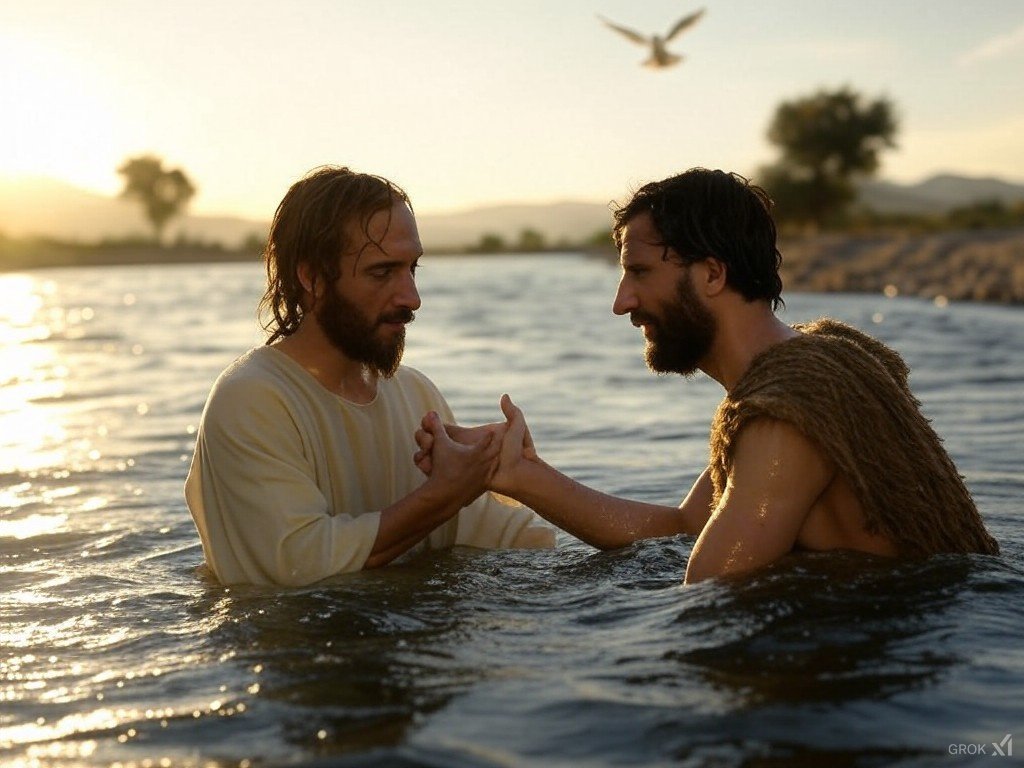 Course Lesson
Are Vows Made at Baptism to a Specific Church Binding If I Didn’t Understand Them?
Open a related course lesson for more teaching connected with Anointing after baptism.
Course Lesson
Are Vows Made at Baptism to a Specific Church Binding If I Didn’t Understand Them?
Open a related course lesson for more teaching connected with Anointing after baptism.
 Course Lesson
Baptism
Open a related course lesson for more teaching connected with Anointing after baptism.
Course Lesson
Baptism
Open a related course lesson for more teaching connected with Anointing after baptism.
 Site Page
Anointing with Oil
Compare another early Christian topic page with related source quotations.
Site Page
Baptism
Compare another early Christian topic page with related source quotations.
Site Page
Baptism in the Holy Spirit
Compare another early Christian topic page with related source quotations.
Site Page
Anointing with Oil
Compare another early Christian topic page with related source quotations.
Site Page
Baptism
Compare another early Christian topic page with related source quotations.
Site Page
Baptism in the Holy Spirit
Compare another early Christian topic page with related source quotations.