

Early Christian Beliefs About Easter
Early Christians tied Easter to Jesus’ resurrection, not just to a date on the calendar. Ignatius, Irenaeus, Hippolytus, Cyprian, and Dionysius of Alexandria connect the feast to Christ’s Passover and the Lord’s Day. They also reject the idea that Easter should be kept on the Jewish fourteenth day. A few passages are only background from Passover or resurrection texts, but the main witness is clear.
156 early-church witnesses · 250 source quotations · compared with Scripture
What did early Christians believe about easter?
Early Christian writings connect Easter with Christ’s resurrection, the Paschal feast, and the first day of the week. Writers like Ignatius, Hippolytus, Irenaeus, Cyprian, and Dionysius of Alexandria speak of celebrating the Lord’s resurrection, keeping the feast, and rejecting the Jewish fourteenth-day Easter practice in favor of Sunday resurrection joy.
The evidence is broad across the 2nd and 3rd centuries, though some cards are only background or typology from Passover passages and a few are weak or unrelated. Overall, early Christians treated Easter as a resurrection festival rooted in Christ’s Passover and linked it to Sunday rather than the old Jewish date. Many more early Christian quotations, Bible passages, and source links are gathered below so you can study the evidence for yourself.
Key Takeaways
- Early Christians called Easter a joy-filled feast of Christ’s resurrection.
- Several writers linked the celebration to Sunday, the Lord’s Day, not the fourteenth day.
- Irenaeus and Dionysius show that Easter practice was discussed early and widely.
Questions Answered by the Sources
Did early Christians reject keeping Easter on the fourteenth day?
Several early Christian writers explicitly reject the claim that Easter should be kept on the fourteenth day of the first month. One source also says some groups insisted on the fourteenth day, while the mainstream reply was that the Passover is understood by faith rather than only by the letter.
-
Ignatius, Epistle to the Magnesians (Long Version) Direct teaching
And after the observance of the Sabbath, let every friend of Christ keep the Lord’s Day as a festival, the resurrection-day, the queen and chief of all the days [of the week].
-
Apostolic Constitutions, Apostolic Constitutions Supporting witness
And on the day of our Lord's resurrection, which is the Lord's day, meet more diligently, sending praise to God that made the universe by Jesus, and sent Him to us, and condescended to let Him suffer, and raised Him from the dead.
-
Tertullian, On Prayer Supporting witness
We, however (just as we have received), only on the day of the Lord's Resurrection ought to guard not only against kneeling, but every posture and office of solicitude;
-
Ignatius, Epistle to the Trallians (LongVersion) Supporting witness
the Sabbath embraces the burial; the Lord’s Day contains the resurrection.
-
Apostolic Constitutions, Apostolic Constitutions Supporting witness
XXX . On the day of the resurrection of the Lord, that is, the Lord's day, assemble yourselves together, without fail, giving thanks to God, and praising Him for those mercies God has bestowed upon you through Christ, and has delivered you from ignorance, error, and bondage, that your sacrifice may be unspotted, and acceptable to God, who has said concerning His universal Church: In every place shall incense and a pure sacrifice be offered unto me;
-
Apostolic Constitutions, Apostolic Constitutions Supporting witness
Isaiah 14:19 And since He was crucified on the day of the Preparation, and rose again at break of day on the Lord's day, the scripture was fulfilled which says, Arise, O God;
-
Apostolic Constitutions, Apostolic Constitutions Supporting witness
every Sabbath day excepting one, and every Lord's day, hold your solemn assemblies, and rejoice: for he will be guilty of sin who fasts on the Lord's day, being the day of the resurrection, or during the time of Pentecost, or, in general, who is sad on a festival day to the Lord.
Did early Christians celebrate Easter as the day of Christ’s resurrection?
The sources repeatedly describe the Lord’s Day and Easter as days of joy because Christ rose from the dead. They say Christians should assemble, rejoice, and stop fasting in connection with the resurrection.
-
Hippolytus, Refutation of All Heresies Direct teaching
And some other heretics, naturally contentious, completely uninstructed in knowledge, and more quarrelsome than usual, join together in insisting that Easter must be kept on the fourteenth day of the first month, according to the commandment of the law, whatever day of the week it falls on. But in this they pay attention only to what is written in the law: that he will be accursed who does not keep the commandment in the way it is ordered. However, they do not consider this fact: the legal command was made for the Jews, who in later times would kill the true Passover. And this Passover sacrifice, in its power, has spread to the Gentiles and is understood by faith, and is not now observed merely by the letter. They pay attention to this one commandment, and do not look to what has been spoken by the apostle: "For I testify to every man that is circumcised, that he is a debtor to keep the whole law." Galatians 5:3. In all other respects, however, these agree with all the traditions handed down to the Church by the Apostles.
-
Hippolytus, Refutation of All Heresies Supporting witness
How those are mistaken who argue that Easter should be kept on the fourteenth day.
-
Hippolytus, Refutation of All Heresies Supporting witness
And certain other (heretics), contentious by nature, (and) wholly uniformed as regards knowledge, as well as in their manner more (than usually) quarrelsome, combine (in maintaining) that Easter should be kept on the fourteenth day of the first month, according to the commandment of the law, on whatever day (of the week) it should occur.
-
Hippolytus, Refutation of All Heresies Supporting witness
How those err who contend for keeping Easter on the fourteenth day.
-
Hippolytus, Refutation of All Heresies Supporting witness
...lly perfected in understanding a mystery, is a new and not outdated feast, legal and everlasting, a Passover of the Lord God kept through our generations by those who are able to discern this mystery, at the beginning of the fourteenth day, which, he says, is the beginning of a decade from which they count. For the monad, up to fourteen, is the summary of that one small stroke of the perfect number. For one, two, three, and four become ten, and this is the one small stroke. But from fourteen to twenty-one, he says there is a Hebdomad contained in the one small stroke of the world, and it makes an unleavened creature in all these. For in what way, he says, would the one small stroke need any substance such as leaven from outside for the Lord's Passover, the eternal feast, which is given from generation to generation? For the whole world and all the causes of creation make up a passover, that is, a feast of the Lord. For God rejoices in the conversion of the creation, and this is brought about by ten strokes of the one small stroke. And this small stroke is Moses' rod, which God gave into Moses' hand. And with this rod Moses strikes the Egyptians in order to alter bodies, for exam
-
Hippolytus, Refutation of All Heresies Supporting witness
But the entire is for those who have not been altogether perfected in understanding a mystery, a new and not antiquated feast, legal, (and) everlasting, a passover of the Lord God kept unto our generations, by those who are able to discern (this mystery), at the commencement of the fourteenth day, which is the beginning of a decade from which, he says, they reckon.
How did early Christians connect Easter with Passover?
The sources link Christ’s death and resurrection to the Passover and say the true Passover is fulfilled in Christ rather than observed merely in letter. Bible texts in the packet also give the Passover background and say Christ our Passover has been sacrificed.
-
Irenaeus, Fragments from the Lost Writings of Irenæus Direct teaching
Now this custom took its rise from apostolic times, as the blessed Irenæus, the martyr and bishop of Lyons, declares in his treatise On Easter, in which he makes mention of Pentecost also;
-
Irenaeus, Against Heresies: Book II Supporting witness
...amined the Gospels to determine how many times after His baptism the Lord went to Jerusalem for the Passover, as was the custom for Jews from every land to gather there each year to celebrate it. First, after turning water into wine at Cana of Galilee, He went to the Passover, and it is written, "Many believed in Him when they saw the signs He did," as recorded by John, the disciple of the Lord. Then, withdrawing from Judea, He went to Samaria, and there He conversed with the Samaritan woman and cured the son of the centurion from a distance by saying, "Go, your son lives." Later, He went a second time to Jerusalem for the Passover, where He healed the paralytic man who had been lying by the pool for thirty-eight years, telling him to rise, take up his bed, and walk. Again, withdrawing to the other side of the Sea of Tiberias, seeing a large crowd had followed Him, He fed them all with five loaves of bread, and twelve baskets of leftovers were collected. When He raised Lazarus from the dead and the Pharisees plotted against Him, He withdrew to a city called Ephraim; and from there, it is written, "He came to Bethany six days before the Passover," and from Bethany went to Jerusal
-
Origen, Commentary on John Supporting witness
...l statements about the law, especially those connected with the festivals, and most of all with the Passover. The Jews' Passover consists of a sheep that is sacrificed, each person taking a sheep according to his father's house. The Passover is also accompanied by the slaughter of thousands of rams and goats, in proportion to the number of the people's houses. But our Passover has been sacrificed for us, namely Christ. Another feature of the Jewish feast is unleavened bread. All leaven is removed from their houses. But we keep the feast, 1 Corinthians 5:8, not with the old leaven, nor with the leaven of malice and wickedness, but with the unleavened bread of sincerity and truth. Whether there is any Passover and any feast of leaven beyond the two we have mentioned is something we must examine more carefully, since these serve as a pattern and a shadow of the heavenly things we spoke of. And not only such things as food and drink and new moons and Sabbaths, but the festivals also, are a shadow of the things to come. First, when the Apostle says, "Our Passover is sacrificed, Christ," one may raise doubts such as these. If the sheep among the Jews is a type of Christ's sacrifice, t
-
Justin Martyr, Dialogue with Trypho Direct teaching
... He showed that He alone would save those who do not turn away from His faith. And the blood of the Passover, sprinkled on each man’s doorposts and lintel, saved those who were rescued in Egypt, when the firstborn of the Egyptians were destroyed. For the Passover was Christ, who was later sacrificed, as Isaiah also said, ‘He was led like a sheep to the slaughter.’ And it is written, that on the day of the Passover you seized Him, and also during the Passover you crucified Him. And just as the blood of the Passover saved those who were in Egypt, so also the blood of Christ will save from death those who have believed. Would God, then, have been wrong if this sign had not been placed above the doors? I do not say that; but I assert that He announced the future salvation for humanity in advance through the blood of Christ. For the sign of the scarlet thread, which the spies sent to Jericho by Joshua, son of Nun, gave to Rahab the harlot, instructing her to tie it to the window through which she let them down to escape from their enemies, also showed the symbol of the blood of Christ, by which those who were once harlots and unrighteous people from all nations are saved, receiving f
-
Tatian, The Diatessaron Background
On the first day of the Feast of Unleavened Bread, when the Jews used to sacrifice the Passover lamb, Jesus sent two of his disciples, Cephas and John, and said to them, "Go and prepare the Passover for us, so that we may eat it." They said to him, "Where do you want us to prepare it?" He said to them, "Go into the city. When you enter it, a man carrying a pitcher of water will meet you. Follow him. Wherever he enters, say to the master of the house, 'Our Master says, "My time has come, and at your house I am keeping the Passover." Where is the guest room where I may eat with my disciples?' He will show you a large upper room, furnished and ready. Prepare for us there." His two disciples went out and came to the city, and found it just as he had told them. And they prepared the Passover.
-
Irenaeus, Against Heresies: Book IV Supporting witness
...he day of His passion, Moses was not unaware, and he foretold it in a symbolic manner by naming the Passover; and during that very festival, long ago proclaimed by Moses, our Lord suffered, thus fulfilling the Passover. Moses not only described the day but also the place and the time of day when the sufferings ended, and the sign of the setting of the sun, saying: “You may not sacrifice the passover within any other of your cities that the God gives you; but in the place which your God chooses for His name to be called on there, you shall sacrifice the passover in the evening, towards the setting of the sun.”
-
Tertullian, Against Marcion Supporting witness
...fer, since the law foreshadows His passion. So, out of all the feast days of the Jews, He chose the Passover. Luke 22:1 In this, Moses had declared that there was a sacred mystery: "It is the Lord's Passover." Leviticus 23:5 How earnestly, then, He shows the bent of His soul: "With desire I have desired to eat this Passover with you before I suffer." Luke 22:15 What a destroyer of the law was this, who actually longed to keep its Passover! Could it be that He was so fond of Jewish lamb? Was it not because He had to be led like a lamb to the slaughter, and because, "as a sheep before her shearers is dumb, so He was not to open His mouth," Isaiah 53:7 that He so deeply wished to fulfill the symbol of His own redeeming blood? He might also have been betrayed by any stranger, if I did not find that even here too He fulfilled a Psalm: "He who ate bread with me has lifted up his heel against me." And He might have been betrayed without a price. For what need of a traitor was there in the case of One who offered Himself openly to the people, and might just as easily have been captured by force as taken by treachery? No doubt this might have been well enough for another Christ, but it w
-
Methodius, Fragments Supporting witness
The typical Passover, therefore, then ceased, the true Passover being present: For Christ our Passover was sacrificed for us, as has been before said, and as that chosen vessel, the apostle Paul, teaches.
-
Cyprian, Treatises Supporting witness
for even Christ our passover is sacrificed. Therefore let us keep the feast, not with old leaven, neither with the leaven of malice and wickedness, but with the unleavened bread of sincerity and truth.
-
Methodius, Concerning Free Will Supporting witness
The typical Passover, therefore, then ceased, the true Passover being present: For Christ our Passover was sacrificed for us, as has been before said, and as that chosen vessel, the apostle Paul, teaches.
-
Origen, Against Celsus Supporting witness
Again, he who considers that Christ our Passover was sacrificed for us, and that it is his duty to keep the feast by eating of the flesh of the Word, never ceases to keep the paschal feast;
-
Justin Martyr, Dialogue with Trypho Supporting witness
For the passover was Christ, who was afterwards sacrificed, as also Isaiah said, ‘He was led as a sheep to the slaughter.’ And it is written, that on the day of the passover you seized Him, and that also during the passover you crucified Him.
More related quotations from this section 4 shown
-
Mark 14:12 Background
Now on the first day of Unleavened Bread, when they killed the Passover lamb, His disciples said to Him, “Where do You want us to go and prepare, that You may eat the Passover?”
-
Mark 14:1 Background
After two days was the feast of the passover, and of unleavened bread: and the chief priests and the scribes sought how they might take him by craft, and put him to death.
-
1 Corinthians 5:7 Background
Cleanse out the old leaven that you may be a new lump, as you really are unleavened. For Christ, our Passover lamb, has been sacrificed.
-
1 Corinthians 5:8 Background
Let us therefore celebrate the festival, not with the old leaven, the leaven of malice and evil, but with the unleavened bread of sincerity and truth.
Common Questions
Did early Christians celebrate Easter on Sunday?
Yes. Several early writers connect the Lord’s resurrection with the Lord’s Day, and they treat Sunday as the day of joy.
Did early Christians connect Easter to Passover?
Yes. Many writers link Christ’s death and rising to the Passover and call Him our Passover.
Did all early Christians agree on the Easter date?
No. The early writings include a dispute, especially over the fourteenth-day practice.
Source Index for Easter
The guided sections above show the strongest quotations. This compact index highlights 160 ranked source links from 250 compiled sources for deeper study.
Source index 160 ranked links shown
Early Christian Writings 80 shown of 156
Primary-source quotations from early Christian writers and church documents.
Bible Passages 80 shown of 94
Related Bible passages saved for comparison with the early Christian quotations.
Related Resources
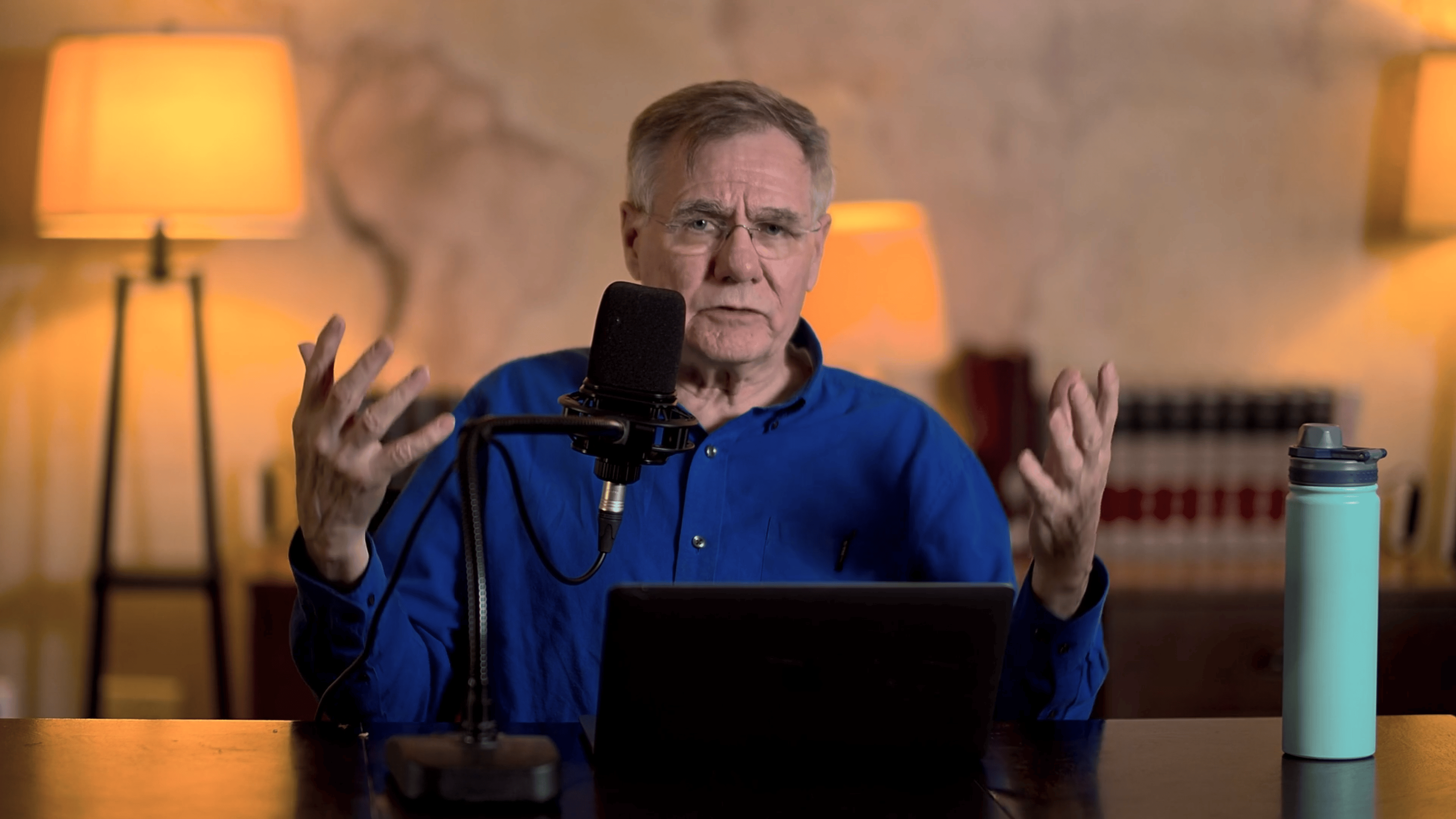 Course Lesson
Episode 034 is Easter a Pagan Holiday
Open a related course lesson for more teaching connected with Easter.
Course Lesson
Episode 034 is Easter a Pagan Holiday
Open a related course lesson for more teaching connected with Easter.
 Site Page
Pascha and Easter
Compare another early Christian topic page with related source quotations.
Site Page
The Paschal Controversy and Easter
Compare another early Christian topic page with related source quotations.
Site Page
Pascha and Easter
Compare another early Christian topic page with related source quotations.
Site Page
The Paschal Controversy and Easter
Compare another early Christian topic page with related source quotations.