

Early Christian Views of Penal Substitution
The early Christian writings teach that Jesus died for sinners, shed his blood for forgiveness, and brought reconciliation with God. Writers like Clement of Rome, Justin Martyr, Irenaeus, Origen, Tertullian, and Cyprian speak of ransom, propitiation, sacrifice, and bearing sin. The exact later formula of penal substitution is not always stated in full, so the witness is strong on substitution and atonement language but mixed on the full theory.
136 early-church witnesses · 268 source quotations · compared with Scripture
What did early Christians believe about penal substitution and the atonement?
Early Christian writings strongly teach that Jesus’ blood, death, and sacrifice bring forgiveness, redemption, reconciliation, and cleansing. Writers like Clement of Rome, Justin Martyr, Irenaeus, Origen, Tertullian, Cyprian, and the Apostolic Constitutions speak this way in many places, and several tie Christ to ransom, propitiation, or the sinner’s place. The evidence for a fully developed penal-substitution model is mixed, though:
some texts stress Christ bearing sins, taking the place of sinners, or giving himself as a ransom, while others use broader sacrifice, healing, and reconciliation language. So the early church clearly taught substitutionary and sacrificial atonement, but the precise later formula of penal substitution is only partly explicit and often indirect. Many more early Christian quotations, Bible passages, and source links are gathered below so you can study the evidence for yourself.
Key Takeaways
- Early Christians often said Christ died for our sins, gave himself as a ransom, and shed his blood for forgiveness.
- Justin Martyr, Irenaeus, Origen, Tertullian, and Cyprian all use strong atonement language.
- The early church is clear on sacrifice and redemption, but the later technical formula of penal substitution is not stated in the same exact way everywhere.
- Bible passages tied to this topic include Matthew 26:28, Romans 3:25, 1 Peter 2:24, 1 Peter 3:18, and 2 Corinthians 5:21.
Questions Answered by the Sources
Did the early Christians teach that Jesus died for sinners?
Yes. Early Christian writers say Christ died, shed his blood, or suffered for the salvation of sinners, not just as an example but as a saving act. Clement of Rome, Barnabas, Polycarp, Justin Martyr, and Cyprian all speak this way, and the Bible passages they echo include Matthew 26:28, 1 Peter 2:24, and 1 Peter 3:18.
-
Barnabas, The Epistle of Barnabas Direct teaching
For to this end the Lord endured to deliver up His flesh to corruption, that we might be sanctified through the remission of sins, which is effected by His blood of sprinkling.
-
Polycarp, Connection to 1 Peter 3:18 Direct teaching
that it is neither possible for us ever to forsake Christ, who suffered for the salvation of such as shall be saved throughout the whole world (the blameless one for sinners
-
Justin Martyr, Dialogue with Trypho Direct teaching
... the law, but He showed that He alone would save those who do not turn away from His faith. And the blood of the Passover, sprinkled on each man’s doorposts and lintel, saved those who were rescued in Egypt, when the firstborn of the Egyptians were destroyed. For the Passover was Christ, who was later sacrificed, as Isaiah also said, ‘He was led like a sheep to the slaughter.’ And it is written, that on the day of the Passover you seized Him, and also during the Passover you crucified Him. And just as the blood of the Passover saved those who were in Egypt, so also the blood of Christ will save from death those who have believed. Would God, then, have been wrong if this sign had not been placed above the doors? I do not say that; but I assert that He announced the future salvation for humanity in advance through the blood of Christ. For the sign of the scarlet thread, which the spies sent to Jericho by Joshua, son of Nun, gave to Rahab the harlot, instructing her to tie it to the window through which she let them down to escape from their enemies, also showed the symbol of the blood of Christ, by which those who were once harlots and unrighteous people from all nations are saved
-
Apostolic Constitutions, Apostolic Constitutions Supporting witness
who enjoy the benefit of the sprinkling of the precious and innocent blood of Christ;
-
Matthew 26:28 Supporting witness
For this is my blood of the new testament, which is shed for many for the remission of sins.
Did the early church teach that Christ’s blood brings forgiveness?
Yes. The most common early pattern is that Christ’s blood brings remission of sins, cleansing, or forgiveness. Justin Martyr, Irenaeus, Cyprian, the Apostolic Constitutions, and the early liturgies all use this language, along with Bible passages like Romans 3:25, Hebrews 9:14, Hebrews 9:22, and 1 John 2:2.
-
Justin Martyr, Dialogue with Trypho Direct teaching
... prophesied by the patriarch Jacob, 'He shall wash His garments with wine, and His vesture with the blood of the grape,' meant that He would cleanse those who believe in Him with His own blood. The Holy Spirit referred to those who receive remission of sins through Him as His garments; He is always present in power among them, and will be visibly present at His second coming. The Scripture mentions the blood of the grape deliberately because Christ's blood comes not from human lineage, but from the power of God. Just as God, not man, produces the blood of the vine, Scripture predicted that the blood of Christ would come not from human lineage, but from the power of God. This prophecy, gentlemen, which I repeated, proves that Christ is not merely human in origin, born in the ordinary way of humanity."
-
Justin Martyr, The First Apology Direct teaching
...ings are true, have been washed with the washing for the remission of sins and renewal, and live as Christ instructed, are allowed to partake. We do not receive these as common bread and drink, but in the same way that Jesus Christ our Savior became flesh by the Word of God and had flesh and blood for our salvation, we have been taught that the food blessed by His word and prayer, which nourishes our blood and flesh through transformation, is the flesh and blood of Jesus who became flesh. The apostles, in the writings they composed, which are called Gospels, have passed down to us what Jesus instructed them: that He took bread, gave thanks, and said, "Do this in remembrance of Me, this is My body;" and in the same way, after taking the cup and giving thanks, He said, "This is My blood;" and gave it to them alone. The wicked devils have imitated this in the mysteries of Mithras, commanding the same actions. You either know or can learn that bread and a cup of water are used with certain incantations in the mystical rites of someone being initiated.
-
Irenaeus, Against Heresies: Book V Direct teaching
By His own blood he redeemed us, as also His apostle declares, “In whom we have redemption through His blood, even the remission of sins.” And as we are His members, we are also nourished by means of the creation (and He Himself grants the creation to us, for He causes His sun to rise, and sends rain when He wills).
-
Cyprian, Epistles Supporting witness
for this is my blood of the New Testament, which shall be shed for many, for the remission of sins.
-
Apostolic Constitutions, Apostolic Constitutions Supporting witness
for this is my blood which is shed for many, for the remission of sins: do this in remembrance of me.
-
Early Liturgies, Divine Liturgy of St. James Supporting witness
this is my blood of the new testament shed for you and many, and distributed for the remission of sins.
-
Early Liturgies, Divine Liturgy of St. Mark Supporting witness
For this is my blood of the new testament which is shed for you and for many, and distributed among you for the remission of sins.
-
Early Liturgies, Divine Liturgy of St. James Supporting witness
We render thanks to You, Christ our God, that You have made us worthy to partake of Your body and blood, for the remission of sins, and for life everlasting.
-
Romans 3:25 Supporting witness
whom God put forward as a propitiation by his blood, to be received by faith. This was to show God's righteousness, because in his divine forbearance he had passed over former sins.
-
Hebrews 9:14 Supporting witness
how much more will the blood of Christ, who through the eternal Spirit offered himself without blemish to God, purify our conscience from dead works to serve the living God.
-
Hebrews 9:22 Supporting witness
And almost all things are by the law purged with blood; and without shedding of blood is no remission.
-
1 John 2:2 Supporting witness
And He Himself is the propitiation for our sins, and not for ours only but also for the whole world.
More related quotations from this section 3 shown
-
1 Corinthians 11:25 Supporting witness
In the same way also he took the cup, after supper, saying, “This cup is the new covenant in my blood. Do this, as often as you drink it, in remembrance of me.”
-
Mark 14:24 Supporting witness
And He said to them, “This is My blood of the new covenant, which is shed for many.
-
Luke 22:20 Supporting witness
Likewise also the cup after supper, saying, This cup is the new testament in my blood, which is shed for you.
Did early Christians call Jesus a ransom or price for us?
Yes. Several early writers describe Christ as a ransom, a price, or an exchange for our life. Origen, Cyprian, Tertullian, Ignatius, and Clement of Alexandria use this kind of redemption language, which lines up with verses like 1 Timothy 2:6, Ephesians 1:7, Colossians 1:14, and 1 Peter 1:18-19.
-
Origen, Commentary on Matthew Direct teaching
...ing a man has that he can give in exchange for his own life, once it has been overcome by death, to ransom it from death’s hand. Therefore, a man could not give anything in exchange for his own life, but God gave an exchange for the life of us all: the precious blood of Christ Jesus, 1 Peter 1:19. As it is written, we were bought with a price, 1 Corinthians 6:20, having been redeemed, not with corruptible things such as silver or gold, but with precious blood, like that of a lamb without blemish and without spot, that is, Christ, 1 Peter 1:18-19. And in Isaiah it is said to Israel, “I gave Ethiopia in exchange for you, and Egypt and Syene for you; since the time you became honorable before Me, you were glorified,” Isaiah 43:3-4. For example, the exchange for the firstborn of Israel was the firstborn of the Egyptians, and the exchange for Israel was the Egyptians who died in the last plagues that came upon Egypt, and in the drowning that took place after the plagues. But from these things, let him who is able ask whether the exchange for the true Israel, given by God, who redeems Israel from all his transgressions, is the true Ethiopia, and, so to speak, spiritual Egypt, and Syen
-
Tertullian, De Fuga in Persecutione Direct teaching
...s. All this happened so that He might redeem us from our sins. The sun yielded to us the day of our redemption. Hell gave back the claim it had over us. Our covenant is in heaven. The everlasting gates were lifted up so that the King of Glory, the Lord of might, might enter in, after He had redeemed man from earth, yes, from hell, so that he might attain to heaven. What, then, are we to think of the man who strives against that glorious One, yes, who slights and defiles His goods, obtained at so great a ransom, namely, His most precious blood? It appears, then, that it is better to flee than to fall in value, if a man will not lay out for himself as much as he cost Christ. And the Lord indeed ransomed him from the angelic powers that rule the world, from the spirits of wickedness, from the darkness of this life, from eternal judgment, and from everlasting death. But you bargain for him with an informer, or a soldier, or some petty thief of a ruler, under, as they say, the folds of the tunic, as if he were stolen property, though Christ bought him openly before the whole world, yes, and set him free. Will you then value this free man at any price, and possess him at any price exc
-
Cyprian, Epistles Direct teaching
so that He who took us out of the jaws of the devil, who abides and dwells in us, may now Himself be rescued and redeemed from the hands of barbarians by a sum of money — who redeemed us by His cross and blood — who suffers these things to happen for this reason, that our faith may be tried, whether each one of us will do for another what he would wish to be done for himself, if he himself were held captive among barbarians.
-
Ignatius of Antioch, Connection to 1 Timothy 2:6 Direct teaching
He loved us when He gave Himself a ransom
-
Ignatius of Antioch, Connection to 1 Timothy 2:6 Direct teaching
Do ye therefore, clothing yourselves with meekness, become the imitators of His sufferings, and of His love, wherewith He loved us when He gave Himself a ransom for us, that He might cleanse us by His blood from our old ungodliness, and bestow life on us when we were almost on the point of perishing through the depravity that was in us.
-
Clement of Alexandria, The Instructor (Paedagogus) Supporting witness
For there is the blood of His flesh, by which we are redeemed from corruption;
-
Clement of Rome, First Epistle to the Corinthians Supporting witness
Let us look stedfastly to the blood of Christ, and see how precious that blood is to God, which, having been shed for our salvation, has set the grace of repentance before the whole world.
-
Cyprian, Treatises Supporting witness
for you are bought with a great price.
-
Tertullian, Against Marcion Supporting witness
For, he says, you are bought with a price.
-
Tertullian, De Corona Supporting witness
but you have been already ransomed by Christ, and that at a great price.
-
1 Timothy 2:6 Supporting witness
who gave Himself a ransom for all, to be testified in due time,
-
Ephesians 1:7 Supporting witness
In whom we have redemption through his blood, the forgiveness of sins, according to the riches of his grace;
More related quotations from this section 4 shown
-
Colossians 1:14 Supporting witness
in whom we have redemption through His blood, the forgiveness of sins.
-
Exodus 21:30 Supporting witness
If a ransom is imposed on him, then he shall give for the redemption of his life whatever is imposed on him.
-
1 Peter 1:19 Supporting witness
but with the precious blood of Christ, like that of a lamb without blemish or spot.
-
Job 33:24 Supporting witness
Then he is gracious unto him, and saith, Deliver him from going down to the pit: I have found a ransom.
Did the early Christians connect atonement with sacrifice?
Yes. Early Christian writers often describe Christ’s saving work with sacrifice language, especially when they talk about remission, reconciliation, and cleansing. Origen, Irenaeus, Clement of Alexandria, Lactantius, and the Apostolic Constitutions all speak of sacrifice, and they often pair that with Bible passages from Leviticus, Hebrews, and 4 Maccabees.
-
Origen, Commentary on John Direct teaching
... name Paraclete in the Epistle of John: “If anyone sins, we have a Paraclete with the Father, Jesus Christ the righteous.” And in the same epistle, He is said to be the atonement for our sins. In the same way, in the Epistle to the Romans, He is called a propitiation: “Whom God set forth to be a propitiation through faith.” A type of this was found in the innermost part of the temple, the Holy of Holies, namely, the golden mercy seat placed upon the two cherubim. But how could He ever be the Paraclete, the atonement, and the propitiation without the power of God, which brings our weakness to an end, overflows into the souls of believers, and is ministered by Jesus, who indeed is before it and is Himself the power of God, who enables a man to say, “I can do all things through Jesus Christ who strengthens me” in Philippians 4:13. From this we know that Simon Magus, who gave himself the title, “The power of God, which is called great,” was handed over to perdition and destruction, he and his money with him. But we, on the contrary, who confess Christ as the true power of God, believe that we share with Him, since He is that power, in all things in which any energy exists.
-
Clement of Alexandria, The Stromata (Miscellanies) Direct teaching
For a whole burnt-offering and rare sacrifice for us is Christ.
-
Irenaeus, Against Heresies: Book IV Direct teaching
Therefore, as the Church offers with single-mindedness, her gift is rightly considered a pure sacrifice to God. As Paul also says to the Philippians, “I am full, having received from Epaphroditus what you sent, a fragrant aroma, an acceptable sacrifice, pleasing to God.” It is necessary for us to make an offering to God, and in everything to be found grateful to God our Maker, with a pure mind, sincere faith, well-grounded hope, and fervent love, offering the first fruits of His created things. The Church alone offers this pure offering to the Creator, giving thanks and offering what is taken from His creation. But the Jews do not offer in this way: their hands are full of blood because they have not received the Word, through whom offerings are made to God. Likewise, none of the assemblies of the heretics offer this. Some claim that the Father is different from the Creator, thus when they offer what belongs to our creation, they portray Him as covetous of another’s property and desiring what is not His own. Others, who assert that the things around us originated from apostasy, ignorance, and passion, offend their Father by offering the fruits of ignorance, passion, and apostasy, r
-
Irenaeus, Against Heresies: Book IV Direct teaching
... gifts because he offered them with sincerity and righteousness. However, God did not accept Cain's offering because Cain's heart was filled with envy and malice towards his brother. God reprimanded Cain's hidden thoughts by saying, “Even if you offer correctly, if you do not divide rightly, haven't you sinned? Be calm.” God is not appeased by mere sacrifice. If someone offers a sacrifice for show—correctly in order and appearance—but does not treat his neighbor with fairness or live in the fear of God, that person harbors secret sin and does not deceive God with outward appearances. Such a sacrifice will not benefit him, but only renouncing the evil he has conceived internally will. This is to prevent sin from making him his own destroyer through hypocrisy. The Lord declared: “Woe to you, scribes and Pharisees, hypocrites, for you are like whitewashed tombs. The tomb looks beautiful on the outside, but inside it is full of dead bones and all uncleanness. You also appear righteous to people outwardly, but inside you are filled with wickedness and hypocrisy.” Though they offered sacrifices that seemed correct outwardly, they harbored jealousy like Cain, and therefore they killed
-
Lactantius, The Divine Institutes Direct teaching
There are two things that ought to be offered: the gift and the sacrifice. The gift is a continual offering, but the sacrifice is for a time. But among those who do not understand the nature of the Divine Being at all, a gift is anything made of gold or silver, or anything woven from purple and silk. A sacrifice is a victim, and whatever things are burned on the altar. But God makes use of neither one nor the other, because He is free from corruption, while those things are completely corruptible. Therefore, in each case, what is incorporeal must be offered to God, for He accepts this. His offering is innocence of soul. His sacrifice is praise and a hymn. For if God is not seen, then He ought to be worshipped with things that are not seen. Therefore, no religion is true except the one that consists of virtue and justice. But the way God regards the justice of man is easily understood. For if a man is just, then after receiving immortality, he will serve God forever. But that men are born for justice alone is something that both the ancient philosophers and even Cicero suspected. For when discussing the Laws, he says, "But of all the things discussed by learned men, surely nothing i
-
Apostolic Constitutions, Apostolic Constitutions Direct teaching
... that honor for Himself, but was appointed to it by the Father. Having become man for our sake, and offering the spiritual sacrifice to His God and Father, before His suffering He gave to us alone the charge to do this, although there were others with us who had believed in Him. But the one who believes is not immediately appointed a priest, or given the dignity of the high-priesthood. But after His ascension we offered, according to His constitution, the pure and unbloody sacrifice, and ordained bishops, and presbyters, and deacons, seven in number. One of these was Stephen, that blessed martyr, who was not inferior to us in his pious disposition of mind toward God. He showed such great piety toward God by his faith and love toward our Lord Jesus Christ that he gave his life for Him, and was stoned to death by the Jews, the murderers of the Lord. Yet even this very great and good man, fervent in spirit, who saw Christ at the right hand of God and the gates of heaven opened, nowhere appears to have performed functions that did not belong to his office as a deacon. Nor did he offer the sacrifices, nor lay hands on anyone, but kept the order of a deacon to the end. For it was fitt
-
Apostolic Constitutions, Apostolic Constitutions Supporting witness
...people, O Lord, and bless Your inheritance, which You have obtained with the precious blood of Your Christ, and have called a royal priesthood, and a holy nation." After this let the sacrifice follow, the people standing and praying silently. And when the oblation has been made, let each rank by itself partake of the Lord's body and precious blood in order, and approach with reverence and holy fear, as to the body of their king. Let the women approach with their heads covered, as is proper to the order of women. But let the door be watched, lest any unbeliever, or anyone not yet initiated, come in.
-
Early Liturgies, Divine Liturgy of St. Mark Supporting witness
...ar in the wide heavens, through Your ministering archangels, the thank offerings of those who offer sacrifice and oblation, and of those who want to offer much or little, in secret or openly, but do not have anything to give.
-
Irenaeus, Fragments from the Lost Writings of Irenæus Supporting witness
And then, when we have perfected the oblation, we invoke the Holy Spirit, that He may exhibit this sacrifice, both the bread the body of Christ, and the cup the blood of Christ, in order that the receivers of these antitypes may obtain remission of sins and life eternal.
-
Clement of Alexandria, The Stromata (Miscellanies) Supporting witness
1 Corinthians 5:7 — a sacrifice hard to procure, in truth, the Son of God consecrated for us.
-
Numbers 29:11 Background
One kid of the goats for a sin offering; beside the sin offering of atonement, and the continual burnt offering, and the meat offering of it, and their drink offerings.
-
2 Chronicles 29:24 Background
And the priests killed them, and they made reconciliation with their blood upon the altar, to make an atonement for all Israel: for the king commanded that the burnt offering and the sin offering should be made for all Israel.
More related quotations from this section 11 shown
-
Cyprian, Epistles Supporting witness
Whence it appears that the blood of Christ is not offered if there be no wine in the cup, nor the Lord's sacrifice celebrated with a legitimate consecration unless our oblation and sacrifice respond to His passion.
-
Apostolic Constitutions, Apostolic Constitutions Supporting witness
...with wine and water, sanctified it, and gave it to them, saying, "Drink all of this, for this is my blood, which is shed for many, for the remission of sins. Do this in remembrance of me." For as often as you eat this bread and drink this cup, you show my death until I come. Therefore, remembering His passion, death, resurrection from the dead, return into the heavens, and His future second appearing, in which He is to come with glory and power to judge the living and the dead, and to repay everyone according to his works, we offer to You, our King and our God, according to His constitution, this bread and this cup. We give You thanks through Him, because You have counted us worthy to stand before You and to sacrifice to You. And we beg You to look mercifully upon these gifts set before You, O God, who stand in need of none of our offerings. Accept them, to the honor of Your Christ, and send down Your Holy Spirit upon this sacrifice, the Witness of the sufferings of the Lord Jesus, that He may show this bread to be the body of Your Christ, and the cup to be the blood of Your Christ, so that those who partake of it may be strengthened for piety, may obtain the remission of their
-
Irenaeus, Fragments from the Lost Writings of Irenæus Background
Those who are familiar with the secondary constitutions of the apostles under Christ know that the Lord established a new offering in the new covenant, as declared by Malachi the prophet. For, “from the rising of the sun to its setting, my name is glorified among the Gentiles, and in every place, incense is offered to my name, and a pure sacrifice;” as John also states in Revelation: “The incense is the prayers of the saints.” Furthermore, Paul urges us “to present our bodies as a living sacrifice, holy and acceptable to God, which is your reasonable service.” And again, “Let us offer the sacrifice of praise, which is the fruit of our lips.” These offerings are not according to the law, which the Lord removed by canceling it, but are according to the Spirit, for we must worship God “in spirit and in truth.” Therefore, the offering of the Eucharist is not physical but spiritual, and in this respect, it is pure. For we offer to God the bread and the cup of blessing, thanking Him for commanding the earth to produce these fruits for our nourishment. Then, after perfecting the offering, we invoke the Holy Spirit, so that He may make this sacrifice—both the bread as the body of Christ an
-
Lactantius, The Divine Institutes Background
His offering is innocency of soul; His sacrifice praise and a hymn.
-
Leviticus 9:7 Background
And Moses said to Aaron, “Go to the altar, offer your sin offering and your burnt offering, and make atonement for yourself and for the people. Offer the offering of the people, and make atonement for them, as the Lord commanded.”
-
Leviticus 14:20 Background
And the priest shall offer the whole burnt offering, and the sacrifice upon the altar before the Lord; and the priest shall make atonement for him, and he shall be cleansed.
-
Leviticus 17:11 Background
For the life of flesh is its blood, and I have given it to you on the altar to make atonement for your souls; for its blood shall make atonement for the soul.
-
4 Maccabees 17:22 Background
For they became the atonement to the sin of the nation; and the Divine Providence saved Israel, aforetime afflicted, by the blood of those pious ones, and their propitiatory death.
-
Hebrews 7:27 Background
Who needeth not daily, as those high priests, to offer up sacrifice, first for his own sins, and then for the people's: for this he did once, when he offered up himself.
-
Hebrews 10:10 Background
By that will we have been sanctified through the offering of the body of Jesus Christ once for all.
-
Hebrews 9:26 Background
For then must he often have suffered since the foundation of the world: but now once in the end of the world hath he appeared to put away sin by the sacrifice of himself.
Did early Christians say Christ bore our sins or stood in our place?
Yes, but the wording is not always the same. Some writers say Christ bore sins, took sins upon himself, or that the righteous one justified the many, which fits a substitutionary reading without always using later technical terms. Irenaeus, Archelaus, the Apostolic Constitutions, and early Bible texts like Isaiah 53:11-12, 1 Peter 2:24, 1 Peter 3:18, and 2 Corinthians 5:21 are the clearest places for this theme.
-
Irenaeus, Against Heresies: Book V Direct teaching
Since the apostle has not declared against the essence of flesh and blood, saying it cannot inherit the kingdom of God, the same apostle has consistently used the term "flesh and blood" regarding the Lord Jesus Christ. This is partly to assert His human nature (as He referred to Himself as the Son of man) and partly to affirm the salvation of our flesh. For if the flesh were not able to be saved, the Word of God would not have become flesh in any way. And if the blood of the righteous were not to be accounted for, the Lord would certainly not have had blood in His being. Since blood has spoken since the world's beginning, God said to Cain, after he had killed his brother, “The voice of your brother’s blood cries out to Me.” And as their blood will be accounted for, He said to those with Noah, “For your lifeblood I will require a reckoning, from every beast;” and again, “Whoever sheds man’s blood, by man shall his blood be shed.” Similarly, the Lord said to those who would later shed His blood, “All righteous blood shall be required that is shed on the earth, from the blood of righteous Abel to the blood of Zacharias son of Barachias, whom you killed between the temple and the altar
-
Archelaus, Disputation with Manes Direct teaching
...He was not baptized, then none of us is baptized. But if there is no baptism, then there will be no remission of sins, and every man will die in his own sins." Manes said: "Is baptism, then, given on account of the remission of sins?" Archelaus said: "Certainly." Manes said: "Does it not follow, then, that Christ sinned, since He was baptized?" Archelaus said: "God forbid! No, rather, He was made sin for us, taking our sins upon Himself. For this reason He was born of a woman, and for this reason also He came to the rite of baptism, so that He might receive the purification of this part, and so that the body which He had taken to Himself might be able to bear the Spirit, who had descended in the form of a dove."
-
Apostolic Constitutions, Apostolic Constitutions Direct teaching
For you imitate Christ the Lord; and as He bare the sins of us all upon the tree at His crucifixion, the innocent for those who deserved punishment, so also you ought to make the sins of the people your own.
-
Methodius, Oration Concerning Simeon and Anna Supporting witness
...care for us, a greatness beyond explanation, for You have sent forth Your own bowels to come to our deliverance. Now, at last, I understand what I had learned from Solomon: "Strong as death is love." For by it the sting of death shall be done away. By it the dead shall see life. By it even death shall learn what death is, being made to cease from that rule which it exercised over us. By it also the serpent, the author of our evils, shall be taken captive and overwhelmed (Song of Songs 8:6). You have made known to us, O Lord, Your salvation, causing the plant of peace to spring up for us, and we shall no longer wander in error. You have made known to us, O Lord, that You have not to the end overlooked Your servants. Neither have You, O beneficent One, entirely forgotten the works of Your hands. For out of Your compassion for our low condition, You have poured out upon us abundantly that goodness of Yours which is inexhaustible, and akin to Your very nature, having redeemed us by Your only begotten Son, who is unchangeably like You, and of one substance with You. You judged it unworthy of Your majesty and goodness to entrust to a servant the work of saving and benefiting Your serv
-
Irenaeus, Against Heresies: Book V Supporting witness
1. For this reason, when about to undergo His sufferings, that He might declare to Abraham and those with him the glad tidings of the inheritance being thrown open, [Christ], after He had given thanks while holding the cup, and had drunk of it, and given it to the disciples, said to them: “Drink ye all of it: this is My blood of the new covenant, which shall be shed for many for the remission of sins.
-
Justin Martyr, The First Apology Supporting witness
they are these: “Because they delivered His soul unto death, and He was numbered with the transgressors, He has borne the sin of many, and shall make intercession for the transgressors.
-
Polycarp, Connection to 1 Peter 2:24 Supporting witness
"who bore our sins in His own body on the tree,"
-
Mathetes, Connection to 2 Corinthians 5:21 Supporting witness
O sweet exchange! O unsearchable operation! O benefits surpassing all expectation! That the wickedness of many should be hid in a single righteous One, and that the righteousness of One should justify many transgressors!
-
Lactantius, The Divine Institutes Supporting witness
the chastisement of our peace was upon Him, by His bruises we are healed.
-
Isaiah 53:11 Supporting witness
Out of the anguish of his soul he shall see and be satisfied; by his knowledge shall the righteous one, my servant, make many to be accounted righteous, and he shall bear their iniquities.
-
Isaiah 53:12 Supporting witness
Therefore I will divide him a portion with the many, and he shall divide the spoil with the strong, because he poured out his soul to death and was numbered with the transgressors; yet he bore the sin of many, and makes intercession for the transgressors.
-
1 Peter 2:24 Supporting witness
He himself bore our sins in his body on the tree, that we might die to sin and live to righteousness. By his wounds you have been healed.
More related quotations from this section 2 shown
-
1 Peter 3:18 Supporting witness
For Christ also suffered once for sins, the just for the unjust, that He might bring us to God, being put to death in the flesh but made alive by the Spirit,
-
2 Corinthians 5:21 Supporting witness
For our sake he made him to be sin who knew no sin, so that in him we might become the righteousness of God.
Common Questions
Did the early Christians believe Jesus died for our sins?
Yes. They repeatedly said Christ was given for sinners, shed his blood for forgiveness, and brought redemption or reconciliation.
Did early Christians teach that Jesus was a ransom for us?
Yes. Writers like Ignatius, Origen, and Cyprian speak of Christ as a ransom or a price for our redemption.
Did the early church use the word propitiation?
Yes. Origen and Tertullian speak of Christ as propitiation for sins, echoing 1 John 2:2 and Romans 3:25.
Source Index for Penal substitution and the atonement
The guided sections above show the strongest quotations. This compact index highlights 160 ranked source links from 268 compiled sources for deeper study.
Source index 160 ranked links shown
Early Christian Writings 80 shown of 136
Primary-source quotations from early Christian writers and church documents.
Bible Passages 80 shown of 132
Related Bible passages saved for comparison with the early Christian quotations.
Related Resources
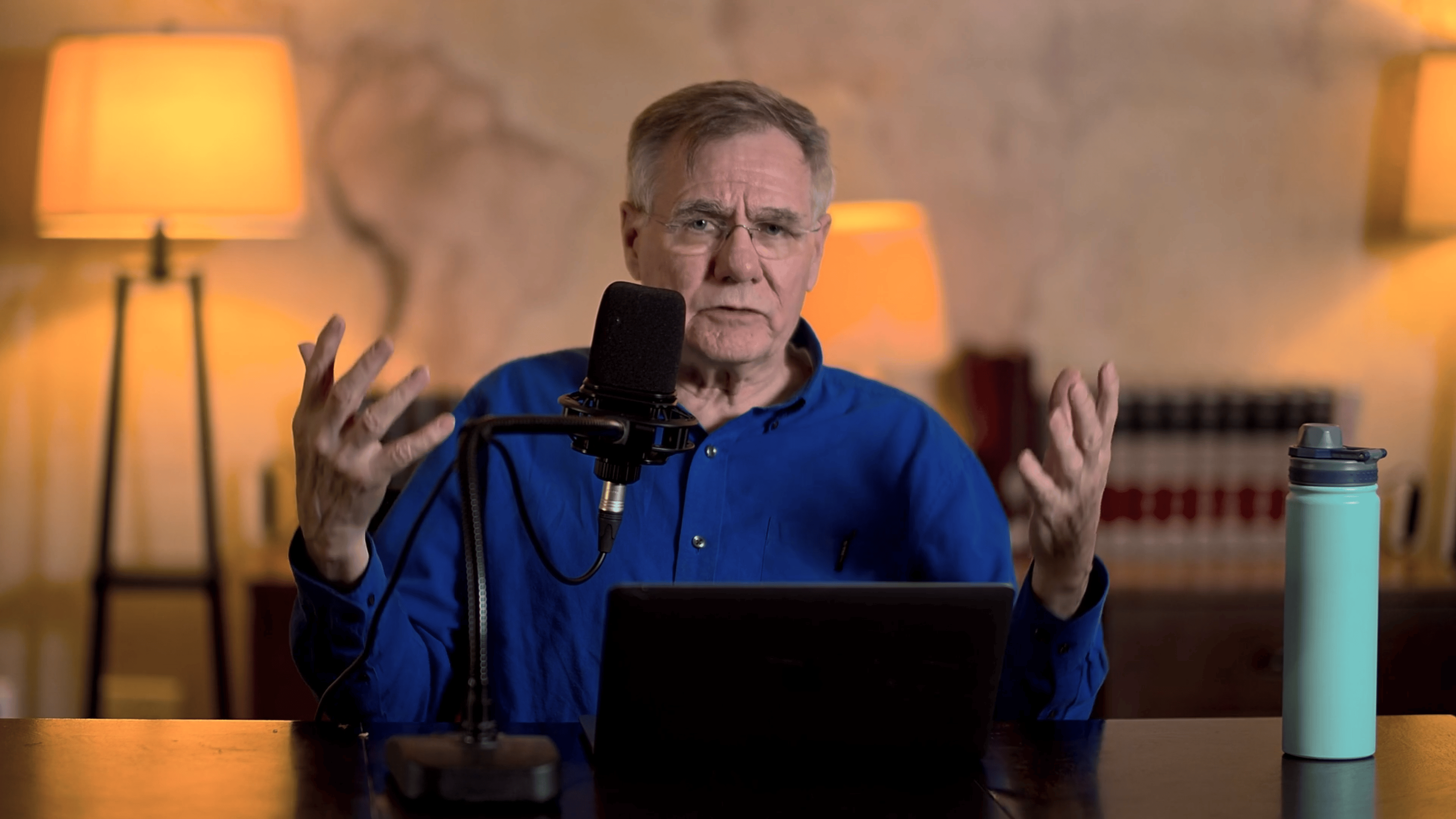 Course Lesson
Episode 016 Christus Victor or Penal Substitution the Historic Faith
Open a related course lesson for more teaching connected with Penal substitution and the atonement.
Course Lesson
Episode 016 Christus Victor or Penal Substitution the Historic Faith
Open a related course lesson for more teaching connected with Penal substitution and the atonement.