

Early Christian Beliefs About the Holy Spirit and the Church
Early Christians taught that the Holy Spirit lives in the Church, teaches believers, gives spiritual gifts, and is tied to baptism, unity, and forgiveness. Writers like Irenaeus, Origen, Tertullian, Cyprian, and Hippolytus say the Spirit belongs to the Church and works through it. Bible passages such as Acts 2, Acts 15, John 14, and 1 Corinthians 3 fit this same pattern. The teaching is strong overall, though some texts stress the Spirit’s work in the Church more than a full explanation of the Spirit’s person.
135 early-church witnesses · 202 source quotations · compared with Scripture
What did early Christians believe about the Holy Spirit and the Church?
Early Christian writers taught that the Holy Spirit truly works in the Church, gives life, teaches believers, and is received in baptism and the laying on of hands. Writers like Irenaeus, Tertullian, Origen, Cyprian, Hippolytus, and the Apostolic Constitutions connect the Spirit with Church unity, forgiveness, prophecy, and holy living.
The evidence is broad and early, with strong overlap between second- and third-century authors and key Bible passages like Acts 2, Acts 15, John 14, and 1 Corinthians 3. Some passages are about the Spirit’s work in the Church more than a full doctrine of the Spirit’s person, so the teaching is strong but not always equally direct on every point. A few liturgical texts also show that early worship called on the Holy Spirit for the Church’s life and sanctification.
Many more early Christian quotations, Bible passages, and source links are gathered below so you can study the evidence for yourself.
Key Takeaways
- Early Christians linked the Holy Spirit to the Church’s unity, holiness, and growth.
- They often connected the Spirit with baptism, forgiveness of sins, and laying on of hands.
- Irenaeus, Tertullian, Origen, Cyprian, and Hippolytus all give clear early witness.
- Acts 2, Acts 15, John 14, and 1 Corinthians 3 are key Bible passages for this topic.
Questions Answered by the Sources
Did early Christians teach that the Holy Spirit dwells in the Church?
Early sources consistently describe the Spirit as present in the Church, dwelling with believers, and giving grace, unity, and life. The Bible passages selected here reinforce the same theme with direct statements about the Spirit dwelling in the Church and believers.
-
Irenaeus, Against Heresies: Book III Direct teaching
...man, so that all who receive it may be given life. The means of communion with Christ, which is the Holy Spirit, the guarantee of incorruption, the means of confirming our faith, and the ladder to God, have been distributed throughout it. "For in the Church," it is said, "God has placed apostles, prophets, teachers," and all the other ways through which the Spirit works. Those who do not join with the Church miss out on these and deprive themselves of life through their misguided views and disgraceful behavior. Where the Church is, there is the Spirit of God; and where the Spirit of God is, there is the Church, along with every kind of grace; and the Spirit is truth. Therefore, those who do not partake in Him are neither nurtured into life from the mother's breasts nor do they enjoy the purest fountain flowing from the body of Christ. Instead, they dig for themselves broken cisterns out of earthly ditches and drink tainted water from the mud, fleeing from the faith of the Church to avoid being corrected, and rejecting the Spirit to avoid being instructed.
-
Tertullian, Against Marcion Direct teaching
that is, His Holy Spirit, who builds the church, which is indeed the temple, and household and city of God.
-
Tertullian, On Modesty Direct teaching
For the very Church itself is, properly and principally, the Spirit Himself, in whom is the Trinity of the One Divinity — Father, Son, and Holy Spirit.
-
Irenaeus, Against Heresies: Book III Supporting witness
and where the Spirit of God is, there is the Church, and every kind of grace;
-
Irenaeus, Against Heresies: Book III Supporting witness
For where the Church is, there is the Spirit of God;
-
1 Corinthians 3:16 Supporting witness
Know ye not that ye are the temple of God, and that the Spirit of God dwelleth in you?
-
Ephesians 2:22 Supporting witness
In him you also are being built together into a dwelling place for God by the Spirit.
Did early Christians connect the Holy Spirit with baptism and forgiveness?
Several sources connect baptism with receiving the Holy Spirit, including baptism in the name of Father, Son, and Holy Spirit, the laying on of hands, and forgiveness of sins. The Bible passages here support the same pattern from Acts and John.
-
Cyprian, Epistles Direct teaching
..., the Lord proves and declares in His Gospel that sins can be taken away only by those who have the Holy Spirit. For after His resurrection, when He sent out His disciples, He spoke to them and said, "As the Father has sent Me, even so I send you." And when He had said this, He breathed on them and said to them, "Receive the Holy Spirit. If you forgive anyone's sins, they will be forgiven; if you retain anyone's sins, they will be retained." John 20:21-23 In this place He shows that only the one who has the Holy Spirit can baptize and give forgiveness of sins. Moreover, John, who was to baptize Christ our Lord Himself, received the Holy Spirit beforehand while he was still in his mother's womb, so that it might be certain and clear that no one can baptize except those who have the Holy Spirit. Therefore those who support heretics or schismatics must answer us whether they have the Holy Spirit or not. If they have Him, why are hands laid on those who were baptized among them when they come to us, so that they may receive the Holy Spirit, since He must surely have been received there, where, if He was there, He could also be given? But if heretics and schismatics who baptize outsi
-
Cyprian, Epistles Direct teaching
...d among them not also given the laying on of hands, in the name of that same Christ, to receive the Holy Spirit? Why does the same greatness of the same name not have power in the laying on of hands, if, as they claim, it had power in the sanctifying of baptism? For if someone born outside the Church can become God's temple, why can the Holy Spirit not also be poured out on that temple? For the one who has been sanctified, with his sins taken away in baptism, and has been spiritually remade into a new man, has become fit to receive the Holy Spirit, since the apostle says, "As many of you as have been baptized into Christ have put on Christ." Galatians 3:27. He who, after being baptized among the heretics, is able to put on Christ, can much more receive the Holy Spirit whom Christ sent. Otherwise, the One who is sent would be greater than the One who sends, so that a person baptized outside may indeed begin to put on Christ, but not be able to receive the Holy Spirit, as if Christ could be put on without the Spirit, or the Spirit could be separated from Christ. Moreover, it is foolish to say that although the second birth is spiritual, by which we are born in Christ through the w
-
Anonymous, Treatise on Re-Baptism Direct teaching
Because outside the Church there is no Holy Spirit, sound faith moreover cannot exist, not alone among heretics, but even among those who are established in schism.
-
Anonymous, Treatise on Re-Baptism Direct teaching
... who believed. Certainly, both in water, and no less in their own blood, and then especially in the Holy Spirit, men may be baptized. For Peter says, “But this is what was spoken by the prophet: ‘It shall come to pass in the last days, says the Lord, I will pour out my Spirit upon all flesh; and their sons and their daughters shall prophesy, and their young men shall see visions, and their old men shall dream dreams. And upon my servants and upon my handmaidens I will pour out of my Spirit,’” Acts 2:17-18. We find that this Spirit was communicated in the Old Testament, not indeed everywhere or widely, but along with other gifts; or rather, that He sprang up by His own will in certain men, or clothed them, or was upon them. So we see that the Lord said to Moses about the seventy elders, “And I will take of the Spirit which is upon you, and will put it upon them,” Numbers 11:17. For this reason also, according to His promise, God put upon them from the Spirit that had been upon Moses, and they prophesied in the camp. And Moses, as a spiritual man, rejoiced that this had happened, although Joshua the son of Nun had urged him, against his will, to oppose this thing, and yet he was n
-
Anonymous, Treatise on Re-Baptism Supporting witness
...tized in the Spirit, so that these also may not seem to have anything less than those who are fully Christians, lest it should be necessary to ask what kind of baptism they received in the name of Jesus Christ. Unless perhaps, in that earlier discussion also, about those who had only been baptized in the name of Jesus Christ, you decide that they can be saved even without the Holy Spirit, or that the Holy Spirit is not usually given only in this way, but by the laying on of the bishop's hands, or even say that it is not the bishop alone who can give the Holy Spirit.
-
Anonymous, Treatise on Re-Baptism Supporting witness
... it would be enough that only hands should be laid on them by the bishop for their reception of the Holy Spirit, and that this laying on of hands would provide them with the renewed and perfected seal of faith. Or whether a repetition of baptism would in fact be necessary for them, as if they should receive nothing if they had not obtained baptism afresh, just as if they had never been baptized in the name of Jesus Christ. Therefore, on this new question, some things were spoken of as having been written and answered, in which both sides tried with the greatest eagerness to tear down what had been written by their opponents. In this kind of debate, as it seems to me, no controversy or discussion could have arisen at all if each one of us had been content with the venerable authority of all the churches, and with fitting humility had wished to introduce nothing new, since there was no room for contradiction. For everything that is doubtful and ambiguous, and is established in differing opinions among prudent and faithful men, if it is judged to be against the ancient, memorable, and most solemn observance of all those holy and faithful men who have deserved well, ought certainly
-
Cyprian, Epistles Supporting witness
...the truth. For when we say, “Do you believe in eternal life and the forgiveness of sins through the holy Church?” we mean that the forgiveness of sins is not given except in the Church, and that among heretics, where there is no Church, sins cannot be taken away. Therefore, those who claim that heretics can baptize must either change the question or hold to the truth, unless they also assign a church to those who, they argue, have baptism. It is also necessary that the person who is baptized should be anointed, so that, after receiving the chrism, that is, the anointing, he may be anointed by God and have in himself the grace of Christ. Further, it is from the Eucharist that the baptized are anointed with the oil sanctified on the altar. But one who has neither an altar nor a church cannot sanctify the created thing of oil. Therefore there also can be no spiritual anointing among heretics, since it is clear that among them the oil cannot be sanctified nor the Eucharist celebrated at all. But we ought to know and remember that it is written, “Let not the oil of a sinner anoint my head,” which the Holy Spirit warned about beforehand in the Psalms, lest anyone who has gone out of t
-
Novatian, Treatise Concerning the Trinity Direct teaching
Moreover, the order of reason, and the authority of the faith in the disposition of the words and in the Scriptures of the Lord, admonish us after these things to believe also on the Holy Spirit, once promised to the Church, and in the appointed occasions of times given.
-
Anonymous, Treatise on Re-Baptism Supporting witness
... is mightier than I, whose shoe's latchet I am not worthy to unloose: He shall baptize you with the Holy Ghost, and with fire," Matthew 3:11. For this reason, we also ought to begin this discussion from this point. For in the Acts of the Apostles, after His resurrection, the Lord confirmed this same word of John and commanded them not to depart from Jerusalem, but to wait for that promise of the Father, "which," He says, "you have heard from me; for John truly baptized with water, but you shall be baptized with the Holy Ghost not many days from now," Acts 1:4-5. Peter also repeated these same words of the Lord when he explained his actions to the apostles, saying: "And as I began to speak, the Holy Ghost fell upon them as on us at the beginning; and I remembered the word of the Lord, how that He said, John indeed baptized with water, but you shall be baptized with the Holy Ghost. If, therefore, He gave them a like gift as to us, who believe in the Lord Jesus Christ, who was I, that I could withstand the Lord?" Acts 11:15-17. And again: "Men, brothers, you know how from ancient days God made choice among us, that the Gentiles by my mouth should hear the word of the Gospel, and be
-
John 20:22 Supporting witness
And when he had said this, he breathed on them and said to them, “Receive the Holy Spirit.
-
Acts 15:8 Supporting witness
And God, who knows the heart, bore witness to them, by giving them the Holy Spirit just as he did to us,
-
Acts 19:2 Supporting witness
He said unto them, Have ye received the Holy Ghost since ye believed? And they said unto him, We have not so much as heard whether there be any Holy Ghost.
Did early Christians say the Holy Spirit teaches and guides believers?
The sources say the Spirit gives understanding, teaches all things, and leads believers into truth. Several writers also treat the Spirit as the source of prophetic speech and Spirit-given instruction.
-
Origen, Commentary on John Direct teaching
...that the Son is second beside the Father, He being the same as the Father, while a distinction is clearly drawn between the Spirit and the Son in the passage, Matthew 12:32: “Whoever shall speak a word against the Son of Man, it shall be forgiven him; but whoever shall blaspheme against the Holy Spirit, he shall not have forgiveness, either in this world or in the world to come.” We consider, therefore, that there are three hypostases: the Father, the Son, and the Holy Spirit. At the same time, we believe that nothing is uncreated except the Father. Therefore, as the more pious and truer course, we admit that all things were made by the Word, and that the Holy Spirit is the most excellent and the first in order of all that was made by the Father through Christ. And this, perhaps, is the reason why the Spirit is not called God’s own Son. The Only-begotten alone is by nature and from the beginning a Son, and the Holy Spirit seems to need the Son to minister His essence to Him, so as to enable Him not only to exist, but also to be wise and reasonable and just, and all that we must think of Him as being. All this He has by participation in the character of Christ, of which we have s
-
Origen, De Principiis (On First Principles) Direct teaching
...f the Holy Spirit when he declares, "God has revealed them to us by His Holy Spirit; for the Spirit searches all things, even the deep things of God;" and again in the Gospel, when the Saviour, speaking of the divine and deeper parts of His teaching, which His disciples were not yet able to receive, thus addresses them: "I have yet many things to say unto you, but you cannot bear them now; but when the Holy Spirit, the Comforter, has come, He will teach you all things, and will bring all things to your remembrance, whatsoever I have said to you." We must understand, therefore, that just as the Son, who alone knows the Father, reveals Him to whom He will, so also the Holy Spirit, who alone searches the deep things of God, reveals God to whom He will: "For the Spirit blows where He lists." We must not suppose, however, that the Spirit derives His knowledge through revelation from the Son. For if the Holy Spirit knows the Father through the Son's revelation, He passes from a state of ignorance into one of knowledge. But it is both impious and foolish to confess the Holy Spirit and yet ascribe ignorance to Him. For even if something else existed before the Holy Spirit, it was not by
-
Origen, De Principiis (On First Principles) Supporting witness
Then, Thirdly, the apostles related that the Holy Spirit was associated in honour and dignity with the Father and the Son.
-
Ignatius of Antioch, Connection to John 16:13 Direct teaching
But the Holy Spirit does not speak His own things, but those of Christ, and that not from himself, but from the Lord; even as the Lord also announced to us the things that He received from the Father. For, says He, "the word which ye hear is not Mine, but the Father's, who sent Me." And says He of the Holy Spirit, "He shall not speak of Himself, but whatsoever things He shall hear from Me."
-
Novatian, Treatise Concerning the Trinity Supporting witness
But this Holy Spirit the Lord Christ calls at one time the Paraclete, at another pronounces to be the Spirit of truth.
-
Origen, De Principiis (On First Principles) Supporting witness
From all which we learn that the person of the Holy Spirit was of such authority and dignity, that saving baptism was not complete except by the authority of the most excellent Trinity of them all, i.e., by the naming of Father, Son, and Holy Spirit, and by joining to the unbegotten God the Father, and to His only-begotten Son, the name also of the Holy Spirit.
-
Victorinus, Commentary on the Apocalypse Supporting witness
Moreover, the order of reason, and the authority of the faith in the disposition of the words and in the Scriptures of the Lord, admonish us after these things to believe also on the Holy Spirit, once promised to the Church, and in the appointed occasions of times given.
-
Apostolic Constitutions, Apostolic Constitutions Supporting witness
And I am baptized into the Holy Ghost, that is, the Comforter, who wrought in all the saints from the beginning of the world, but was afterwards sent to the apostles by the Father, according to the promise of our Saviour and Lord, Jesus Christ;
-
Apostolic Constitutions, Apostolic Constitutions Supporting witness
the Holy Ghost is the Comforter, who is sent by Christ, land taught by Him, and proclaims Him.
-
John 7:39 Supporting witness
(But this spake he of the Spirit, which they that believe on him should receive: for the Holy Ghost was not yet given; because that Jesus was not yet glorified.)
-
John 14:26 Supporting witness
But the Comforter, which is the Holy Ghost, whom the Father will send in my name, he shall teach you all things, and bring all things to your remembrance, whatsoever I have said unto you.
Did early Christians say the Church is one because of the Holy Spirit?
The evidence ties the Church’s oneness to the Spirit and repeatedly calls the Church one, holy, and Spirit-governed. Several writers also say the Spirit and the Church belong together and that the Spirit preserves unity.
-
Hippolytus, Refutation of All Heresies Direct teaching
But none will refute these, save the Holy Spirit bequeathed unto the Church, which the Apostles, having in the first instance received, have transmitted to those who have rightly believed.
-
Cyprian, Epistles Supporting witness
2. But that the Church is one, the Holy Spirit declares in the Song of Songs, saying, in the person of Christ, My dove, my undefiled, is one;
-
Cyprian, Epistles Direct teaching
since both baptism is one and the Holy Spirit is one, and the Church founded by Christ the Lord upon Peter, by a source and principle of unity, is one also.
-
Cyprian, Epistles Supporting witness
But apostates and deserters, or adversaries and enemies, and those who lay waste the Church of Christ, cannot, even if outside the Church they have been slain for His name, according to the apostle, be admitted to the peace of the Church, since they have neither kept the unity of the spirit nor of the Church.
-
Ignatius of Antioch, Connection to Ephesians 4:4 Supporting witness
And ye are, as Paul wrote to you, "one body and one spirit, because ye have also been called in one hope of the faith. Since also "there is one Lord, one faith, one baptism, one God and Father of all, who is over all, and through all, and in all."
-
Clement of Rome, Connection to Ephesians 4:4 Supporting witness
Have we not [all] one God and one Christ? Is there not one Spirit of grace poured out upon us? And have we not one calling in Christ? [Ephesians 4:4-6]
-
Cyprian, Epistles Supporting witness
...-baptize those whom they lure away from us. It does not matter to us at all what the enemies of the Church do, as long as we ourselves keep respect for our authority and for the firmness of reason and truth. For Novatian, like apes, which are not men and yet imitate human actions, wants to claim for himself the authority and truth of the Catholic Church, though he himself is not in the Church. No, more than that, up to now he has come forward as a rebel and enemy against the Church. For although he knows that there is one baptism, he claims this one for himself, so that he may say that the Church is with him and make us heretics. But we, who hold to the head and root of the one Church, know and confidently trust that nothing is lawful there outside the Church, and that the one baptism is among us, where he himself also was formerly baptized, when he still held to both the wisdom and truth of divine unity. But if Novatian thinks that those who have been baptized in the Church must be re-baptized outside the Church, he ought to begin with himself, so that he might first be re-baptized with a foreign and heretical baptism, since he thinks that after the Church, yes, and against the
-
Ephesians 4:4 Supporting witness
There is one body, and one Spirit, even as ye are called in one hope of your calling;
Did early Christians believe the Holy Spirit gives gifts and prophecy?
Early Christians said the Holy Spirit gives prophecy, wisdom, tongues, and other gifts to the Church. Hermas, Origen, Gregory Thaumaturgus, and the Apostolic Constitutions connect the Spirit with prophetic speech and spiritual gifts, and Acts 2 and 11 give the same biblical pattern.
-
Hermas, The Shepherd (Pastor) Direct teaching
...e makes no reply. Nor does he speak privately. Nor, when a man wishes the spirit to speak, does the Holy Spirit speak. It speaks only when God wishes it to speak. When, then, a man having the Divine Spirit comes into an assembly of righteous men who have faith in the Divine Spirit, and this assembly of men offers prayer to God, then the angel of the prophetic Spirit, who is appointed for him, fills the man. And the man, being filled with the Holy Spirit, speaks to the multitude as the Lord wishes. Thus, then, the Spirit of Divinity becomes manifest. Whatever power, therefore, comes from the Spirit of Divinity belongs to the Lord. "Hear, then," he says, "about the spirit that is earthly, empty, powerless, and foolish. First, the man who seems to have the Spirit exalts himself and wants the first seat, and is bold, impudent, and talkative, and lives in the midst of many luxuries and many other delusions, and takes rewards for his prophecy. And if he does not receive rewards, he does not prophesy. Can, then, the Divine Spirit take rewards and prophesy? It is not possible for the prophet of God to do this. But prophets of this kind are possessed by an earthly spirit. Then it never c
-
Hermas, The Shepherd (Pastor) Direct teaching
Listen, then, he says, foolish man, to how grief crushes out the Holy Spirit, and on the other hand saves. When the doubting man tries to do any deed, and fails in it because of his doubt, this grief enters into the man, and grieves the Holy Spirit, and crushes him out. Then, on the other hand, when anger attaches itself to a man about any matter, and he becomes bitter, grief enters into the heart of the man who had become irritated, and he is grieved at the deed he did, and repents that he has done a wicked deed. This grief, then, appears to be accompanied by salvation, because the man, after doing a wicked deed, repented. Both actions grieve the Spirit: doubt, because it did not accomplish its object; and anger grieves the Spirit, because it did what was wicked. Both of these are grievous to the Holy Spirit: doubt and anger. Therefore remove grief from yourselves, and do not crush the Holy Spirit who dwells in you, lest he entreat God against you, and withdraw from you. For the Spirit of God, which has been granted to dwell in this body, does not endure grief or straitness. Therefore put on cheerfulness, which is always agreeable and acceptable to God, and rejoice in it. For ever
-
Gregory Thaumaturgus, A Sectional Confession of Faith Supporting witness
...im. God also bore them witness with signs and wonders, with various miracles, and with gifts of the Holy Spirit" Hebrews 2:3-4. And again he says in the same epistle: "Therefore, as the Holy Spirit says, 'Today, if you will hear His voice, do not harden your hearts, as in the rebellion, in the day of testing in the wilderness, when your fathers tested Me, tried Me, and saw My works for forty years. Therefore I was grieved with that generation, and said, They always go astray in their heart, and they have not known My ways. So I swore in My wrath that they should not enter into My rest'" Hebrews 3:7-11. And there too they ought to listen to Paul, because he in no way separates the Holy Spirit from the divinity of the Father and the Son. Instead, he clearly presents the speech of the Holy Spirit as coming from the person of the Father, and thus as spoken by God, just as it has been shown in the statements mentioned earlier. Therefore the holy Trinity is believed to be one God, in agreement with these testimonies of Holy Scripture, although throughout the inspired Scriptures countless declarations are given to us, all confirming the apostolic and ecclesiastical faith.
-
Didache, Connection to Acts 2:4 Supporting witness
for on that day, at the third hour, the Lord Jesus sent on us the gift of the Holy Ghost, and we were filled with His energy, and we "spake with new tongues, as that Spirit did suggest to us; "
-
Gregory Thaumaturgus, A Sectional Confession of Faith Supporting witness
And there is also the perfect Holy Spirit supplied of God through the Son to the sons of adoption, living and life-giving, holy and imparting holiness to those who partake of Him — not like an unsubstantial breath breathed into them by man, but as the living Breath proceeding from God.
-
Gregory Thaumaturgus, A Sectional Confession of Faith Supporting witness
John 1:1 and there is a divinity present according to nature in the Spirit into wit, what subsists as the Spirit of God— according to Paul's statement, You are the temple of God, and the Spirit of God dwells in you. 1 Corinthians 3:6
-
Gregory Thaumaturgus, A Sectional Confession of Faith Supporting witness
and in like manner the Spirit is called the Spirit of God, and that, too, of nature according to the very substance, and not according to simple participation of God.
-
Theophilus of Antioch, To Autolycus Supporting witness
For the Spirit is fine, and the water is fine, that the Spirit may nourish the water, and the water penetrating everywhere along with the Spirit, may nourish creation.
-
Novatian, Treatise Concerning the Trinity Supporting witness
we also believe, and therefore speak. He is therefore one and the same Spirit who was in the prophets and apostles, except that in the former He was occasional, in the latter always.
-
Tatian, Connection to John 14:17 Supporting witness
But the Spirit of God is not with all, but, taking up its abode with those who live justly, and intimately combining with the soul.
-
Acts 2:4 Direct teaching
And they were all filled with the Holy Spirit and began to speak in other tongues as the Spirit gave them utterance.
-
Acts 11:15 Supporting witness
And as I began to speak, the Holy Spirit fell upon them, as upon us at the beginning.
More related quotations from this section 10 shown
-
1 Corinthians 2:10 Supporting witness
these things God has revealed to us through the Spirit. For the Spirit searches everything, even the depths of God.
-
1 Corinthians 14:12 Supporting witness
So with yourselves, since you are eager for manifestations of the Spirit, strive to excel in building up the church.
-
Romans 8:16 Supporting witness
The Spirit itself beareth witness with our spirit, that we are the children of God:
-
1 Corinthians 2:12 Supporting witness
Now we have received not the spirit of the world, but the Spirit who is from God, that we might understand the things freely given us by God.
-
1 Corinthians 2:13 Supporting witness
Which things also we speak, not in the words which man's wisdom teacheth, but which the Holy Ghost teacheth; comparing spiritual things with spiritual.
-
Romans 8:11 Supporting witness
If the Spirit of him who raised Jesus from the dead dwells in you, he who raised Christ Jesus from the dead will also give life to your mortal bodies through his Spirit who dwells in you.
-
John 16:13 Supporting witness
When the Spirit of truth comes, he will guide you into all the truth, for he will not speak on his own authority, but whatever he hears he will speak, and he will declare to you the things that are to come.
-
Acts 11:2 Supporting witness
and the Spirit of God shall rest upon him, the spirit of wisdom and understanding, the spirit of counsel and strength, the spirit of knowledge and godliness shall fill him;
-
1 Enoch 60:20 Supporting witness
mist are connected, and the one gives to the other. And when the spirit of the rain goes forth from its chamber, the angels come and open the chamber and lead it out, and when it is diffused over the whole earth it unites with the water on the earth. And whensoever it unites with the water on
-
Luke 12:12 Supporting witness
For the Holy Ghost shall teach you in the same hour what ye ought to say.
Common Questions
Did early Christians teach that the Holy Spirit dwells in the Church?
Yes. Irenaeus says, “where the Spirit of God is, there is the Church,” and Tertullian says the Church is built by the Holy Spirit.
Did early Christians connect the Holy Spirit with baptism?
Yes. Cyprian, Novatian, and the Treatise on Re-Baptism connect the Spirit with baptism and the laying on of hands.
Did early Christians think the Holy Spirit teaches believers?
Yes. Origen, Ignatius, and John 14:26 all say the Spirit teaches, guides, or brings truth to mind.
Source Index for the Holy Spirit and the Church
The guided sections above show the strongest quotations. This compact index highlights 147 ranked source links from 202 compiled sources for deeper study.
Source index 147 ranked links shown
Early Christian Writings 80 shown of 135
Primary-source quotations from early Christian writers and church documents.
-
Clement of Rome, Connection to Ephesians 4:4
Bible Passages 67 included
Related Bible passages saved for comparison with the early Christian quotations.
Related Resources
 Course Lesson
How Should Anabaptists Approach the Early Church Practice of Laying on Hands for Receiving the Holy Spirit?
Open a related course lesson for more teaching connected with The Holy Spirit and the Church.
Course Lesson
How Should Anabaptists Approach the Early Church Practice of Laying on Hands for Receiving the Holy Spirit?
Open a related course lesson for more teaching connected with The Holy Spirit and the Church.
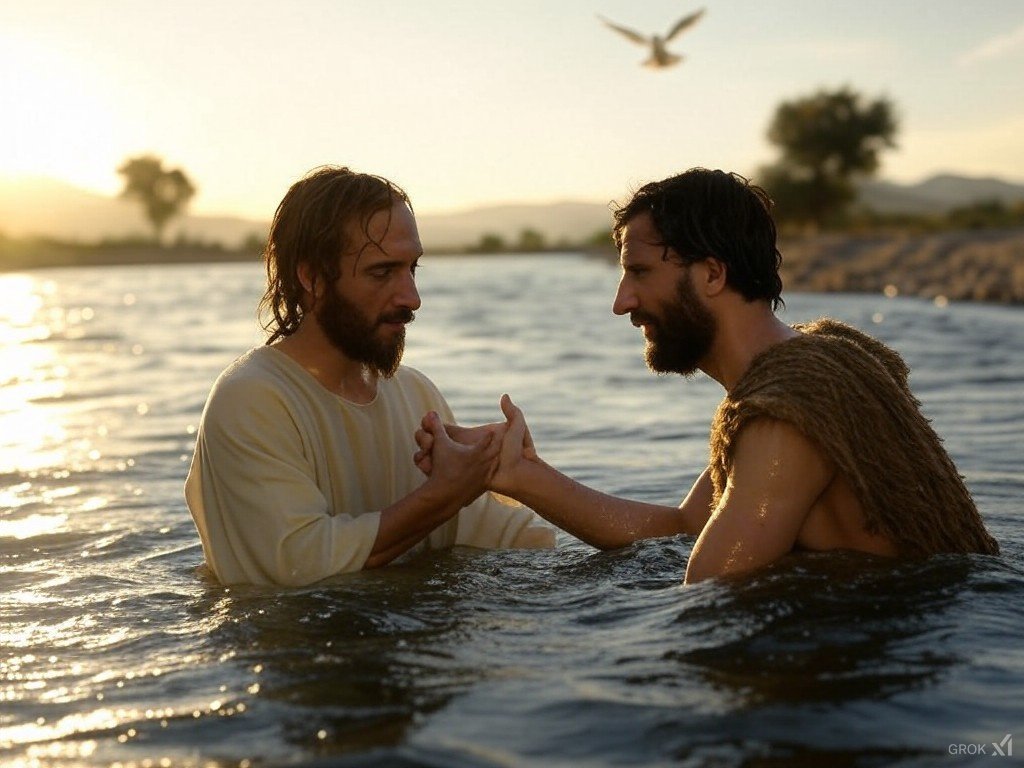 Course Lesson
I was baptized once in the name of the Father, Son, and Holy Spirit. The early church used triple immersion. Should I be re-baptized?
Open a related course lesson for more teaching connected with The Holy Spirit and the Church.
Course Lesson
I was baptized once in the name of the Father, Son, and Holy Spirit. The early church used triple immersion. Should I be re-baptized?
Open a related course lesson for more teaching connected with The Holy Spirit and the Church.
 Course Lesson
Being Filled with the Holy Spirit
Open a related course lesson for more teaching connected with The Holy Spirit and the Church.
Course Lesson
Being Filled with the Holy Spirit
Open a related course lesson for more teaching connected with The Holy Spirit and the Church.
 Site Page
Baptism in the Holy Spirit
Compare another early Christian topic page with related source quotations.
Site Page
Pentecost and the Holy Spirit
Compare another early Christian topic page with related source quotations.
Site Page
Spiritual Gifts in the Early Church
Compare another early Christian topic page with related source quotations.
Site Page
Baptism in the Holy Spirit
Compare another early Christian topic page with related source quotations.
Site Page
Pentecost and the Holy Spirit
Compare another early Christian topic page with related source quotations.
Site Page
Spiritual Gifts in the Early Church
Compare another early Christian topic page with related source quotations.