

What does Revelation 13 mean?
Revelation 13 warns about evil powers that demand worship, spread lies, and persecute believers. The first beast rules by force, and the second beast leads people into false worship with signs and a mark. Early Christian writers like Irenaeus, Hippolytus, Victorinus, and Cyprian often read this chapter as a picture of Antichrist and end-time pressure on believers.
124 early-church witnesses · 237 source quotations · compared with Scripture
What does Revelation 13 mean?
Revelation 13 warns that evil will rise through two beasts: one uses political power and the other uses signs, lies, and pressure to make people worship the first beast. The chapter says this rule will demand loyalty, use a mark, and punish those who refuse. Early Christian writers often read the first beast as Antichrist, the second as a false prophet, and the mark as a real sign of false worship.
Many more early Christian quotations, Bible passages, and source links are gathered below so you can study the evidence for yourself.
Passage context
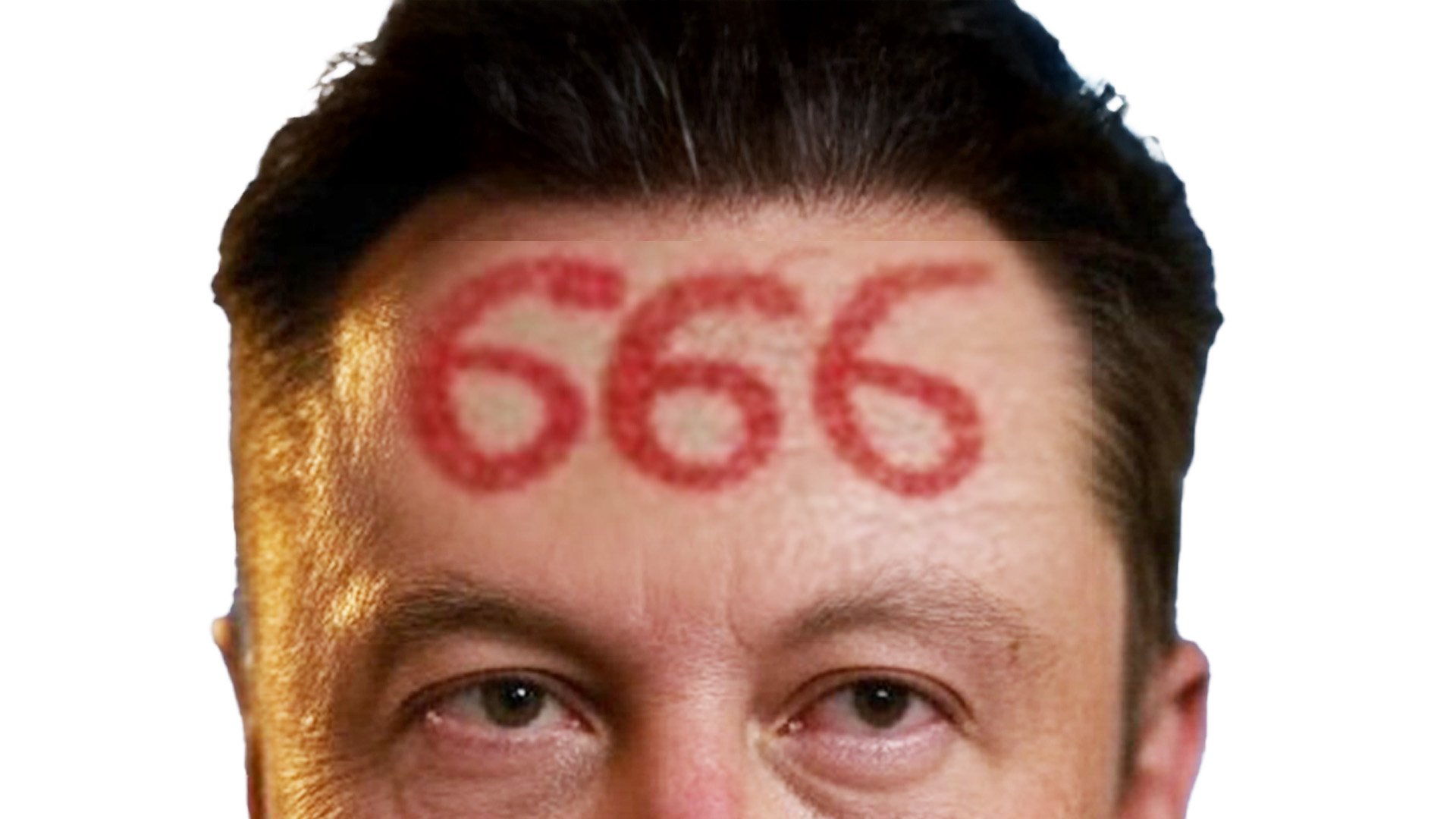
Revelation 13 comes after the dragon in chapter 12 and shows how his power works on earth. One beast rises from the sea, and another rises from the land. The chapter ends with the mark of the beast and the number 666, which mark out those who belong to this false kingdom.
Why early Christian sources matter
Early Christian writers help show how close believers read this chapter to the apostles’ world. Irenaeus gives an early witness to 666 and warns about the coming man, while Hippolytus, Victorinus, and Cyprian connect the chapter to Antichrist, false signs, and persecution. Dionysius also matters because he treats Revelation as symbolic and distinct from the Gospels, which shows that early readers did not all approach it the same way.
Common interpretation points
- The strongest early reading is that the beasts picture Antichrist-style power and false prophecy.
- The mark is treated as a sign of worship and loyalty, not just a random number.
- Early Christian writers agree more on the danger of the chapter than on every detail of its symbols.
- Dionysius warns against reading Revelation in a bare literal sense, so symbolism must be taken seriously.
Evidence-Based Summary
Revelation 13 presents two beastly powers that work together against God and pressure the world into false worship. Early Christian writers such as Irenaeus, Hippolytus, Victorinus, and Cyprian commonly read the first beast as a future Antichrist power, the second as a false prophet who works signs, and the mark as a real sign of loyalty that blocks buying and selling.
They also tied the chapter to the number 666 and to persecution of believers, while some writers stressed that the book is symbolic and not meant to be read in a flat literal way. The evidence is broad on the Antichrist theme and the mark, but mixed on details like the exact identity of the beasts and whether every image should be read literally.
Key Takeaways
- Revelation 13 warns about false worship, not just strange symbols.
- Early writers often linked the first beast to Antichrist and the second to a false prophet.
- The mark and 666 were read as signs of allegiance to evil power.
- The chapter’s meaning is clearer on the warning than on every symbol’s exact identity.
Questions Answered by the Sources
What did early Christians think the first beast in Revelation 13 was?
The first beast was commonly read as a future Antichrist power that rules by force and false power. Irenaeus, Hippolytus, and Victorinus connect the beast to a coming enemy who deceives the world and opposes God.
-
Victorinus, Connection to Revelation 13:1 Direct teaching
"And I saw a beast rising up from the sea, like unto a leopard." This signifies the kingdom of that time of Antichrist, and the people mingled with the variety of nations.
-
Victorinus, Connection to Revelation 13:2 Direct teaching
"His feet were as the feet of a bear." A strong and most unclean beast, the feet are to be understood as his leaders. "And his mouth as the mouth of a lion." That is, his mouth armed for blood is his bidding, and a tongue which will proceed to nothing else than to the shedding of blood.
Who is the second beast in Revelation 13?
The second beast was often read as a false prophet who works signs and pushes people into false worship. Victorinus says it is the great false prophet, and Hippolytus says it deceives by signs and pressure.
-
Victorinus, Connection to Revelation 13:11 Direct teaching
"And I saw another beast coming up out of the earth." He is speaking of the great and false prophet who is to do signs, and portents, and falsehoods before him in the presence of men. "And he had two horns like a lamb-that is, the appearance within of a man-and he spoke like a dragon." But the devil speaks full of malice; for he shall do these things in the presence of men, so that even the dead appear to rise again.
-
Hippolytus, Treatise on Christ and Antichrist Supporting witness
...r he says, "And he will cause all, both small and great, rich and poor, free and bond, to receive a mark in their right hand or in their forehead, that no man might buy or sell, except he that had the mark, the name of the beast, or the number of his name." For, being full of guile, and lifting himself up against the servants of God, with the desire to afflict them and persecute them out of the world because they do not give glory to him, he will order incense-pans to be set up by all everywhere. This will be so that no man among the saints may be able to buy or sell without first sacrificing. For this is what is meant by the mark received upon the right hand. And the words, "in their forehead," indicate that all are crowned and made to wear a crown of fire, and not of life, but of death. For in this way too Antiochus Epiphanes, the king of Syria, the descendant of Alexander of Macedon, devised measures against the Jews. He too, in the exaltation of his heart, issued a decree in those times that all should set up shrines before their doors, and sacrifice, and that they should march in procession in honor of Dionysus, waving ivy garlands. And those who refused obedience should be
-
Irenaeus, Against Heresies: Book V Supporting witness
And we must not be surprised if, since the demons and apostate spirits are at his service, he through their means performs wonders, by which he leads the inhabitants of the earth astray.
What did early Christians teach about the mark of the beast and 666?
The mark was read as a sign of worship and loyalty to the beast, and 666 was treated as a real clue about the coming enemy. Irenaeus gives the strongest early discussion of the number, while Hippolytus and Cyprian connect the mark to forced allegiance and refusal to worship.
-
Irenaeus, Against Heresies: Book V Direct teaching
...peak; and he will cause death to those who will not worship it.” He also says: “And he will cause a mark to be put on the forehead and right hand, so no one can buy or sell unless they have the mark of the beast’s name or number; and the number is six hundred and sixty-six,” that is, six times a hundred, six times ten, and six units. [He gives this] as a summary of the entire apostasy over six thousand years.
-
Irenaeus, Against Heresies: Book V Direct teaching
Given the state of the matter, and this number being found in all the most respected and ancient copies of the Apocalypse, with testimony from those who saw John directly, reason suggests that the beast's name, calculated according to the Greek system by the value of the letters, amounts to six hundred and sixty-six. The number of tens matches the hundreds, and the hundreds match the units. The digit six throughout represents the complete recurrence of apostasy from the beginning, through intermediary periods, to the end. Some have mistakenly altered the middle number in the name, subtracting fifty, so instead of six tens, they claim there is but one. This likely happened due to copying errors, common when numbers are expressed by letters, as the Greek letter for sixty could easily be mistaken for iota. Some accepted this reading without examining it, and in their simplicity used this number representing one ten; others, lacking experience, tried to find a name that matched the incorrect number. Those who did this innocently and without ill intent can be assumed to receive God's pardon. However, those who seek vainglory by asserting that names with the false number should be accept
-
Irenaeus, Against Heresies: Book V Direct teaching
4. But he indicates the number of the name now, that when this man comes we may avoid him, being aware who he is: the name, however, is suppressed, because it is not worthy of being proclaimed by the Holy Spirit.
-
Irenaeus, Against Heresies: Book V Supporting witness
and he shall cause those to be slain who will not adore it.” He says also: “And he will cause a mark [to be put] in the forehead and in the right hand, that no one may be able to buy or sell, unless he who has the mark of the name of the beast or the number of his name;
-
Irenaeus, Against Heresies: Book V Supporting witness
1. Such, then, being the state of the case, and this number being found in all the most approved and ancient copies [of the Apocalypse], and those men who saw John face to face bearing their testimony [to it];
-
Cyprian, Treatises Supporting witness
Jeremiah 7:6 In the Apocalypse too: If any man worship the beast and his image, and receive his mark in his forehead or in his hand, he shall also drink of the wine of the wrath of God, which is mixed in the cup of His wrath, and shall be punished with fire and brimstone before the eyes of the holy angels, and before the eyes of the Lamb: and the smoke of their torments shall ascend for ever and ever: and they shall have no rest day or night, whosoever worship the beast and his image. Revelation 14:9-11
-
Cyprian, Treatises Supporting witness
And when he had placed those who were slain in the first place, he added, saying: And whosoever had not worshipped the image of the beast, neither had received his mark upon their forehead or in their hand;
-
Cyprian, Epistles Supporting witness
Isaiah 2:8-9 In the Apocalypse also, we read the anger of the Lord threatening, and saying, If any man worship the beast and his image, and receive his mark in his forehead or in his hand, the same shall drink of the wine of the wrath of God mixed in the cup of His anger;
-
Lactantius, The Epitome of the Divine Institutes Supporting witness
And by these prodigies he shall entice many to worship him, and to receive his sign in their hand or forehead.
-
Lactantius, The Divine Institutes Supporting witness
but they who shall refuse his mark will either flee to the mountains, or, being seized, will be slain with studied tortures.
-
Hippolytus, Treatise on Christ and Antichrist Supporting witness
...o be killed. And he caused all people, small and great, rich and poor, free and slave, to receive a mark on their right hand or on their forehead. And no one could buy or sell except the one who had the mark, the name of the beast, or the number of his name. Here is wisdom. Let the one who has understanding count the number of the beast, for it is the number of a man, and his number is six hundred sixty-six."
Did early Christians read Revelation 13 as symbolic?
Some early Christian writers treated Revelation as symbolic and not something to read in a flat literal way. Dionysius of Alexandria is the clearest witness here, saying the book is distinct and cannot be understood in a bare literal sense.
-
Dionysius of Alexandria, Miscellaneous Fragments Direct teaching
...it is clear that the Gospel and the Epistle are marked by one and the same kind of writing. But the Revelation is totally different, and completely distinct from this. I might almost say that it does not even come near it or touch it. Nor does it contain a single syllable in common with these other books. More than that, the Epistle—for I say nothing of the Gospel—does not mention the Revelation or show any awareness of it. And the Revelation, in the same way, gives no sign of the Epistle. Paul, however, does give some indication of his revelations in his epistles, although he did not record those revelations in separate writings.
-
Dionysius of Alexandria, Miscellaneous Fragments Direct teaching
After this, he examines the whole book of Revelation. After proving that it cannot possibly be understood in a bare, literal sense, he goes on like this: “When the prophet has now completed, so to speak, the whole prophecy, he declares those blessed who keep it, and he also includes himself among them. For he says, ‘Blessed is he who keeps the words of the prophecy of this book; and I, John, am the one who saw and heard these things,’ Revelation 22:7-8. Therefore, I do not deny that this person was called John, or that this was the writing of a John. I also admit that it was the work of some holy and inspired man. But I cannot easily admit that this was the apostle, the son of Zebedee, the brother of James, and the same man who wrote the Gospel that bears the title According to John, and the catholic epistle. Instead, from the character of both works, their forms of expression, and the whole arrangement and execution of the book, I conclude that the authorship is not his. For the evangelist nowhere else adds his name, and he never identifies himself either in the Gospel or in the epistle.”
-
Dionysius of Alexandria, Miscellaneous Fragments Supporting witness
But the Revelation is totally different, and altogether distinct from this;
-
Dionysius of Alexandria, Miscellaneous Fragments Supporting witness
But the writer of the Revelation puts himself forward at once in the very beginning, for he says: The Revelation of Jesus Christ, which He gave to him to show to His servants quickly;
-
Dionysius of Alexandria, Miscellaneous Fragments Supporting witness
Nay more, the Epistle — for I say nothing of the Gospel— does not make any mention or evince any notion of the Revelation and the Revelation, in like manner, gives no note of the Epistle.
Common Questions
Who is the first beast in Revelation 13?
Early Christian writers often understood the first beast as a future Antichrist ruler or kingdom that gets power from the dragon and demands worship.
What is the second beast in Revelation 13?
Victorinus calls it the great false prophet, a deceiver who works signs and leads people into false worship.
What does the mark of the beast mean?
The mark shows loyal worship of the beast and separates people from God’s people; Hippolytus says it is tied to forced sacrifice and buying or selling.
Did early Christians think Revelation 13 was about Antichrist?
Yes. Irenaeus, Hippolytus, and Victorinus commonly connected the chapter with Antichrist or a similar end-time enemy of God.
Did early Christians treat the beast’s mark as real or symbolic?
They usually treated it as a real sign of loyalty within a symbolic vision, tied to worship, pressure, and persecution.
Source Index for Revelation 13
The guided sections above show the strongest quotations. This compact index highlights 160 ranked source links from 237 compiled sources for deeper study.
Source index 160 ranked links shown
Early Christian Writings 80 shown of 124
Primary-source quotations from early Christian writers and church documents.
Bible Passages 80 shown of 113
Related Bible passages saved for comparison with the early Christian quotations.
Related Resources
 Course Lesson
Are the 144000 in Revelations Literally Virgins
Open a related course lesson for more teaching connected with Revelation 13.
Course Lesson
Are the 144000 in Revelations Literally Virgins
Open a related course lesson for more teaching connected with Revelation 13.
 Site Page
Revelation 21:1-8
Compare another early Christian topic page with related source quotations.
Site Page
The Book of Revelation and the Apocalypse
Compare another early Christian topic page with related source quotations.
Site Page
The Mark of the Beast and Revelation
Compare another early Christian topic page with related source quotations.
Site Page
Revelation 21:1-8
Compare another early Christian topic page with related source quotations.
Site Page
The Book of Revelation and the Apocalypse
Compare another early Christian topic page with related source quotations.
Site Page
The Mark of the Beast and Revelation
Compare another early Christian topic page with related source quotations.