Skip to content

Add your phone number?

Optional. Nothing is sent unless you choose it.

Part of: Anabaptists

Anabaptist martyrs their stories the book

The Martyrs Mirror and the Anabaptist Martyrs

The short answer

The Martyrs Mirror is a book of Christian martyr stories compiled by Thieleman J. van Braght, a Dutch Mennonite minister, and first published in 1660. It tells of believers who were baptized on confession of faith and died for it, from the time of Christ to 1660. Most of its pages are about Anabaptists of the 1500s, such as Felix Manz, Michael Sattler and Dirk Willems.

Next to the Bible, it has long held the most honored place in Amish and Mennonite homes.3

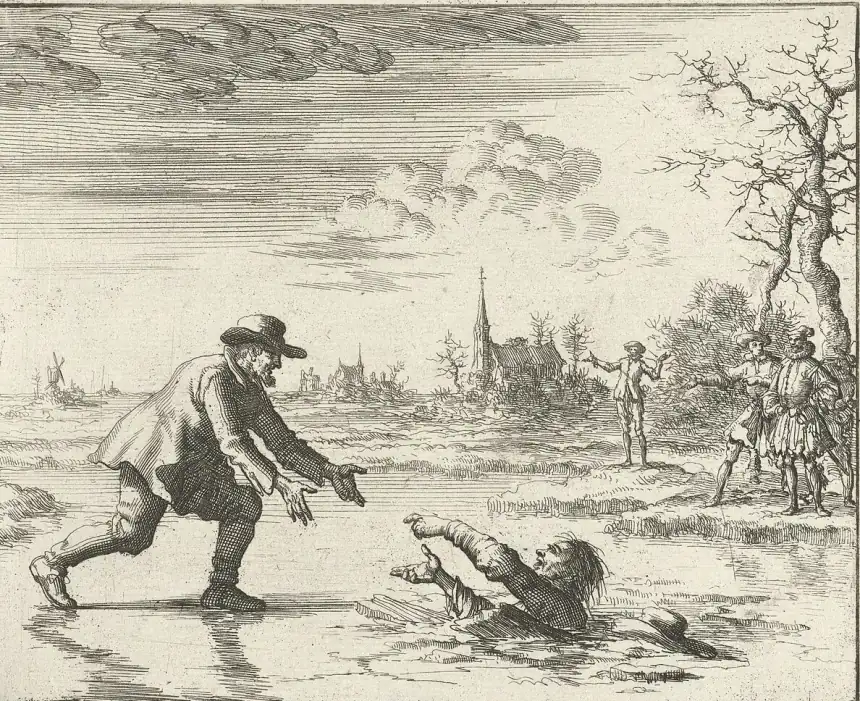
Etching: Dirk Willems turns back across the ice to pull the man chasing him out of the frozen water, 1569.
Dirk Willems turns back, 1569. He had escaped across the ice. When the man chasing him fell through, he went back and pulled him out, and was burned for his faith. Etching by Jan Luyken for the 1685 Martyrs Mirror, public domain.13
Compiled by
Thieleman J. van Braght (1625–1664)
First published
Holland, 1660, in Dutch
Pictures
104 etchings by Jan Luyken, 1685
In English
1837, and the 1886 translation still in print

At a glance

The Martyrs Mirror at a glance

The Martyrs Mirror at a glance
Full titleThe Bloody Theater or Martyrs Mirror of the Defenseless Christians who baptized only upon confession of faith, and who suffered and died for the testimony of Jesus, their Saviour, from the time of Christ to the year A.D. 16601
Dutch titleHet Bloedig Tooneel of Martelaers Spiegel
Compiled byThieleman J. van Braght (1625–1664), a Dutch Mennonite minister born in Dordrecht4
CoversFrom the apostles to 1660. Most of the book is about Anabaptists in the Low Countries, Germany, Switzerland and Austria, 1524–16602
Pictures104 copper etchings by Jan Luyken, added in 16853
In GermanPrinted at the Ephrata Cloister, Pennsylvania, in 1749: 1,512 pages, the largest book printed in America before the Revolution3
In English1837, Lancaster County, Pennsylvania; 1886, Elkhart, Indiana, translated by Joseph F. Sohm and reprinted from 19381
Best-known storyDirk Willems, who saved the man chasing him, 1569

This page is written by The Historic Faith, a ministry that studies the first three centuries of the church. We do not host the text of the Martyrs Mirror. Every quote below is copied from the public-domain 1886 English translation, with a link to where you can read it.

On this page8 parts

The martyrs

Three Anabaptist martyrs and their stories

Each story comes from the Martyrs Mirror itself, in its 1886 English translation. The dates are checked against the book and modern histories.

Felix Manz

About 1498 –

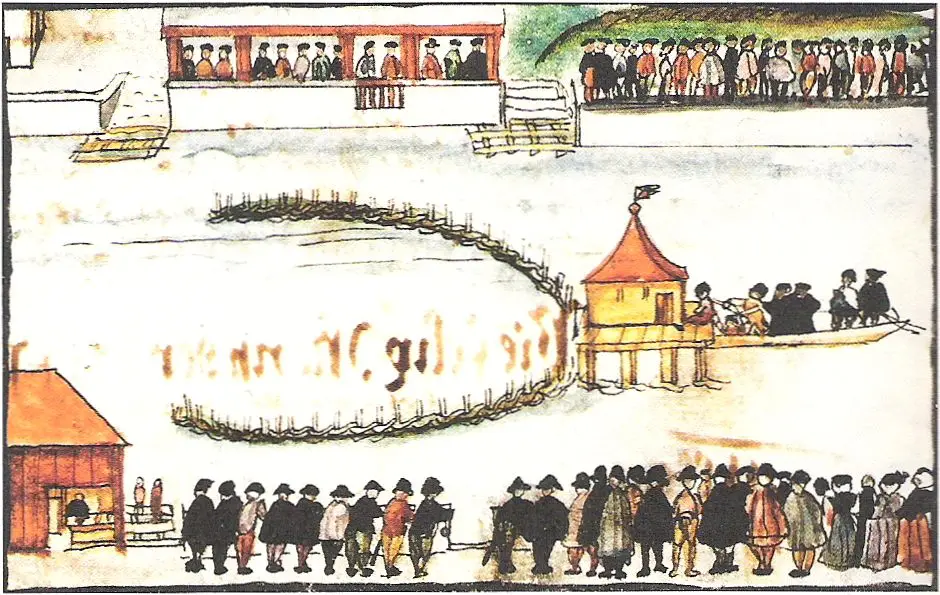
A Zurich scholar who knew Hebrew, Greek and Latin, Manz was one of the first Swiss Brethren, with Conrad Grebel and George Blaurock. Between 1525 and 1527 he was arrested several times for preaching and baptizing adults. In March 1526 Zurich made rebaptism a crime punished by drowning. On January 5, 1527, he was drowned in the Limmat, the first Swiss Anabaptist put to death by a Protestant government.6

“The true love of Christ shall not destroy the enemy.”

The book dates his entry 1526. Histories give January 5, 1527.
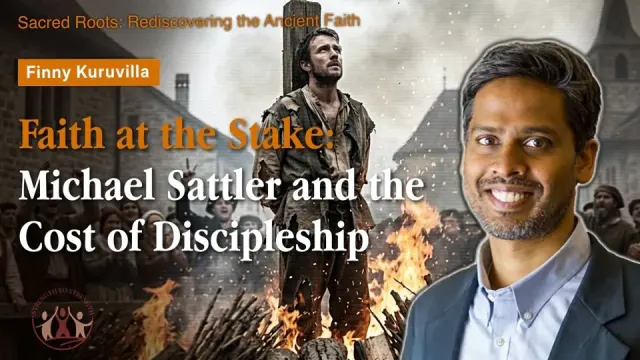
Michael Sattler

About 1490 – May 1527

A Benedictine monk at St. Peter’s in the Black Forest, Sattler left the monastery, married, and joined the Swiss Brethren. In February 1527 he led the meeting at Schleitheim that agreed on seven articles of faith. That May he was tried at Rottenburg on the Neckar, tortured and burned. His wife, who also would not give up her faith, was drowned a few days later.8

“If the Turks should invade the country, no resistance ought to be offered them.”

His answer in court: “If the Turks should come, we ought not to resist them; for it is written: Thou shalt not kill.”

The articles he helped write: The Schleitheim Confession

Dirk Willems

Died

Baptized as a young man in Rotterdam, Willems later held meetings and baptisms in his house at Asperen. Arrested in 1569, he escaped and ran across the ice. The thief-catcher chasing him broke through, and Dirk turned back to pull him out. The man wanted to let him go, but the burgomaster reminded him of his oath. Dirk was taken again and burned outside the town.9

“Dirk Willems, perceiving that the former was in danger of his life, quickly returned and aided him in getting out, and thus saved his life.”

A strong east wind blew the fire away from him, so he died slowly. In the town of Leerdam, downwind, he was heard to cry out “O my Lord; my God” over seventy times.

More people in the story, with their dates: the key figures of Anabaptism Menno Simons · page coming

The book

What is in the Martyrs Mirror?

Short answer

Two parts. The first goes century by century from the time of Christ through the 1400s, telling of baptism on confession of faith and of those who suffered for it. The second, and by far the larger, gives the Anabaptist martyrs of the 1500s and 1600s: their trials, sentences, letters from prison and last words.2

Part one

From the time of Christ to the 1400s

It opens with a long chapter, “Of the True Church of God, Its Origin, Progress, and Immovable Stability, through All Times.” Then, for each century from the first to the fifteenth, an account of holy baptism and an account of those who suffered.

Part two

The Anabaptist martyrs, 1524–1660

Hundreds of short accounts, year by year, many with the court sentence and the prisoner’s own letters. The 1886 edition ends with an index of Anabaptists who were persecuted or put to death from 1525 to 1660.10

The word “defenseless”

Christians who would not fight back

The title calls them “defenseless Christians.” It means nonresistant: believers who would suffer rather than take up the sword. That is why the book, unlike Foxe’s Book of Martyrs, keeps to martyrs who did not resist.3

How the book came down to us

  1. Dutch, Holland. Van Braght gathers the accounts from older chronicles, records and testimonies.

  2. Amsterdam edition. Jan Luyken’s 104 etchings are added, among them Dirk Willems on the ice.

  3. German, Pennsylvania. The Ephrata Cloister translates and prints it: 1,512 pages.

  4. First English. Translated from the German, printed in Lancaster County.

  5. English from the Dutch. Joseph F. Sohm’s translation, Elkhart, Indiana.

  6. Still in print. Herald Press has reprinted the 1886 English ever since.

Older than 1525

It begins with the early church

The Martyrs Mirror does not start with the Anabaptists. Its title says it runs “from the time of Christ,” and its first part begins with the first century. Van Braght set the Anabaptist martyrs in one line with the Christians who died in the first centuries.

Those early martyr accounts are on this site, and you can listen to them. When the Roman governor told the old bishop Polycarp of Smyrna to swear by Caesar and go free, he answered:

“For eighty-six years I have served Him, and He never did me any harm: how then can I blaspheme my King and my Saviour?”

Old painting: crowds on the riverbanks watch as Felix Manz is taken by boat to be drowned in Zurich, 1527.
The drowning of Felix Manz in Zurich, January 5, 1527, from a Zurich manuscript copied in 1605–06. Public domain.13

The cost

Why it cost them their lives

Where every baby was baptized into the state church, baptizing adults broke the law, and refusing oaths and the sword looked like rebellion. Catholic and Protestant rulers alike jailed, drowned, burned and beheaded them, and the full answer, with its sources, has its own page.

Questions

Questions people ask about the Martyrs Mirror

Short, plain answers. Tap a question to open it.

What is the Martyrs Mirror?

A large book of Christian martyr stories, first published in Dutch in 1660 by Thieleman J. van Braght. It tells of believers who were baptized on confession of faith and died for it, from the apostles to 1660, and above all of Anabaptist martyrs of the 1500s. The 1685 edition added Jan Luyken’s 104 etchings.

Who wrote the Martyrs Mirror?

Thieleman J. van Braght (1625–1664), a Dutch Mennonite minister born in Dordrecht. He did not write every story himself. He gathered them from older chronicles, records and testimonies, and added his own account of the true church from the time of Christ. The best-known English translation is Joseph F. Sohm’s of 1886.

Who was Dirk Willems?

A Dutch Anabaptist from Asperen, in Holland. In 1569 he escaped from prison across the ice. When the man chasing him fell through, Dirk turned back and pulled him out. He was taken again and burned at the stake on May 16, 1569. His story and Jan Luyken’s etching of it are the best-known part of the book.

What does “defenseless Christians” mean in the title?

It means nonresistant Christians: believers who would not fight back or take up the sword, even to save their own lives. Anabaptists took this from Jesus’ words in the Sermon on the Mount. Van Braght chose martyrs who held this belief, which is one way his book differs from Foxe’s Book of Martyrs.

How many Anabaptists were martyred?

No one knows the exact number, and we do not give one. The Martyrs Mirror holds hundreds of accounts, and the 1886 edition ends with a five-page index of Anabaptists who were persecuted or put to death from 1525 to 1660. Many more died whose names were never written down.

Is the Martyrs Mirror the same as Foxe’s Book of Martyrs?

No. John Foxe’s book, first printed in 1563, is mostly about English Protestant martyrs and leaves out many Anabaptists. The Martyrs Mirror follows believers who were baptized on confession of faith and did not resist, from the apostles to 1660. Both books start with the early church.

Who made the pictures in the Martyrs Mirror?

Jan Luyken, a Dutch artist and poet, made 104 copper etchings for the 1685 edition, including the picture of Dirk Willems on the ice at the top of this page. Thirty-one of the copper plates survive, in an exhibit at Bethel College in North Newton, Kansas. The etchings are now in the public domain.

Is the Martyrs Mirror still read today?

Yes. Herald Press has kept the 1886 English translation in print since 1938, and many Amish and Mennonite families keep a copy at home. It is still a common wedding gift in Mennonite homes. You can also read the 1886 English text free online.

Where can I read the Martyrs Mirror online?

We do not host the text. The 1886 English translation is in the public domain and online at homecomers.org, with its table of contents, an index of names and the Luyken pictures. The three stories on this page link straight to their chapters there. Printed copies are sold by Herald Press and Christian bookstores.

Notes and sources

Lectures and library chapters are on The Historic Faith. Outside sources are named with their address. Quotes from the Martyrs Mirror are from the 1886 English translation, which is in the public domain.

Show all 13 notessources for every date, number and quote
  1. Martyrs Mirror, title page and prefaces (full title; translated from the Dutch edition of 1660 by Joseph F. Sohm; first English 1837, Lampeter Square, Lancaster County; second English 1886, Elkhart, Indiana; reprinted from 1938 at Scottdale, Pennsylvania): homecomers.org.
  2. Martyrs Mirror, table of contents and introduction (part one by centuries; part two, the sixteenth and seventeenth centuries; most of the book on Anabaptists in the Low Countries, 1524–1660): contents, introduction.
  3. Wikipedia, “Martyrs Mirror”, read November 6, 2026: its place in Amish and Mennonite homes, “defenseless” as non-resistance, 104 Luyken etchings (1685) and 31 surviving plates, the Ephrata German edition (1749, 1,512 pages), and the difference from Foxe.
  4. Wikipedia, “Thieleman J. van Braght” (January 29, 1625 – October 7, 1664, born in Dordrecht).
  5. Martyrs Mirror, “Felix Mantz, A.D. 1526,” and his letter to the brethren: homecomers.org.
  6. Wikipedia, “Felix Manz”: the Zurich edict of March 7, 1526, and his drowning in the Limmat on January 5, 1527. Also Lecture 7.
  7. Martyrs Mirror, “Michael Sattler, A.D. 1527”: the charges, his answers, the sentence and the drowning of his wife: homecomers.org.
  8. Wikipedia, “Michael Sattler”: St. Peter’s Abbey in the Black Forest, the Schleitheim meeting of February 1527, the trial at Rottenburg am Neckar. Also Lecture 9.
  9. Martyrs Mirror, “Dirk Willems, A.D. 1569,” with the sentence dated May 16, 1569: homecomers.org; date also in Wikipedia, “Dirk Willems”.
  10. “Index of Anabaptists Who Were Persecuted or Martyred 1525–1660,” compiled by Ira D. Landis, pages 1145–1149: homecomers.org.
  11. The Martyrdom of Polycarp, chapter 9, Ante-Nicene Fathers volume 1, on The Historic Faith.
  12. The free course “Radical Reformation History”: Lecture 7, Lecture 9, Lecture 10.
  13. Pictures, all public domain: Jan Luyken, Dirk Willems, 1685 (Rijksmuseum, via Wikimedia Commons); the drowning of Felix Manz, from a Zurich manuscript copied in 1605–06 (Wikimedia Commons).

Cite this page: The Historic Faith editorial team, “The Martyrs Mirror and the Anabaptist Martyrs”, The Historic Faith, reviewed November 6, 2026, https://thehistoricfaith.com/anabaptist/martyrs-mirror.