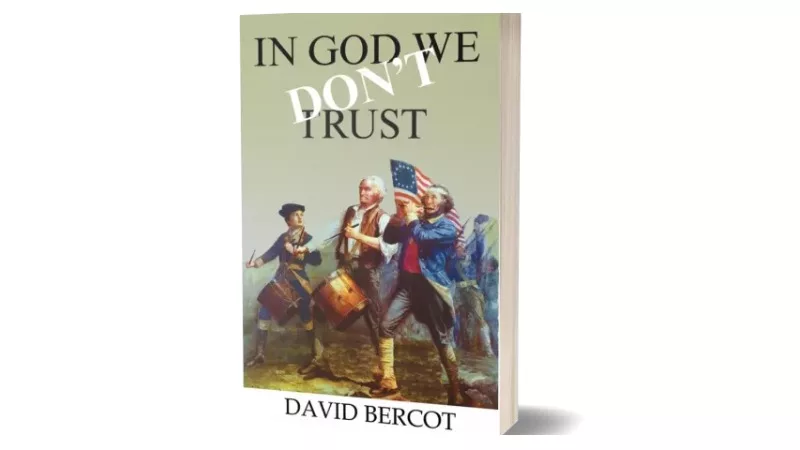
In God We Don't Trust is a free course built around David Bercot’s examination of American founding history in light of Jesus’ teachings. The lessons begin with the meaning of trust: not a slogan, but obedient confidence in God when His commands feel costly. From there, the course looks at English colonization, treatment of Native peoples, tobacco, rum, slavery, Puritan New England, and William Penn’s Pennsylvania as a contrasting example.
The second major section turns to the American Revolution, asking whether colonial resistance, tax refusal, mob action, and armed rebellion fit New Testament commands about government, enemies, and the kingdom of God. Later lessons consider George Washington stories, the Declaration of Independence, the Constitution, Loyalists, enslaved people, Native Americans, and Christians who refused to fight. The course closes by pressing the question back on modern Christians:
The opening chapter uses Bercot’s account of an earthquake in Costa Rica and following a truck through dangerous mountain roads to illustrate total trust. It then introduces the course’s main question: whether America’s founders truly trusted God or merely used religious language.
- What does real trust feel like in a dangerous situation?
- Why is verbal trust not the same as obedient trust?
- Why does the course question the religious image of America’s forefathers?
This chapter compares colonial charter language about evangelizing Native peoples with the violent and dispossessing policies that followed. It argues that professed gospel aims were contradicted by the methods used against Native inhabitants.
- What did colonial charters say about spreading Christianity?
- How did English policies affect Native peoples?
- Why does the course call these methods the wrong way to spread the gospel?
This lesson applies Jesus’ commands, including the Golden Rule, loving enemies, and being harmless as doves, to the question of colonization. It argues that peaceful settlement and fair dealing were possible and points to figures such as Roger Williams and William Penn.
- How would the Golden Rule apply to settling another people’s land?
- What would love for enemies have required of Christian settlers?
- Could colonies have been planted without violence?
The chapter examines Jamestown, economic motives, tobacco, and the colony’s treatment of the Powhatan people. It argues that trust in profit and survival by human means produced tobacco, slavery, and violence rather than obedience to Christ.
- Why were many early colonies founded for profit?
- How did tobacco shape Jamestown’s economy?
- What connection does the course make between commerce and failure to trust God?
This lesson discusses the people later called Pilgrims, their Separatist background, and their use of armed force. It highlights criticism from their own pastor and from Native voices about violence carried out by professing Christians.
- Who were the Pilgrims before they were called Pilgrims?
- How did the Plymouth colony respond to perceived threats?
- Why does the lesson say they trusted in guns?
The lesson examines John Winthrop’s city-on-a-hill sermon, the founding of Massachusetts Bay, Puritan politics, and the Mystic Massacre. It argues that Puritan New England failed to embody Jesus’ kingdom teachings despite its lofty language.
- What did Winthrop mean by a city upon a hill?
- How did Puritan ideals compare with Puritan actions?
- Why does the Mystic Massacre matter in the course’s argument?
This chapter focuses on Puritan religious intolerance, Roger Williams, Quaker persecution, and the Salem witch trials. It argues that reliance on the state and the sword blemished the name of Christ.
- How did Puritan New England handle religious dissent?
- What did Roger Williams challenge?
- How does the course interpret the Salem witch trials through Jesus’ teachings?
The lesson describes New England’s involvement in slave trafficking and the rum-based Golden Triangle. It emphasizes how deeply the profits of rum and slavery reached into colonial society.
- What role did New England play in slave trafficking?
- How did the Golden Triangle work?
- Why does the course connect rum, slavery, and Mammon?
This chapter describes another trade triangle involving fish, molasses, rum, and furs. It argues that selling rum to Native peoples was destructive and unnecessary, since the colonies had many lawful and useful industries.
- What was the other triangle of evil?
- How did rum affect Native communities?
- What alternatives did colonial economies have?
The lesson presents William Penn’s Pennsylvania as a holy experiment built around the Golden Rule, religious liberty, and fair treatment of Native peoples. It contrasts Penn’s approach with violence and coercion in other colonies.
- What was William Penn’s holy experiment?
- How did Penn deal with Native peoples?
- Why does the course treat Pennsylvania as an important counterexample?
This chapter begins the course’s section on the American Revolution by rejecting the language of inevitable causes. It frames rebellion as a moral choice and introduces questions about rights, Scripture, charters, and English law.
- Why does the course prefer choices over causes?
- Where do human rights come from?
- Why does the course examine charters and English law?
The lesson argues that the colonists came to America under the king’s authority through colonial charters. It describes the rights and benefits they received while remaining subject to the English crown and Parliament.
- Did the colonists settle America independently of England?
- What did colonial charters grant and require?
- Why does the lesson ask whether Christians may rebel against government?
This chapter centers on Romans 13 and the command to be subject to governing authorities. It also examines claims about British economic oppression, including manufacturing restrictions and trade protectionism.
- What does Romans 13 say about resisting government?
- Were the colonies broadly prohibited from manufacturing?
- How does the course compare British and later American protectionism?
This lesson reviews the Navigation Acts, the Staple Act, and the Molasses Act. It argues that common textbook portrayals are misleading and that colonists should have pursued lawful relief rather than lawbreaking.
- What did the Navigation Acts actually require?
- Why was the Molasses Act passed?
- What lawful options did the colonists have?
The chapter applies Jesus’ command to render to Caesar to colonial smuggling and tax evasion. It argues that widespread participation in smuggled goods revealed a lawless spirit despite colonial prosperity.
- How did the colonists respond to the Molasses Act?
- Why does the course call smuggling a failure to trust God?
- What benefits did the colonists receive from belonging to the British Empire?
This lesson explains how the French and Indian War changed relations between Britain and the colonies. It discusses colonial smuggling during the war, the Royal Proclamation of 1763, British debt, and Grenville’s tax plans.
- How did the French and Indian War affect Britain and the colonies?
- What was the Royal Proclamation of 1763?
- Why did Britain seek colonial revenue after the war?
The chapter presents the Stamp Act as a test of whether colonists would obey God’s commands about taxes and authorities. It contrasts violent colonial resistance with the responses of other British colonies.
- Why did Grenville choose a stamp tax?
- How did the thirteen colonies respond?
- How did other British colonies respond differently?
This lesson challenges common claims about no taxation without representation and colonial consent. It discusses British constitutional arguments, the colonists’ claims, and Benjamin Franklin’s testimony that helped lead to the Stamp Act’s repeal.
- Was no taxation without representation the main colonial slogan?
- What did the colonists mean by consent?
- Why did Parliament repeal the Stamp Act?
The chapter follows Parliament’s move to external taxes through the Townshend Acts and the colonists’ changed objections. It also addresses quartering claims and writs of assistance in the context of smuggling enforcement.
- How did the colonists respond to the Townshend Acts?
- What does the course say about quartering soldiers in homes?
- Why were writs of assistance used?
This lesson describes the Boston Massacre, the Gaspee incident, and the destruction of tea in Boston Harbor. It portrays these events as examples of escalating mob action and refusal to honor lawful authority.
- What happened before the Boston Massacre?
- What was the Gaspee incident?
- Why does the course call the Boston Tea Party destructive lawlessness?
The chapter compares mob pressure in the colonies with later examples of civic disorder and highlights John Wesley’s attempt to reason with the colonists. It returns to the New Testament command to obey governing authorities unless obedience to man directly violates God’s law.
- How does mob rule shape political crises?
- What arguments did John Wesley make to the colonies?
- When is disobedience to government proper, according to the lesson?
This lesson outlines lawful, nonviolent responses the colonists could have used: paying taxes, seeking repeal, lobbying Parliament, supporting sympathetic candidates, and voluntary boycotts. It stresses that Christians should stay within the boundaries set by God and man.
- What should Christians do when taxes seem unfair?
- What lawful political tools were available to the colonists?
- Why were violence and threats unacceptable?
The chapter argues that the colonists lacked faith and trust in God’s goodness. It contrasts the fruit of the Spirit with revolutionary agitation and critiques the hypocrisy of declaring equality while maintaining slavery.
- What spiritual quality does the course say was lacking?
- How does the fruit of the Spirit contrast with revolutionary behavior?
- Why does the Declaration’s language of equality raise a charge of hypocrisy?
This lesson examines colonial ministers who supported resistance and war, especially the Black Regiment. It argues that they twisted Scripture to tell the people what they wanted to hear instead of calling them to obedience.
- What does it mean to preach to tickle the ears?
- Who were the Black Regiment?
- How did pro-revolution preachers handle Romans 13?
The chapter critiques later Christian authors and textbook publishers who praise revolutionary preachers and portray the Revolution as a holy cause. It also discusses misrepresentation of quartering and warns against situational ethics.
- How do later Christian writers defend the Revolution?
- What example does the lesson give about the Quartering Act?
- Why does the course connect revolutionary justification with situational ethics?
This lesson argues that victory in war does not prove God’s approval. It emphasizes French aid, other foreign support, colonial conscription, and practical military factors behind American victory.
- Does winning a war prove God is on the victor’s side?
- How important was French support to the American victory?
- What role did conscription and home-territory fighting play?
The chapter evaluates the popular story of George Washington praying in the snow at Valley Forge. It argues that the story comes from Parson Weems, an unreliable source, and conflicts with other evidence about Washington’s religious practice.
- Where did the Valley Forge prayer story come from?
- Why does the course question Parson Weems as a source?
- What does the lesson say about Washington’s church practice?
This lesson distinguishes genuine trust from religious slogans and public God-language. It critiques the Declaration of Independence’s claim that government authority comes from the governed and argues that giving God credit after disobedience is not true trust.
- What is fake trust?
- How does the course read the Declaration of Independence biblically?
- Why is giving God credit not enough?
The chapter describes how nonresistant Kingdom Christians, including groups such as Quakers, Brethren, Moravians, and Mennonites, suffered under revolutionary authorities. It discusses oaths, fines, confiscation, travel restrictions, and pressure to support the war.
- How were nonresistant Christians treated during the Revolution?
- Why did some Christians refuse oaths and military service?
- What liberties did revolutionary governments take away?
This lesson argues that Native Americans were among the greatest losers of the Revolution. It discusses the Royal Proclamation, Native alliances, the Moravian massacre, the Treaty of Fort Pitt, and later patterns of land seizure.
- Why did many Native peoples side with the British?
- What happened to the Moravian Indians described in the lesson?
- How did the Revolution affect Native land and survival?
The chapter considers Loyalists and enslaved Black people as groups harmed by the Revolution. It describes confiscations, exile, forced allegiance, British offers of freedom to enslaved people, and the later entrenchment of slavery in the United States Constitution.
- Who were the Loyalists?
- How were Loyalists treated by revolutionary governments?
- How did the Revolution affect enslaved Black people?
This lesson describes the human and economic costs of the Revolution, including deaths, trade disruption, inflation, and hardship. It also notes that the new United States later used taxes and force in ways similar to policies colonists had condemned.
- What costs did independence bring to Americans?
- How did the Revolution affect trade and the economy?
- Why does the Whiskey Rebellion matter in the course’s argument?
The chapter argues that God was intentionally omitted from the United States Constitution. It compares state constitutions, discusses Franklin’s failed prayer motion at the Constitutional Convention, and cites the Treaty of Tripoli’s statement about the United States not being founded on the Christian religion.
- Why does the course say God was written out of the Constitution?
- How did many state constitutions differ from the federal Constitution?
- What does the lesson make of the Treaty of Tripoli?
This lesson asks what might have happened if the colonists had obeyed God rather than revolting. It argues that God’s purposes would not have been thwarted by obedience and connects that claim to independence, Christian unity, and the abolition of slavery.
- Would obedience have thwarted God’s purposes for America?
- How does the lesson compare national loyalty with loyalty to Christ?
- What does the course argue about slavery ending without the Revolution?
The final substantive chapter turns the argument toward modern Christians. It challenges readers who praise disobedient forefathers, revisits Jonathan Mayhew’s influence, and calls believers to place allegiance to Jesus’ kingdom above national identity.
- Do modern Christians trust God differently than the colonists did?
- Why does the course criticize the praise of disobedient forefathers?
- What does it mean to be Christians who happen to be Americans rather than Americans who happen to be Christians?
The available transcript for this lesson contains only closing credits for the audiobook, naming the work, author, publisher, and narrator. No additional teaching content is present in the supplied sample.
- Who wrote the audiobook?
- Who narrated the audiobook?