
Can Christians really identify the Antichrist or the mark of the beast? Will Jesus set up a future earthly kingdom? Explore what the early Christians believed about end-time prophecy and separate biblical truth from popular speculation.

This course is free to access. The Historic Faith is donation-funded, with no paywall and no subscription required. Generous supporters help keep these lessons open to anyone in the world.

Course Content

Play Without Quiz Interruptions

Plays through this course continuously and skips quiz and discussion stops. On desktop, this opens the normal playlist player with your current place.

Free Course Guide

What This Free Course Covers

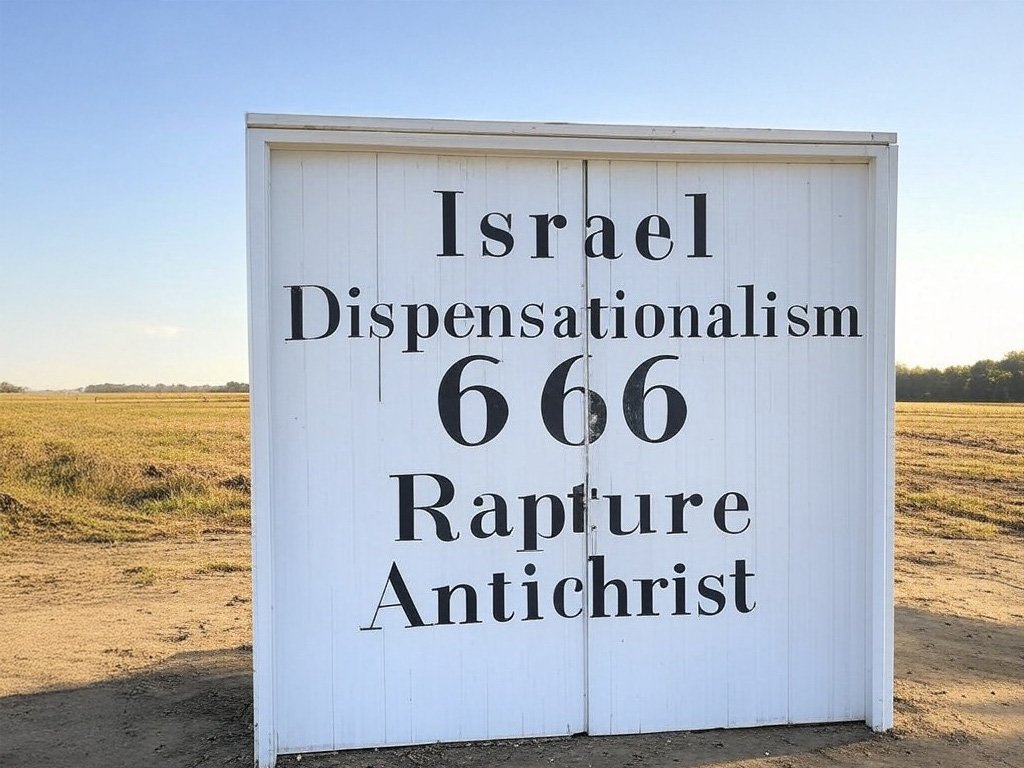
In this free course, David Bercot examines Bible prophecy and related doctrines through the writings of the early Christians. The lessons begin with life after death and the intermediate state, then move to Christ’s descent into Hades, the meaning of 666, the Antichrist, the millennium, and the rapture. Later lessons focus on Israel, the Israel of God, Romans 11, modern claims about Israel and prophecy, and the rise of dispensationalism in the early 1800s.

Throughout the course, Bercot compares modern assumptions with passages from Scripture and with early Christian interpretations. He repeatedly cautions students not to treat prophecy as a field for speculation or fear, but to read carefully, consider the historic Christian witness, and focus on faithfulness to Jesus Christ.

Life after death Hades and paradise Resurrection 666 and Antichrist Millennium and rapture Israel of God Old and New Covenants Dispensationalism Prophecy and speculation Faithfulness to Christ

What You Will Study

  • Early Christian teaching on life after death, Hades, the resurrection, and the return of Christ
  • The meaning of the Apostles’ Creed phrase that Christ “descended to hell”
  • How Revelation 13, 666, and the mark of the beast were understood in relation to John’s original readers
  • Early Christian cautions about naming the Antichrist or building prophecy systems on speculation
  • The millennium, Revelation 20, the resurrection of the dead, and the rapture
  • Early Christian teaching about Israel, believing Jews and Gentiles, and the Israel of God
  • Questions about modern Israel, Old Testament prophecy, and political attempts to fulfill prophecy
  • The rise of dispensationalism, J. N. Darby’s teaching, and Bercot’s critique from Scripture and early Christian sources

Questions This Course Helps Answer

  • What did early Christians believe happens to people after death?
  • What is the intermediate state, and how does Bercot distinguish Hades from heaven?
  • What did early Christians mean when they said Christ descended into hell?
  • How did Bercot explain the number 666 in Revelation 13?
  • Why does Bercot warn against dogmatically identifying the Antichrist’s name?
  • What views about the millennium existed among early Christians between about 100 and 300?
  • How did early Christian writers connect the rapture with Christ’s return and tribulation?
  • Who is the Israel of God according to the course’s reading of Scripture and early Christian writings?
  • How does the course handle Paul’s statement that “all Israel will be saved”?
  • What questions does Bercot raise about modern Israel and Bible prophecy?
  • How did J. N. Darby’s dispensationalism differ from earlier Christian understandings of the covenants?
  • How does Bercot use Hebrews to address claims about a renewed temple, sacrifices, and Mosaic Law?

Lesson-by-Lesson Guide

Life After Death

Bercot surveys what early Christians believed about what happens after death, especially the intermediate state in Hades and the resurrection at Christ’s appearing. He contrasts this with several later or modern views and urges students to read the full range of New Testament passages together.

  • What happens to believers after death according to the early Christian view presented here?
  • What is Hades, and how is it related to the resurrection?
  • Why does Bercot question the common claim that believers go straight to heaven when they die?
  • How should Christians weigh Scripture and early Christian testimony together?
Christ's Descent Into Hades

This lesson explains the ancient creed’s statement that Christ descended into hell, with attention to early Christian teaching about Christ preaching to those in Hades. Bercot distinguishes Hades, paradise, and heaven while acknowledging questions the sources do not fully answer.

  • What did the Apostles’ Creed mean by saying Christ descended into hell?
  • How did early Christians understand Christ preaching to the dead?
  • How does Bercot distinguish paradise from heaven?
  • What questions about Hades does Bercot leave unresolved?

666 and the Antichrist

Bercot discusses Revelation 13, the number 666, and early Christian comments about possible names for the Antichrist. The lesson emphasizes that prophecy should not lead to fear or obsession, but to faithful love for God and obedience to Christ.

  • What did 666 mean to John’s Greek-speaking readers?
  • Why did Irenaeus avoid dogmatically naming the Antichrist?
  • How does Bercot respond to modern fears about barcodes, credit cards, or similar claims?
  • What kind of readiness does Bercot say matters most?

The Millennium and Rapture

This lesson considers Revelation 20, the millennium, the resurrection of the dead, and the rapture. Bercot describes two early Christian views on the millennium and says the main issue is not winning debates about timing, but being faithful when Christ returns.

  • How did early Christians interpret Revelation 20?
  • Did early Christians expect a literal millennium on earth?
  • How did Bercot describe early Christian views of the rapture?
  • Why does he warn against focusing on prophecy debates more than faithfulness?

Israel – Part 1

Bercot introduces early Christian teaching about Israel in three points: the kingdom was taken from unfaithful fleshly Israel, believing Jews and Gentiles together make up the Israel of God, and Scripture points to a future turning in some sense. He supports the discussion with both early Christian writings and biblical passages.

  • How did early Christians understand the rejection of fleshly Israel?
  • Who belongs to the Israel of God in this lesson’s argument?
  • How does Bercot use John the Baptist’s words about Abraham’s children?
  • What problem does Romans 11 raise for interpretation?

Israel – Part 2

The second Israel lesson continues the discussion of Romans 11, Old Testament prophecy, and the modern state of Israel. Bercot weighs possible interpretations, notes where early Christian evidence is limited, and cautions against using human political means to force prophetic fulfillment.

  • What possible meanings does Bercot consider for a future turning of Israel?
  • How does he approach Old Testament prophecies about Israel?
  • What does he say about Zechariah and the Mount of Olives passage?
  • Why does he question attempts to fulfill prophecy through political or military means?

Dispensationalism – Part 1

Bercot introduces dispensationalism through J. N. Darby and contrasts Darby’s teaching with earlier Christian views of the covenants, the church, Israel, and the kingdom of God. He argues from Jesus’ parables and sayings that the kingdom is given to those who bear its fruit.

  • Who was J. N. Darby in Bercot’s account of dispensationalism?
  • How does dispensationalism describe the church age?
  • How does Bercot contrast Darby’s view with earlier Christian teaching?
  • What does Jesus’ parable of the vineyard contribute to the argument?

Dispensationalism – Part 2

This lesson addresses further dispensationalist claims, including arguments about the Mosaic Law, a rebuilt temple, sacrifices, and Israel. Bercot uses Hebrews to argue that the old covenant was a shadow fulfilled in Christ, then discusses modern Israel, Zionism, and related political questions.

  • Does Bercot think the Mosaic Law remains valid for Jews as a separate covenantal system?
  • How does Hebrews shape his argument about temple sacrifices?
  • What questions does he raise about the modern state of Israel and prophecy?
  • How does he connect political history with Christian responsibility?

Survey: Future Things

This is a survey item for the Future Things course. No transcript sample was supplied, so no teaching content can be summarized from the provided source.

What students are saying

4.83 out of 5 — 53 reviews
Noah Steiner Sep 1, 2026
★★★★★
Solid historical and scriptural teaching much needed in our day. “Modern-day Christians must have their eyes wide open.” Amen!
Daniel Segura Jul 20, 2026
★★★★★
So many good things to share about this series. David Bercot’s audio of the ante-nicene Christian view of the intermediate state and afterlife is what initially turned me onto his work when I stumbled upon it on youtube. This enlivens the NT emphasis on the resurrection and the Father as the transcendent God whom Jesus is preparing us to meet at the end. It immediately made sense and shocked me that the predominant view of flying straight to heaven bodiless is explicitly decried as having pagan Greek and gnostic origin. The topic of true Israel and Dispensationalism is as relevant as ever…
Gordon Miller May 12, 2026
★★★★★
I’ve enjoyed this course very much. It is a great help in sorting out the many narratives that are being pushed in relation to end times, and fulfillment of Bible prophecy.
Keely Willis Dec 27, 2025
★★★★★
Thank you! This course is a helped me understand these prophecies and what dispensationalism is really all about.
Verified Student Aug 27, 2025
★★★★★
This course was highly informative, I was especially enlightened by the discussion on Israel. Thank you.
Help spread the message. Every honest review helps more people discover this teaching through Google and word of mouth. If this course has helped you, sharing a few sentences is one of the simplest ways to support the mission — it’s free, takes about a minute, and reaches people we may never meet.
Divine Secrets: Decoding 666, Antichrist, and the Rapture

Preview this Course

+543 enrolled
Start Course

Open Registration

Course Includes

  • 9 Lessons
  • 8 Quizzes
  • Course Certificate