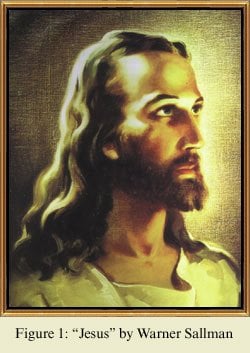
Hi, I'm David Bercot, and tonight we're going to be talking about what did Jesus look like? The face of Jesus is one of the most recognizable faces in the world. I remember seeing pictures of him from the time I was five or six years old, and when I would see them, I knew immediately," Oh, that's Jesus." In 1940, an artist named Warner Sallman painted a portrait of Jesus that became one of the most reproduced paintings of all time. That painting is figure number one.
When I was young, you saw this Sallman portrait of Jesus everywhere. It was in people's homes, Sunday school classes, all sorts of Christian and secular books. And when I was little, I thought," Oh, that's exactly what Jesus looked like." In this famous painting, Jesus has a lean face with long, flowing light brown hair that reaches down to his shoulders. He also has fair skin and blue eyes. And that's exactly how probably most people in the United States came to picture Jesus.
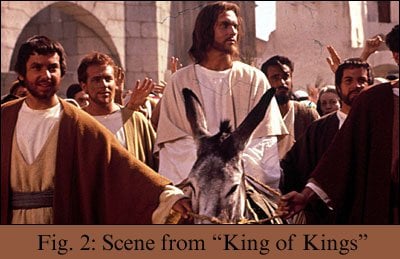
Now, when I was 11 years old, I remember going with my family to see the movie" King of Kings," which was about the life of Jesus. Now, in this movie, a scene from which is figure number two in our pictures, Jesus was portrayed by an actor named Jeffrey Hunter. And very similar to the famous Sallman painting, in King of Kings, Jesus had shoulder-length golden brown hair. He was fair-skinned with blue eyes.
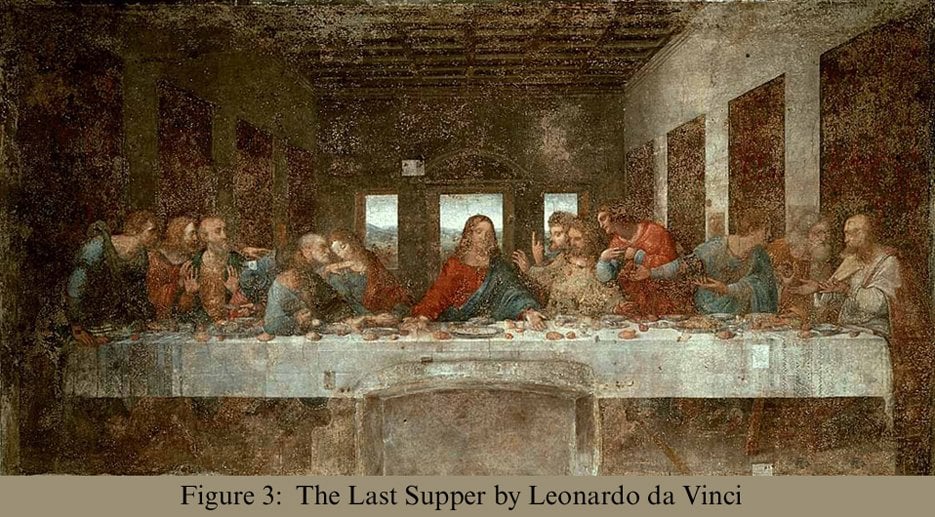
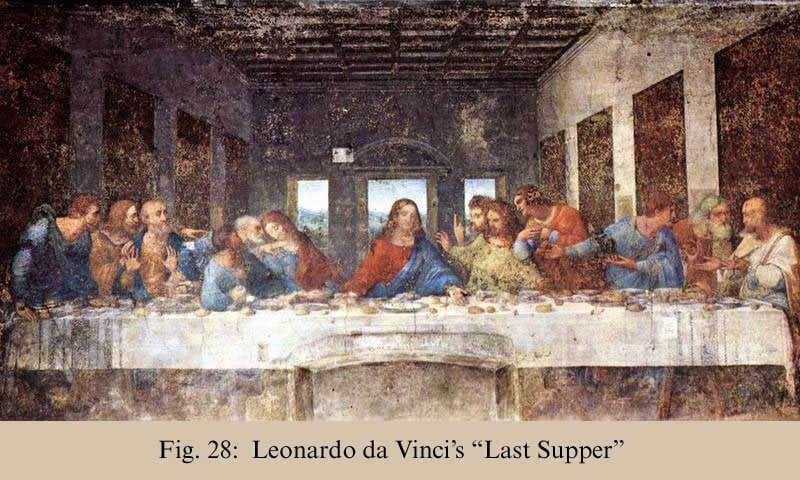
Probably the most famous painting of Jesus of all time is Leonardo da Vinci's Last Supper, which is figure number three. And again, in this painting, Jesus has golden brown, shoulder-length hair, and fair skin. Now, it would be logical to assume that there's some historic basis for these various paintings and portrayals of Jesus. As I said, when I was a little boy, I assumed, well, that just must be what Jesus looked like. Someone must have painted a picture of him when he was still alive.
But the truth is, no one painted any such picture while Jesus was living. Well, did perhaps someone who was an eyewitness of Christ leave a detailed description of him in a writing that people were able to use to paint accurate pictures of him? Again, the answer is no. There are no eyewitness descriptions of Jesus. So all of these familiar pictures that we've seen of Jesus that we can identify so quickly, they're all simply guesses. But are they historically based guesses?
Is there some scientific basis for portraying Jesus this way? Again, the answer is no. So the question is, now if someone were to paint a picture of Jesus based on the historic and scientific evidence, what sort of picture would they come up with? What would be the color of his skin and the color of his eyes? Would he be bearded? How long would his hair be? Would he be a handsome man? How tall would he be?
Well, tonight we're going to do such an historic analysis about what the real Jesus would have probably looked like. Let's see what we come up with. Now the place we're going to begin for our historic evidence are the Scriptures themselves. The gospels do not give us a description of what Jesus looked like. However, they do furnish one important clue, and that clue is given in the description of Jesus' arrest. Let me read to you what Matthew said about that.
He says," And while he was still speaking, behold, Judas, one of the 12, with a great multitude with swords and clubs, came from the chief priests and elders of the people. Now his betrayer had given them a sign saying," Whomever I kiss, he is the one seize Him." Let me now read a description of the same event from the apostle John. He said," Then Judas, having received a detachment of troops and officers, came there with lanterns, torches, and weapons.
Jesus went forward and said to them," Whom are you seeking?" They answered Him," Jesus of Nazareth." Jesus said to them," I am He." And Judas, who betrayed Him, also stood with them. That's John 18 verses 3-5. Now, those descriptions don't tell us very much, but they do indicate one very important thing, and that is, Jesus apparently looked very much like the other Jews of His day. I say that because Judas' method of identifying Jesus was by coming up to Him and kissing Him.
Apparently, there was no distinguishing feature that Judas was able to give the officers to describe him beforehand. In other words, he wasn't able to say, well, now he'll be the tallest one there, or he's the one with red hair, or he's the one who wears his hair in braids, or in a ponytail, or something like that. The fact that he had to kiss him to identify him strongly suggests that Jesus blended in the crowd. He didn't look any different from any other Jewish man of his day.
Now, the Old Testament also gives us some important clues as to what Jesus looked like. Isaiah 53:2 is a prophecy about Jesus. It says," He has no form or comeliness. And when we see Him, there is no beauty that we should desire Him." Now, our human tendency is to want to portray Jesus as this handsome man. But the prophecy of Isaiah 53 would indicate that Jesus wasn't particularly handsome. People were not attracted to Him because of His looks.
Citing that passage in Isaiah, Clement of Rome, who lived not that long after Jesus was on earth, said," Our Lord Jesus Christ did not come in the pomp of pride or arrogance, although he might have done so. Rather, he came in a lowly condition as the Holy Spirit had declared regarding Him." For it says," He has no form nor glory. Yes, we saw Him, and He had no form nor comeliness.
But His form was without eminence, yes deficient in comparison with the ordinary form of men." Tertullian wrote," The first coming was in lowliness, when he was not handsome to look upon." Well, before leaving the scriptures, I want to look at one other source of evidence from the Old Testament, and that is Leviticus 19:27.
This is part of the Mosaic Laws, and it says," You shall not shave around the sides of your head, nor shall you disfigure the edges of your beard." Some translations say you shall not cut the corners of your beard. Now, no one knows for certain exactly what that commandment means. What did it mean to disfigure the edges of your beard or to shave around the sides of your head? But one thing is fairly clear from that commandment, and that is, it was assumed a Jewish man was wearing a beard.
So in summary, what have we gleaned from the Scriptures? Well, one that Jesus blended in the crowd. He didn't have any distinguishing features that would make him stand out in a crowd of other Jewish men. Number 2: He wasn't strikingly handsome, people were not attracted to him by his good looks, and three, like other Jewish men, he would have worn a beard. As I've already mentioned, we don't have any paintings or sculptures of Jesus that were made by someone who had actually seen him.
So in this life, we're never going to know what Jesus looked like, not in the sense that we know what Abraham Lincoln looked like, or John Wesley, or someone like that. The most we can hope to know are some of the likely characteristics of his appearance, such as how long would he have probably worn his hair? What was the likely color of his hair? Did he have a beard? If so, how long would it have been? What was the probable color of his skin? Things like that, we can make reasonable historical estimations.
Because even though we have no sculptures or paintings of Jesus that were made during the first century, we do have paintings and sculptures of Roman, German, Greek, Egyptian, Samaritan, and Jewish men who lived around the same period as Christ. So we do know what other men look like in his day. Let's begin with the Romans. Now it's fairly safe to say that Jesus, being a Jew, would not have dressed and groomed himself exactly like a Roman. Rather, he would have dressed and groomed himself like other Jewish men.
However, like everyone else in the Mediterranean world, the Jews were very heavily influenced by both Greek and Roman culture. The length of their hair and their beards were influenced by how the Greeks and Romans wore their hair and beards. You shouldn't think of the Jews as this monolithic culture that wasn't influenced by the nations around it. In fact, from reading the Old Testament, we know from day one they were influenced by the other peoples who lived around them and who governed them.
John and Peter would not have groomed themselves like Moses and Aaron. They would have groomed themselves similar to other men who lived in their time period. Just like 21st century Christians, we don't groom ourselves the way that 18th century Christians did or the way 14th century Christians groomed themselves.
Even Christian groups that try not to follow the fashions and fads of the world, they still are influenced by the rest of society and how they wear their beards or not having a beard and how long they cut their hair. A Mennonite man living today does not look like a Mennonite who lived in the year 1700. So separation from the world doesn't mean that people take on an entirely different form of grooming.
Even the Old Order Amish, who are probably best known for standing out from the world that is around them in the way that they dress and carry on their life. They don't look like someone from the early Anabaptist movement, nor do they look like men in the days of Jesus. They don't wear robes the way the early Christians did, and things like that. So it's in that sense that I'm saying that Jewish men in the first century didn't look like Jewish men who had lived 1,500 years before them.
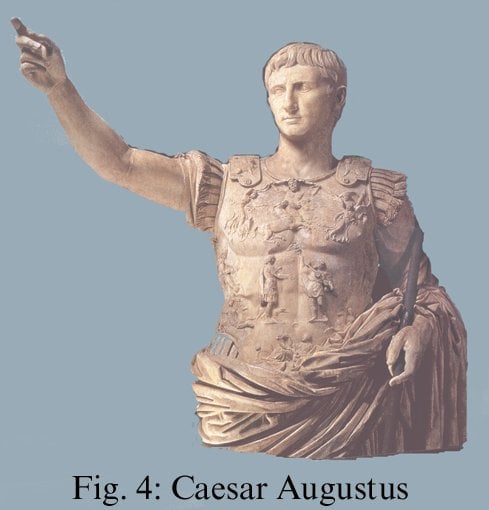
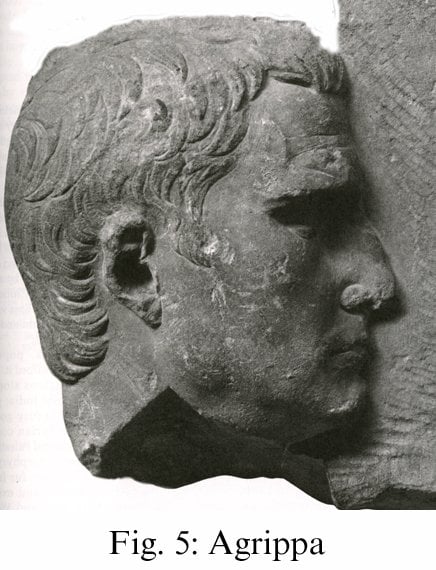
So let's look at some of these pictures of Roman men. Pictures number four through eight are all Roman men. Picture number four is Caesar Augustus, the Caesar who ruled Palestine at the time that Jesus was born. You'll notice he doesn't wear a beard, and his hair is cropped fairly short. Picture number five is an officer of Augustus named Agrippa, not Herod Agrippa, who is mentioned in the Scriptures. This is a different one.
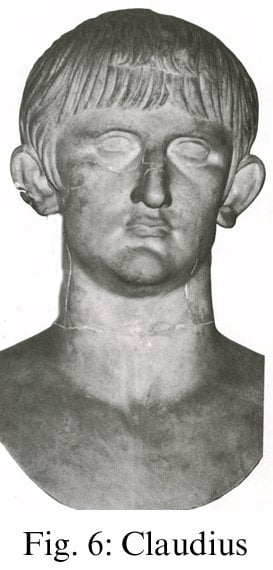
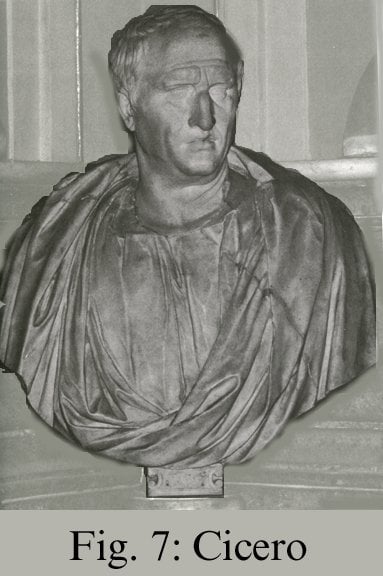
And we have a very good view of his head, showing hair that is quite short, that could pass for the way men wear their hair in America today. And again, you notice he doesn't have a beard. Picture number six is the Emperor Claudius, who was the ruling emperor during the time of much of Paul's ministry. Again, you'll notice fairly short-cut hair and no beard. Picture number seven is Cicero, a statesman who served during the time of Nero.
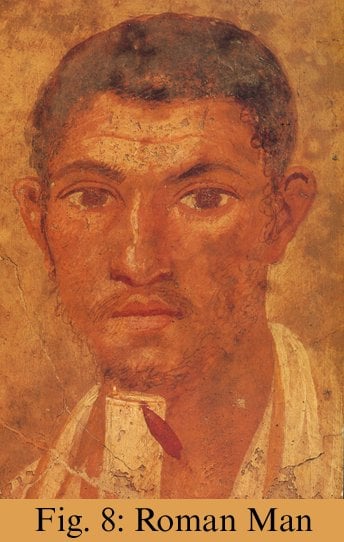
Again, hair that is fairly short, that could pass for 20th or 21st century hair, and no beard. Now, some Roman men did wear beards, but in the first century, the vast majority of them did not. Now, picture number eight is of a first-century Roman man. If you look closely, you'll notice there's a very faint beard on him. Now, as I said, it's highly unlikely, in fact, it's virtually certain that Jesus would not have groomed Himself as a Roman.
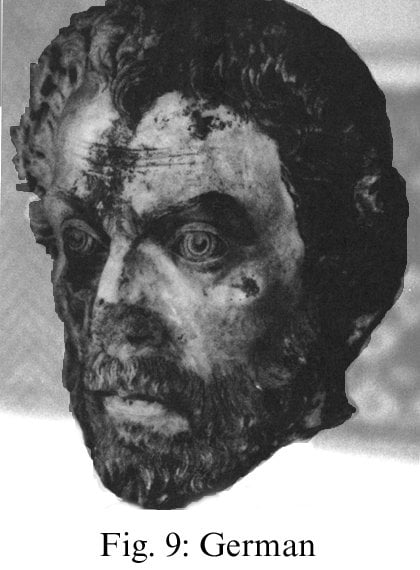
But these pictures do tell us how many of the Gentiles who lived in Palestine during the time of Jesus, how they probably looked. Now, picture number nine is of a Germanic man from the first century. You'll notice that his hair is a bit longer than that of the Romans, but it's still relatively short. It comes nowhere close to touching his shoulders. And he stands out from those sculptures of Roman men because he wears a beard.
In fact, when we look at the paintings and sculptures that we have of different men who lived in the first century in the Mediterranean world, we notice that virtually all of them wear beards except the Romans. Now, when we look at this sculpture of a Germanic man, we notice that his beard is fairly well trimmed. It extends less than an inch below his chin. That's a bit different from what I would have imagined at one time in my life. And likewise, as I said, his hair is relatively short.
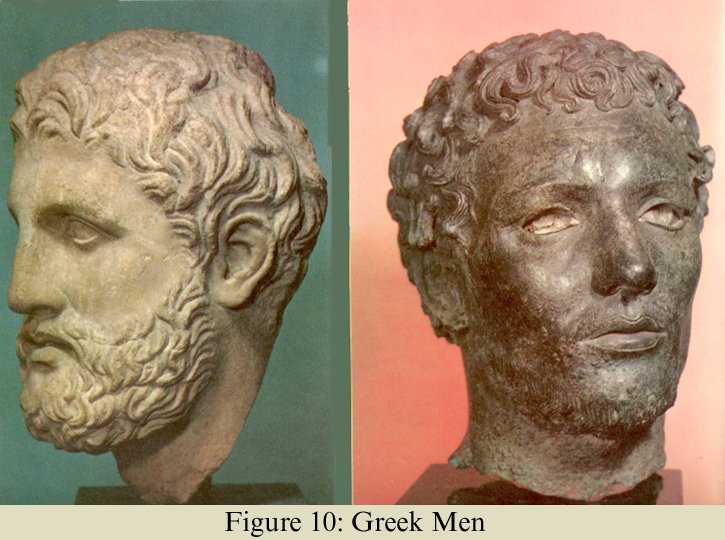
I would have pictured a German from that time period of having hair down to his shoulder. Okay, we've looked at Roman men and a sculpture of a Germanic man. Let's start moving eastward towards Palestine where Jesus lived. Our first stop will be Greece. A picture number 10 are two sculptured heads of Greek men. Again, you'll notice that the hair on these men is relatively short, perhaps a little bit longer than those of some of the Roman men, but it doesn't even extend over their ears.
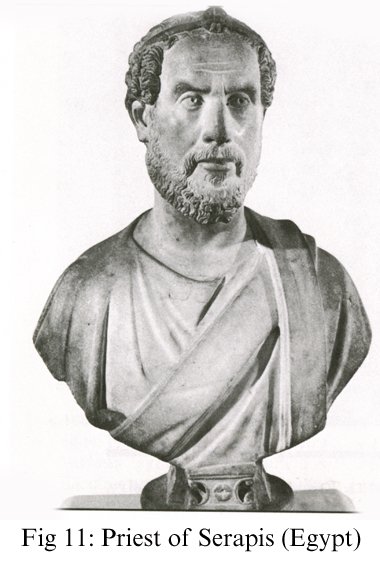
You'll also notice that their beards are trimmed fairly short. Now what the Greeks look like in that time period is very important because most of the Middle East had been ruled by the Greeks until shortly before Christ's birth. And Greek culture enormously influenced the cultures of the Mideastern peoples. And this becomes very obvious when you look at sculptures and paintings of Middle Eastern men who lived during this time period. For example, picture number 11 is a sculptured bust of a priest of Serapis.
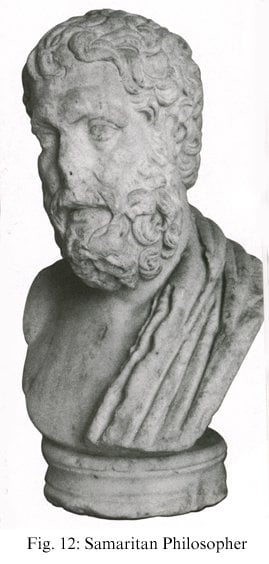
Serapis was an Egyptian deity. And the priest looked very much like the Greek men we just looked at, which isn't surprising because the Greeks had ruled Egypt for many centuries. You'll notice, again, fairly short hair that doesn't even cover his ears, and a well-trimmed beard. At picture number 12, we move even closer to Palestine. This is a bust of a Samaritan philosopher from the 1st century. You'll notice that his hair is a bit longer from the other pictures we've seen, but it's nowhere near shoulder length.
His beard is also fuller than the beards of the other men we've looked at. It extends perhaps even an inch below his chin. But I should mention that philosophers in the ancient world wore their beards longer than did other men. So his beard may be longer than what was worn by the typical Samaritan man of his day. But even then, like I say, his beard is not particularly long, nor is his hair.
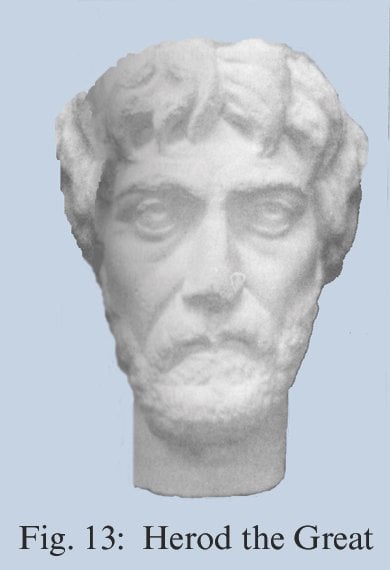
Okay, now we come to one of the most important clues we have as to Jesus' appearance, at least on the questions of how long would he have worn his beard, and how long was his hair? Because picture number 13 is a bust of Herod the Great. He was the king who ruled Judea when Jesus was born, and he was a Jew. Now when I say he was a Jew, he was actually an Edomite by birth. But several generations before his time, the Edomites had all converted to Judaism. So Herod was a practicing Jew living under the law.
It's reasonable to assume that he would have looked somewhat like the other Jews of his day, at least the way he wore his hair in his beard. Now the sculpture of his head reveals that he wore his hair a little bit longer than did the Greeks and the Romans. In fact, his hair covers the upper part of his ears, but it's nowhere as near being shoulder length. And his beard is fairly well trimmed. It's similar in length to that worn by the Greeks of his day.
Now, if I were an artist, which I'm not, and I was trying to paint a realistic picture of Jesus, I personally would use this bust of Herod as my model for the length of Jesus' hair and beard. Because this is the closest we have of a Jewish man living at the same time period as did Jesus. So what have we learned from looking at these various men from the first century? Well, remember, going back to his arrest in Gethsemane, Jesus apparently did not stand out in any way from other Jewish men of his time period.
But a man with shoulder-length hair, or a man with a beard down to the middle of his chest, would have certainly stood out. So would a Jewish man who was not wearing a beard. So from this historical evidence that we've seen up to this point, I think it's fairly safe to say that Jesus' hair would not have been shoulder length. Now let's talk about the paintings in the catacombs and whether or not they shed any light on what the historical Jesus looked like.
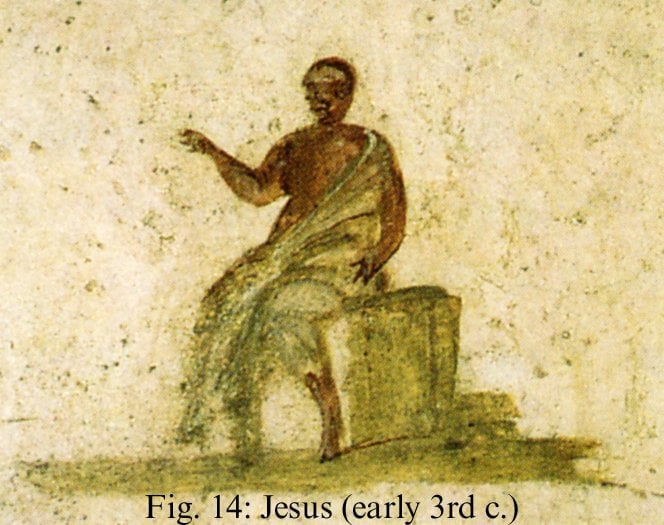
Figure number 14 is one of the earliest paintings that we have of Jesus. It dates back to the early 200s, and it appears on one of the walls in the catacomb of Callistus outside the city walls of Rome. Figure 14 is actually a cropped portion of a scene showing Jesus seated while he was talking to the Samaritan woman at the well. Now at first, it might sound like this painting is extremely valuable in helping us to know what the real Jesus looked like, since it dates back to nearly the year 200.
But in truth, it actually tells us nothing about how the real Jesus looked. The reason is that the paintings in the catacombs are our earliest example of the practice of painting Jesus to look the same way that people looked in the time period and geographical area in which the artist lived. So the primitive artists who painted these early pictures in the catacombs painted Jesus to look the way that Roman Christians looked in the early 200s.
The pictures tell us what the artists probably look like and what other Christians in their time period and locale look like. But they tell us nothing about the way that the real Jesus looked. As you can see, Picture 14 is very primitive, and there's been a lot of decay and discoloration to the picture over the centuries. Jesus appears to be beardless in the picture, although it's a little hard to tell because of the ravages of time.
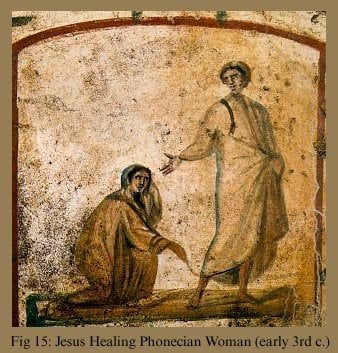
He's portrayed as wearing a Roman toga, something that the historical Jesus would certainly not have worn. Figure 15 has been a bit better preserved. It's a scene of the Phoenician woman touching the hem of Jesus' robe to be healed. It dates from the late 200s, and it's painted on one of the walls in the catacomb of St. Peter and St. Marcellinus that are also located right outside the city walls of Rome.
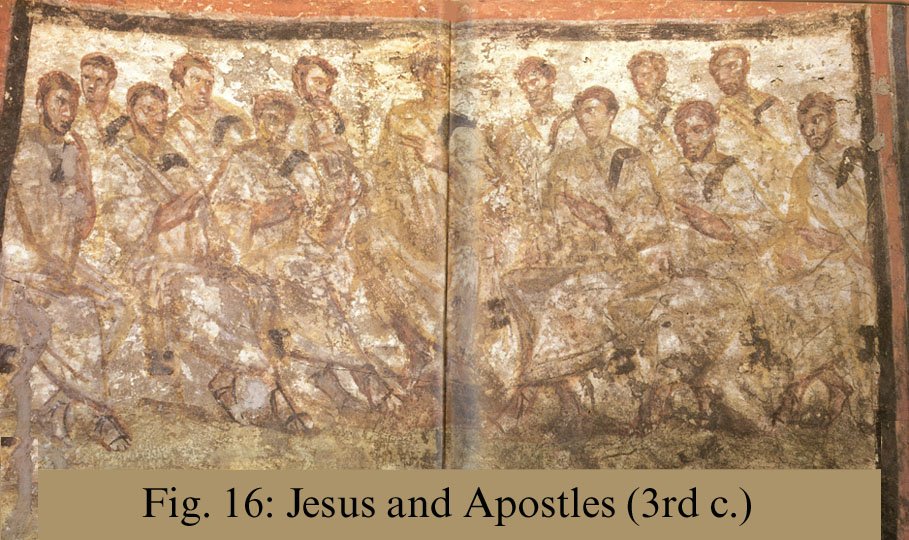
Again, it clearly shows a beardless Jesus, and he's wearing a robe identical to the robes worn by Romans in that time period. Figure #17 is another early catacomb painting. It portrays Jesus and his twelve apostles. Although the picture isn't real clear, Jesus is the figure who is at the center of it. Again, he is shown beardless wearing a third-century Roman robe. Some of the apostles are shown as beardless, and others are shown with neatly trimmed beards.
In all of these pictures, Jesus and his apostles are represented as wearing fairly short hair the way the Romans wore their hair. Now, because these catacomb pictures are the earliest pictures we have of Jesus, and because they all portray Him as being beardless, some Christians have come to the mistaken conclusion that, evidently, Jesus didn't wear a beard. However, as I've said, these catacomb artists are merely portraying Jesus to look like the Roman Christians of the 3rd century.
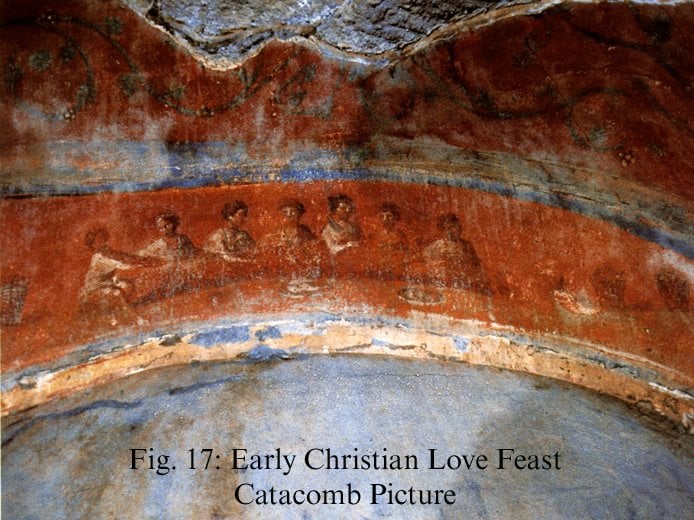
These pictures tell us that evidently Roman Christians didn't wear beards in the 3rd century, or at least a lot of them didn't. But they don't tell us anything about the real Jesus. Most likely, these primitive artists had never even set foot in Palestine, and had maybe never even seen a Palestinian Jew. That these paintings actually represent what Christians look like in the 3rd century, becomes very clear when we look at Figure 17.
It's a painting of an early Christian love feast and communion, and although this fresco has deteriorated quite a bit over the centuries, it enables us to see how Roman Christians groomed themselves at that time. And we see that some of them in the picture, if not all of them, have no beards. And they all look fairly similar to the portrayals of Jesus. They painted Jesus as beardless because they were beardless. And they didn't realize that things were different thousands of miles away in Palestine.
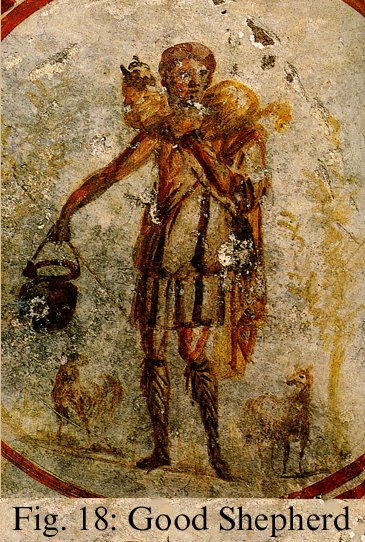
Figure number 18 also dates back to the early 200s, and here we see Jesus portrayed as the Good Shepherd. Actually, portrayals of Christ as the Good Shepherd abound throughout the various catacombs in the area of the city of Rome. But it's important that you realize that these paintings of the Good Shepherd don't purport to be a portrait of the historical Jesus. They're intended as a symbolic representation only. In fact, the Good Shepherd image is very common in pagan Roman frescoes and engravings.
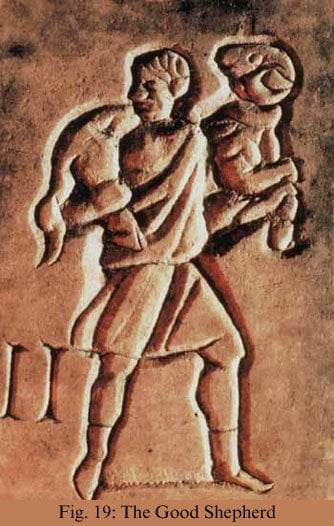
For example, figure 19 is an engraving on a Christian sarcophagus, showing the good shepherd again, and this Christian sarcophagus is located in the catacomb of Callistus. However, the engraving itself might well have been made by a pagan. You have to remember that Christianity was illegal in the Roman Empire during the 200s. And so a Christian would not necessarily have wanted to identify himself to a sarcophagus maker as a Christian.
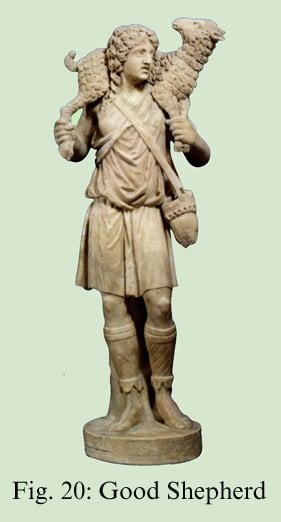
But since the Good Shepherd image was a common Roman emblem, a Christian could hire a pagan artisan to engrave it on a sarcophagus without raising any suspicions whatsoever. The figure meant one thing to a Christian and something entirely different to a pagan. Figure number 20 is a statue of the Good Shepherd, which I remember seeing when I visited the Catacomb of Callistus in the year 2001. Now, more than likely, this statue was not made by a Christian artist, but rather was purchased from a non-Christian Roman.
I say that because this particular type of good shepherd image abounded throughout ancient Greece and Rome. In fact, it was originally a statue of a minor Greek god who was portrayed as a shepherd boy. Now these statues of this minor Greek god were copied by the Romans, and over the centuries they began appearing in Roman homes and courtyards and gardens.
In fact, from what we can tell, by the 3rd century, these statues often were regarded as simply decoration, much the same way that today a lot of people will put a statue of Francis of Assisi in their garden, even though they may not even be Christians. So a Christian could purchase one of these statues from an artisan, and in his mind, it's a symbol of Christ the Good Shepherd.
Now, perhaps that wasn't the most appropriate thing to do, but it's quite likely that a Roman Christian in the 3rd century would not have even known of the origin of this type of statue. He would have thought it's merely a statue of a shepherd boy. Now, if you look at it closely, you may notice that this shepherd boy has long braided hair that goes down to his shoulders.
Yet neither Jewish, Greek or Roman men wore their hair that way in the third century, nor did they wear their hair that way in the first century, for that matter. Instead, the hair is long because it was an ancient representation of a Greek deity, patterned after statues that were made several centuries before Christ. Before we leave the subject of the catacombs, I want to point out something about the art in the catacombs so that you don't get misled by them at some time.
Now I've been showing you pictures of catacomb art that dates to the third century, that is, during the 200s. However, the catacombs continued to be used long after Constantine, first as a hallowed place of burial, and later as a site for pilgrims. So the art in the catacombs transcends at least six centuries. Just because a picture appears in the catacombs doesn't mean that it's an early pre-Nicene painting.
You have to know what catacomb it came from, what level it came from, because the catacombs are in many, many levels. And the further down you go, the more recent the pictures are. I mean, they started off at one level, which in, say, the catacomb of Callistus was during the 200s, and then they went down to another level below that and another level below that, etc. You also have to know what scholars say about the picture to what year do they date it?
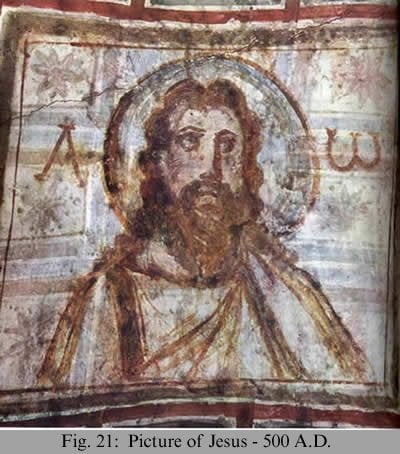
For example, Figure 21 is a portrayal of Jesus that dates to around the year 400 AD, nearly a century after Constantine legalized Christianity. And this was at a time when many Germanic people lived in the Roman Empire. In fact, they would soon overrun it. Now this portrayal of Jesus shows him with hair down to his shoulders and with a beard. Now, this sheds no real light on how the historical Jesus wore his hair.
Rather, it gives us some evidence as to the length of hair on men in the Western Roman Empire around the year 400. Now, they may not have all had hair this long. In fact, it may be only a minority then, but it's certainly a major change from, say, the first century when I have been unable to find any pictures or statues of Roman men with hair that even went down over their ears.
Now something that reveals that this picture is not of pre-Nicene origin is the fact that Jesus' head is encircled with a nimbus or a halo. You don't see that on any pictures made before the time of Constantine. And that's because the Nimbus was borrowed from pagan Roman paintings. It's something they put around the heads of their gods. And Christians did not adopt that pagan practice until, like I say, Constantine legalized Christianity, and then later before the year 400, it was made the state religion.
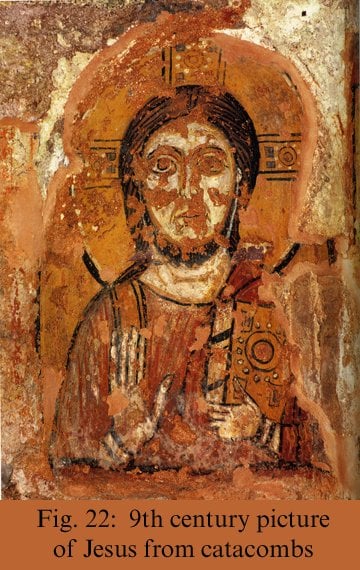
And so a lot of pagan practices were brought into both Christian art and into Christian worship. And our last painting from the catacombs is Figure 22. And this dates back only to the ninth century, during the early Middle Ages. And it represents a stylized image of Jesus that became very common in iconography of that period, particularly in the East. In fact, Eastern Orthodox icons of Jesus still today look very similar to this picture back from the 9th century.
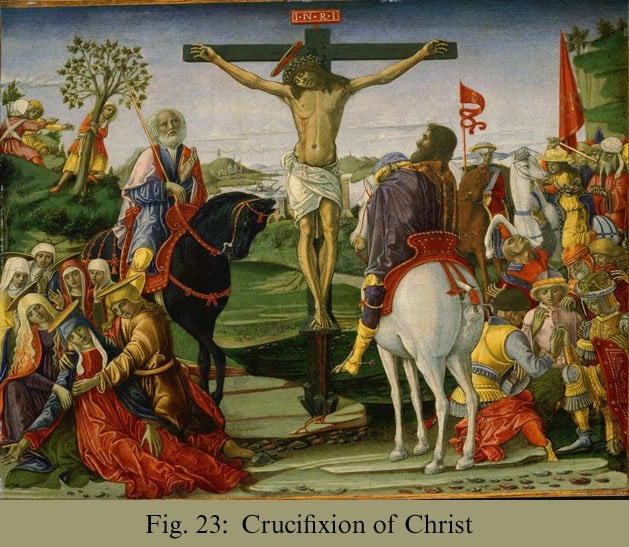
Now this practice of portraying Jesus to look like a man contemporary with the artist continued in the West through the Renaissance and perhaps for about a century beyond. There was no science of archaeology at that time, and no artist tried to research how people looked in Palestine during Jesus' day. In fact, doing such research would not have been easy as there was little readily available source material. Figure number 23 is a good example of this practice.
It's a Renaissance painting of the crucifixion of Christ, painted in the year 1490. Now you notice that the artist dresses everyone up in Renaissance clothing. Even the horses are saddled and dressed up the way that they would have been in Renaissance times, certainly not the way they would have been done in the first century. The painting tells us a lot about the clothing and grooming during the Renaissance, but it tells us nothing about real history.
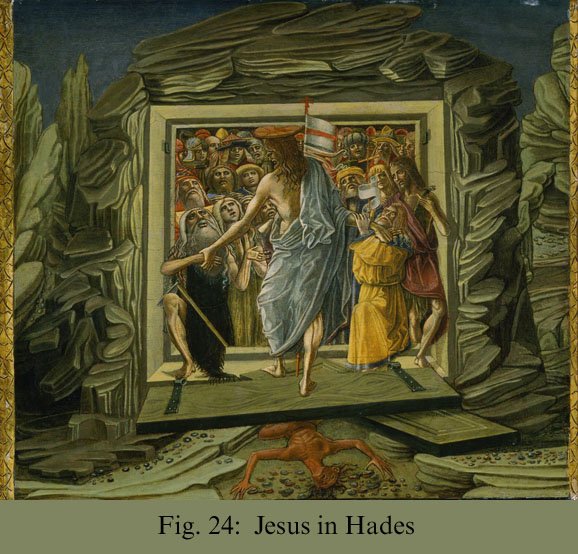
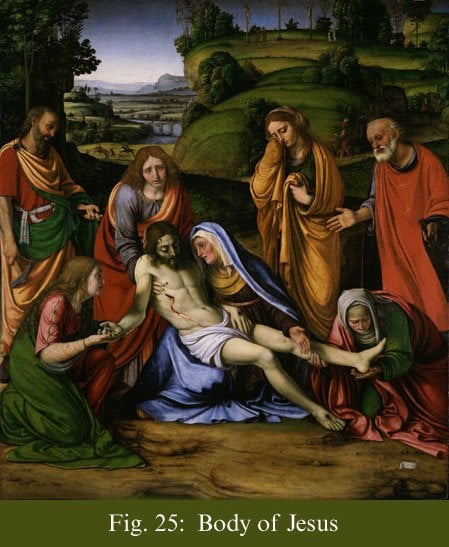
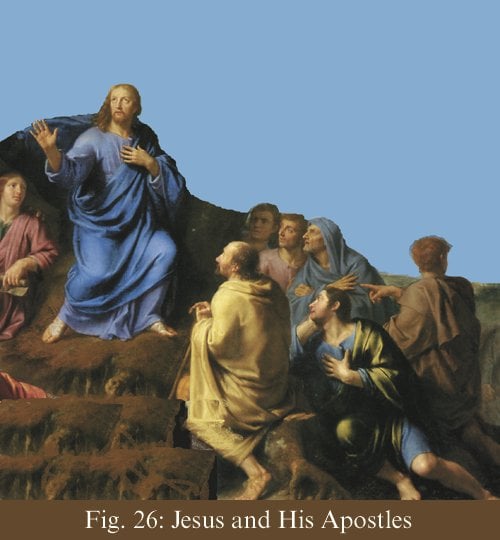
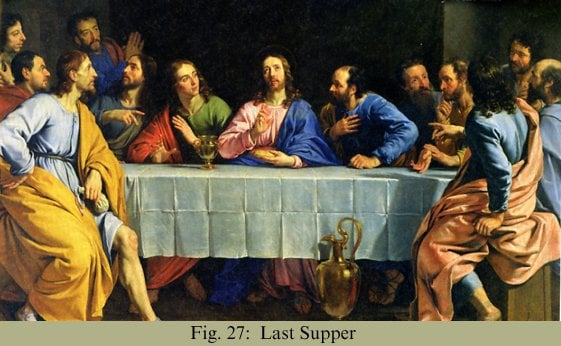
Jesus is portrayed as having light brown hair that extends below his shoulders. Figure #24, another Renaissance painting, shows Christ freeing the captives in Hades. Again, he is shown to have light brown hair that extends several inches below his shoulders. Figures numbers 25 through 28 are more examples of Renaissance paintings of Jesus, scenes from His ministry, The Last Supper, and His Death.
In all of them, Jesus is portrayed with either brown or golden hair that extends at least to his shoulder and often further. And these Renaissance portrayals of Jesus ultimately became the norm, the way to paint Christ, and artists have continued to follow the pattern that they set up to the present day. But where did this business of shoulder-length golden brown hair come from? As we've seen, it certainly didn't come from the many pictures and sculptures we have of first-century men.
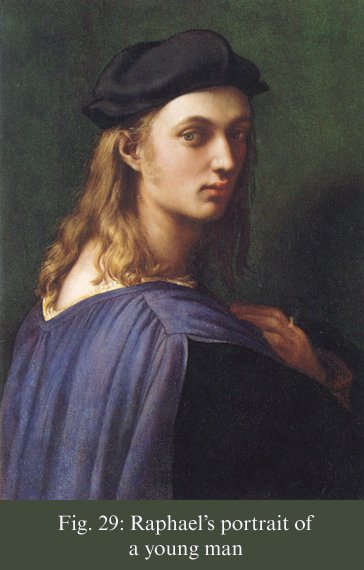
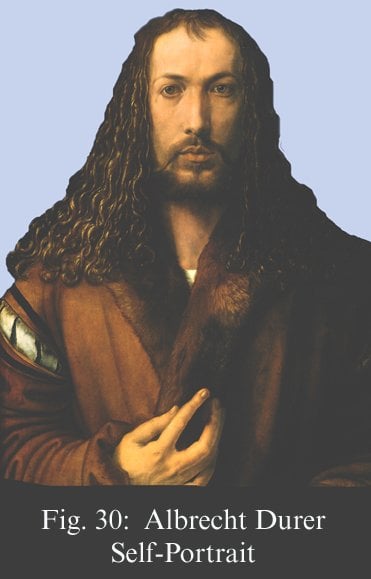
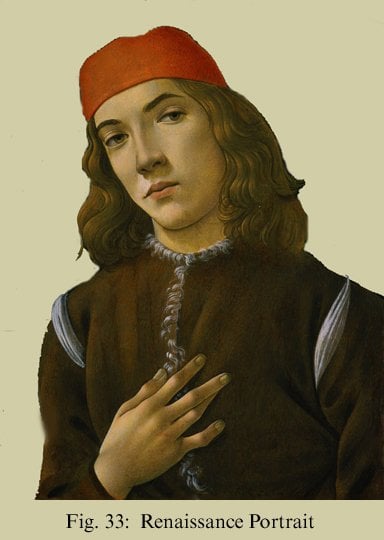
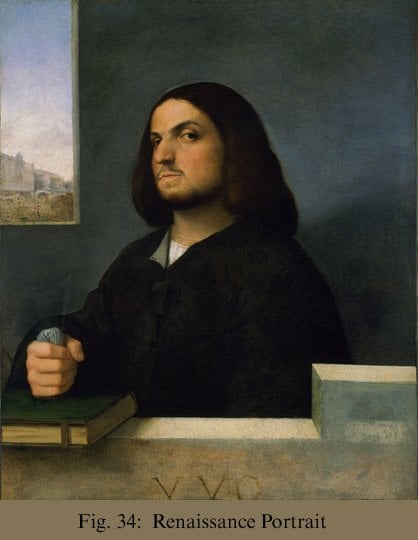
Rather, the Renaissance artist painted Jesus this way because this is the way that man looked in Renaissance Italy and in other parts of Europe at that time. For example, figures numbers 29 through 34 are portraits of various Renaissance men made by the great artists of their day. Figure 29 is a portrait of a young nobleman made by Raphael. Notice his long golden brown hair that flows down to his shoulders. Figure 30 is a self-portrait made by the German Renaissance painter, Albrecht Dürer.
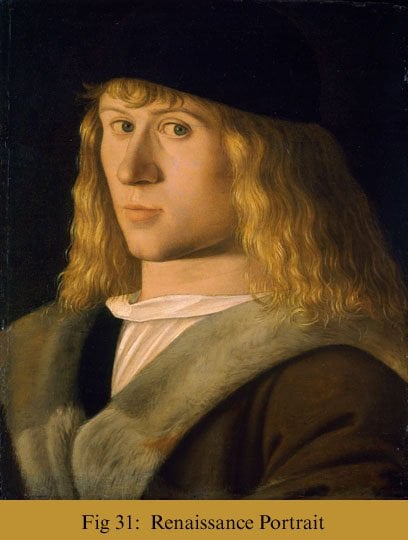
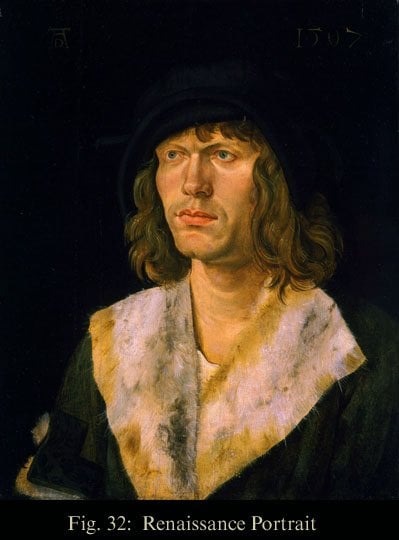
When I first saw it, I thought it was supposed to be a picture of Jesus. It looks very similar to the way you see Jesus portrayed. The artist's brown hair flows down to his shoulders and actually a bit below. But no, this is actually a portrait of the artist himself. Figures 31 through 34 are other Renaissance men, all with shoulder-length hair. So it's easy to see that the Renaissance artist painted Jesus with shoulder-length hair because that's the way most men apparently wore their hair during the Renaissance.
Now I haven't said very much about medieval art because it is not nearly as abundant as Renaissance art. But the little bit that we do have indicates the same thing that at least by the late Middle Ages, men typically wore their hair down to their shoulders. Although the medieval and Renaissance paintings give us no clue as to how the historic Jesus looked. An archaeological find in the 20th century has given us important clues as to how Jewish men looked a couple of centuries after the time of Jesus.
In 1920, British soldiers in Iraq came across the ruins of the ancient city of Dura Europos. This Mideastern city had been destroyed and partially buried by Persian invaders in the year 256 AD. As a result, the ruins of the city were preserved in somewhat of a state of suspended animation, you might say, for nearly 1,700 years. When archaeologists began studying the ruins and digging out the various buildings of the city, they found a Jewish synagogue fairly intact.
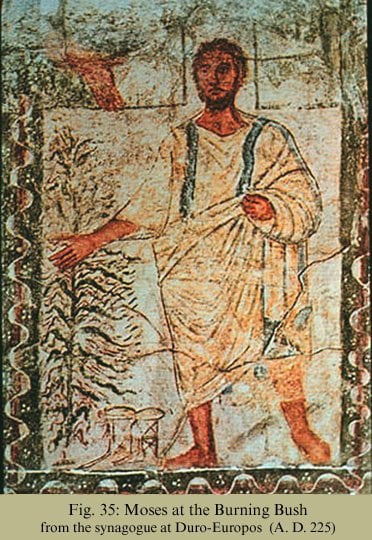
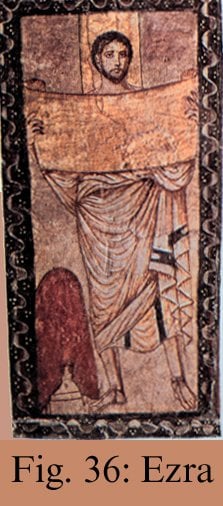
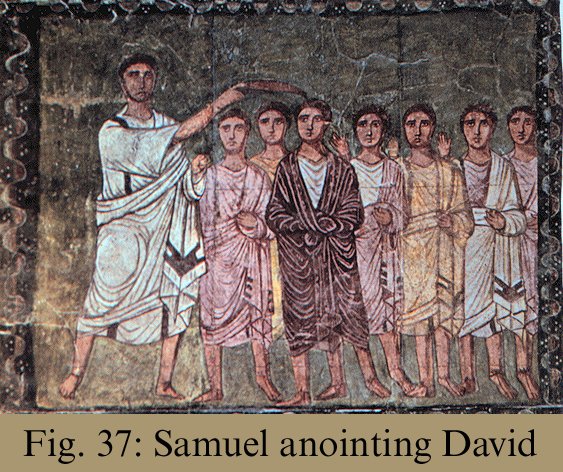
The walls of the assembly hall of the synagogue were covered with paintings of Old Testament scenes, such as Moses at the burning bush, or Samuel anointing David, things like that. Now, like all other artists of their day, in fact, all artists up until modern times, the men who decorated the walls of the synagogue portrayed Moses, Samuel, Ezra, and other biblical figures as dressing and grooming themselves the way that Mideastern Jews dressed and groomed themselves in the early 200s. And what do we find out?
Well, we find that Jewish men in the early 200s wore their hair relatively short, and they trimmed their beards rather closely. Figure 35 is one of the murals painted on the walls of that synagogue, and it portrays Moses at the burning bush. As you can see, his hair extends to his ears, but not below, and his beard doesn't extend very far below his chin. Figure 36 is from another painting on the wall at this synagogue, and it's portraying Ezra reading the law.
Again, we see short, dark hair, and a well-trimmed beard. Figure 37 is another mural from the wall, and it's portraying Samuel anointing the young man David, while his brothers, the other sons of Jesse, look on. Once again, the men all have very short hair and very closely trimmed beards. At the beginning of this message, I mentioned that the Jews were influenced in their dress and grooming by the other peoples of their day. And these paintings at the synagogue of Dura Europos demonstrate this fact quite well.
These Jewish men look very similar to the Greek men of their day, very similar to the Romans, except for the fact that they all wear beards. Now again, these paintings were made about 200 years after the time of Christ. The Jewish men in Jesus' day may have worn their hair a bit longer, and they may have had fuller beards. We don't know for sure, but from all of the evidence we've seen, shoulder-length hair would have been very unusual.
The question of what Jesus looked like has fascinated so many people that several years ago, BBC, the state-owned British television company, decided to do a special about it. Now, they began at the same point of departure that I have. That is, Jesus apparently looked like an ordinary first-century Palestinian Jew. Otherwise, why would Judas have had to point him out with a kiss if he had certain unusual characteristics about him?
So the mission of BBC was to create a picture of a typical first-century Palestinian Jew. And to do this, they hired a forensic anthropologist. Forensic anthropologists use cultural and archaeological data, as well as biological science, to study different groups of people, and often they're involved in solving crimes. For example, they sometimes recreate an image of what someone would have probably looked like.
Well, the BBC chose a forensic anthropologist named Richard Neave from the University of Manchester in England. Now, Dr. Neave has made a career out of reconstructing the faces of famous historical figures, such as Philip of Macedon, who was the father of Alexander the Great. And so his job that was given him by BBC was to recreate a skull and face of an adult man who lived in the same place and at the same time as Jesus.
He couldn't, of course, reconstruct Jesus' actual face because we don't have the skull of Jesus nor any description of Him. But to recreate an ordinary 1st-century Palestinian Jew, Dr. Neave first made a composite cast of three different Jewish skulls, all unearthed near the area of Jerusalem and all from the first century. Then, using sophisticated software and other high-tech help, he and his assistants recreated the muscles and skin overlying this representation of a first-century Jewish skull.
Now they did this by applying to the skull layers of clay matching the thickness of facial tissues that had been specified by the computer program. Well, what about the hair, the beard, and his skin color? Well, for these, the BBC put together a team of artists. And this team relied heavily on the murals on the walls of the ancient synagogue at Dura-Europos that we talked about just a few minutes ago.
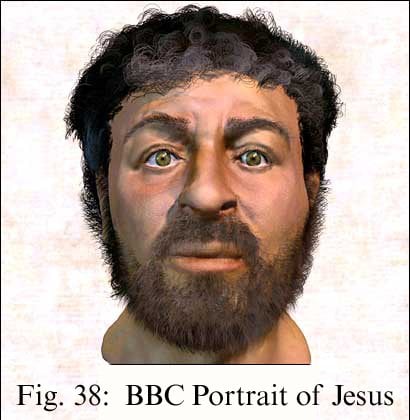
So they reproduced the hair and beard on their hypothetical Jesus to match those found in the murals at Dura-Europos. They also used those murals as the basis for the skin color they chose. And the finished result is Figure 38. If you look at it next to Figure 35, you can see how they got his skin color based on that mural of Moses at Dura Europos. You also see that the length of hair and beard is also based on that and on those other murals that are on the wall there.
Now of course this does not purport to be the face of Jesus, but the face of an average first century Palestinian Jew. However, Dr. Neave was not very happy with the result that the BBC artist came up with. Some people said that the face made Jesus look like a New York City taxi driver. Dr. Neave himself said he didn't like the eyes and the mouth and what one historian has called a particular dumbfounded, one might say stupid expression on this man's face.
In fact, I don't think any Christian is pleased with this picture. I mean, the features may all be correct, and they're certainly scientific, but there's no excuse for such a stupid-looking expression or an expression of somebody who's dumbfounded. It looks almost like a mugshot or something. Well, as it turned out, a couple of years after the BBC project, CNN, one of the television channels here in the United States, decided to prepare a special entitled The Mystery of Jesus.
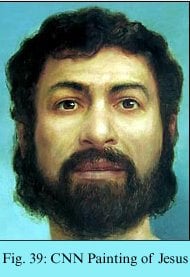
Well, they also decided to go back to Dr. Neave, and working with him, they hired an artist to repaint the portrait of this hypothetical Jesus using Dr. Neave's skull together with information from other experts. The results were Figure 39. And this picture is a much more noble, even soulful Jesus, and yet one that is also historically believable.
They lightened his skin a bit, and they made his hair and beard a bit longer, perhaps taking their cues from the bust of Herod the Great that we looked at earlier this evening. And they put an expression on his face that is much more believable of a teacher and leader like Jesus Christ. And based on all of the evidence that we've looked at tonight, I would say that Figure 39 is the most believable and historically accurate picture of Jesus that I've ever seen.
So it would seem that we've got a fairly good idea of what Jesus probably looked like. Not His exact face, of course, but His general features. However, there's one thing that throws a potential monkey wrench into all of this, and that's the famous Shroud of Turin. The Shroud of Turin is a linen cloth that is either the genuine burial cloth of Jesus or else is an ingenious forgery from the period of the early Renaissance.
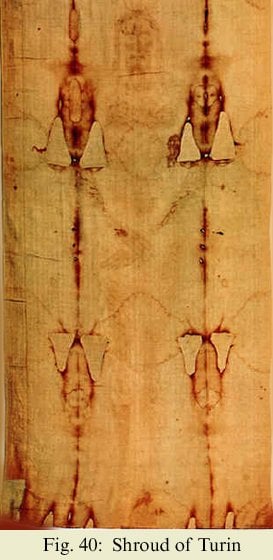
It bears a faint image on it of either the real Jesus after his crucifixion or else someone's conception of what they thought he looked like. And this faint image is shown in Figure 40, which is a photograph of the front part of the shroud of Turin. Now it didn't originate in Turin, Italy, but that is where it is kept today and has been for centuries, in the royal chapel of the Cathedral of St. John the Baptist.
The known history of this cloth dates back to the year 1357, when the widow of a French knight had it displayed in a church in France. During the 14th century, the shroud was often publicly displayed, though not continuously, because the original bishop who had jurisdiction over it had prohibited veneration of the cloth or its image. In fact, in 1389, the successor to the previously mentioned bishop denounced the image as a fraud.
In a letter to the Pope, this bishop mentioned that the cloth had been previously denounced by his predecessor, who had been concerned that no such image was mentioned in Scripture.
This second bishop continued, and I'm quoting," eventually after diligent inquiry and examination, he, the previous bishop, discovered how the said cloth had been cunningly painted, the truth being attested by the artist who had painted it, to wit, that it was a work of human skill and not miraculously wrought or bestowed." Yet despite the pronouncement of this bishop, the pope granted indulgences for pilgrimages to see the shroud.
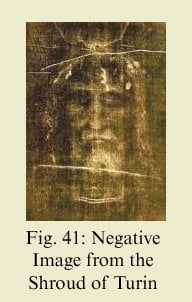
However, he ruled that the shroud was not permitted to be designated as the" true shroud", or in other words, as the actual burial cloth of Christ. Well, what about the image on the shroud? The image is of a man with a beard and shoulder-length hair parted in the middle. He's muscular and is about six feet tall. Dark red stains, either blood or pigment, depending on your view, are found on the cloth, showing various wounds from Jesus' flogging and crucifixion.
There's a stain on his wrist from the crucifixion, in his side, where the spear pierced his side, small stains around his forehead from the crown of thorns, and many stains on his back from the flogging. Actually, outside of Roman Catholic circles, this shroud was not particularly famous until modern times. Ironically, science has been the catalyst that has made the shroud famous today. In 1898, an amateur Italian photographer took the first photograph ever of the shroud.
And when he was developing the picture in his darkroom, he was startled when he looked at the negative. That was because the image on the negative was much more clear than the image on the cloth. In other words, the image on the cloth itself is a negative. And so a negative of that negative produced a positive, which you can see in Figure 41. Well, in 1977, the Archbishop of Turin granted permission to a selected team of scientists to perform a series of tests on the shroud to determine its authenticity.
These scientists conducted their testing over five days in the year 1978. After making all of their studies and examination, these scientists were impressed by the extremely realistic characteristics of the image, which according to them, match exactly the features we would expect to find on the body of a crucified man. Most of these scientists feel that the cloth is the genuine burial cloth of Jesus. They point out that a medieval artist would not have known about negatives before the invention of photography.
They note that the weave of the cloth fits cloth weaves that were used in first century Palestine. They say that they found pollen on the cloth from plants that grow only in Palestine. Finally, they say that neither they or anyone else are able to reproduce such an image by any known methods today.
On the other hand, one of the scientists, Walter McCrone, who was part of the original group, upon analyzing the samples of the image, concluded that the image is actually made up of tiny particles of pigment, that is, paint. According to him, the pigments used were a combination of red ochre and vermilion tempera paint. His conclusions have been contested by some of the other scientists who say that it isn't pigment. So what are we to think?
Well, I remember back in 1982, listening to a lecture from a minister who pointed out all sorts of remarkable things about the shroud of Turin. It was very fascinating, and if you accepted everything he said as being true, you'd almost have to conclude that this was the actual burial cloth of Christ, and that God had made some sort of supernatural image on it at the time that He resurrected His Son. However, I wasn't convinced, and I'm still not.
Now to be sure, the scientific claims are very impressive, and the image on there, if it isn't from a miracle, is certainly ingenious. Yet at the same time, I'm not sure how objective those scientists were who examined the shroud. Now my objections to the shroud aren't on scientific grounds, they're on biblical and historical grounds. Let's start with the biblical problems. Big question is, why would God perform such an important miraculous work and then never even mention it in the Scriptures?
Turn with me to John's account of the events after the resurrection. This is John 20, verses 4 through 8. Now the background here is that Mary Magdalene has just run and told Peter and John that Jesus' body has been taken away. And then we read," So they both ran together, and the other disciple, that's John, outran Peter and came to the tomb first. And he, stooping down and looking in, saw the linen cloths lying there, yet he did not go in.
Then Simon Peter came, following him, and went into the tomb, and he saw the linen cloths lying there and the face cloth that had been around his head, not lying with the linen cloths, but folded together in a place by itself. Then the other disciple, who came to the tomb first, went in also, and he saw and believed. Now, are we to believe that there is an invaluable proof of the resurrection imprinted on this shroud, and yet John doesn't even mention it in his account of the events after the resurrection?
After all, his account was written 60 years later. If the burial shroud of Jesus was still in existence when He wrote the gospel, and it had this miraculous imprint on it, wouldn't John have said something? Not only that, did you notice that each time the Scripture passage refers to linen cloths, plural. He wasn't even buried in a single shroud, but rather in cloths, more than one. Furthermore, in addition to that, his face and head had been wrapped in a separate cloth.
It says," And the face cloth that had been around his head." So there wasn't a single cloth covering his whole body. The shroud of Turin doesn't fit the eyewitness report we have from the Apostle John. And the other three gospel writers also describe the events in the aftermath of the resurrection, and yet none of them mention any single shroud, like the one at Turin, let alone a shroud with a miraculous image on it. How could all four of these men have omitted such an important event?
If we go to Luke 24:3," Here the women have just come to the tomb to anoint Jesus's body with spices." It says," They found the stone rolled away from the tomb.
Then they went in and did not find the body of the Lord Jesus." Skipping down to verse 9, it says," Then they returned from the tomb and told all these things to the eleven and to all the rest." In verse 12, it says," But Peter arose and ran to the tomb, and stooping down, he saw the linen cloths, plural, lying by themselves, and he departed, marveling to himself at what had happened." So again, the Scripture specifically says that it was plural cloths that had been used in covering his body, not a single shroud.
In fact, the Gospel of John indicates that it was customary for the Jews in that era and in that locale to use strips of cloth in wrapping a corpse. For example, notice what it says about Lazarus' burial clothes, John 11:44. This is when Jesus tells him to come out. It says," And he who had died came out bound hand and foot with grave clothes." So in other words, like a mummy, strips of cloth had been bound around him.
And it says," And his face was wrapped with a cloth." So just like Jesus, he had a separate cloth wrapped around his face. The account continues," Jesus said to them,' Loose him and let him go." If Lazarus had been in a shroud, like the shroud of Turin, he could have just easily stepped out from it. No, it says he was bound hand and foot. In fact, this is exactly how Jesus' body was wrapped. Let's go to John 19:39 and 40. It says," Nicodemus came, bringing a mixture of myrrh and aloes about 100 pounds.
Then they took the body of Jesus and bound it in strips of linen with the spices as the custom of the Jews is to bury." So there John says specifically it was strips of linen like a mummy. So the biblical evidence alone refutes the possibility of the shroud being genuine. Jesus wasn't even wrapped in a single cloth shroud. He was wrapped in strips of cloth and there was a separate cloth wrapped around his head.
And the post-New Testament historical records puts even more nails in the coffin, because we have volumes and volumes of writing by the early Christians, but none of them say a word about any shroud whatsoever, let alone a miraculous one. We have a thorough history of the first three centuries of the church written by Eusebius in the early 300s. Eusebius chased down every rumor concerning Jesus, such as His receiving a letter from the King of Edessa.
And yet He makes no mention of Jesus' burial shroud, let alone a miraculous burial shroud with an image impressed on it. Are we to believe that this miraculous shroud existed, and yet Eusebius, the careful historian, never had even heard of it? Even more absurd, we believe that he knew of the miraculous shroud, yet he didn't consider it worth mentioning in his history. No, that's just not reasonable.
You see, you can provide all the scientific evidence in the world, showing that the image on the shroud is a remarkable image, with all sorts of attributes that no one has yet been able to successfully duplicate. But none of that means anything against the eyewitness record we have in the Bible. None of that means anything against the absolute silence on the matter in the early Christian historical record.
And none of that means anything against the further historical record from the time of Eusebius all the way to the beginning of the Renaissance. And then suddenly, out of nowhere, this shroud suddenly appears in the year 1357 AD. How could something so marvelous be kept a secret for all of those centuries? Finally, there are historical problems with the image itself. The image is of a man about six feet tall.
Yet the average first century Palestinian Jew was only 5 foot 1 inches, as shown by anthropologists who have measured many, many skeletons from that time period. A six-foot man would have stood a head taller than almost all other men. Yet the Scriptures say nothing about that concerning Jesus. God purposefully had Jesus become a man in the lowest fashion possible. He wasn't handsome. He had a very lowly birth to then have made him considerably taller than nearly all of the other men of his age.
Well, that would have been to cause him to stand out favorably against all others, just the way King Saul had in his day. Another historical problem with this image is that on it, his beard is extremely light, and so is most of his hair, perhaps blonde, and its shoulder length. Now that fits the conception that medieval and Renaissance artists had of Jesus, but it doesn't fit the historical evidence at all. Again, if Jesus had had shoulder length hair, he would have stood out from most other men of his age.
And if he had had blonde hair, he certainly would have stood out against all other Jewish men. Yet nothing different about him in this regard is mentioned in the scriptures. Why would Judas have had to kiss him to identify him? Judas could have easily described him to the soldiers." Oh, he's going to be the tall man with blonde hair that comes down to his shoulders." No one else would have fit that description. You see, it just doesn't make sense from an historical perspective.
Well, to settle the matter once and for all, in 1988, the Vatican agreed to let the shroud be tested using radiocarbon dating to determine the date of the cloth. They allowed a small piece to be cut from a corner of the shroud, and then to be divided, and pieces of it were sent to three different laboratories to be tested. These were at the University of Oxford, the University of Arizona, and the Swiss Federal Institute of Technology, all of these preeminent universities and institutions.
Well, the separate results of all three testings was a date ranging between 1260 and 1390, the time period when the shroud first appears in the historical record. And the results didn't surprise me one bit. Now, I thought this radiocarbon testing would end the matter, but no, it didn't. Radiocarbon dating is certainly not infallible. Things can throw it off. And believers in the shroud have proposed all sorts of things that might have thrown the dating off.
So my guess is the claims will probably continue on and on until Christ returns. So what have we learned tonight? We've seen that men of the first century, including Jewish men, wore their hair relatively short, their hair didn't hide their ears, and it certainly didn't reach their shoulders. We also learned that first-century Jewish men wore neatly trimmed beards. And we've seen the evidence that Jesus looked like most other Jewish men of his day.
We've also seen that from the very beginning, artists have depicted Jesus in a manner that makes him look like the men in the artist's era and geographical region. Christian artists in Rome painted him without a beard. Renaissance artists painted him with light brown shoulder length hair. Finally, we've seen that the biblical and historic record simply do not support the claims being made that the shroud of Turin is the actual burial shroud of Jesus, regardless of how unique the image on it is.
Yet in the end, the important thing isn't what Jesus looked like, although it's interesting to know. What's important is who Jesus is, the Son of God, and our relationship to Him. Is He my Savior? Is He my Lord? If He is not yours, I encourage you to make Him your Lord right now by surrendering your life unconditionally to Him. He will never fail you.