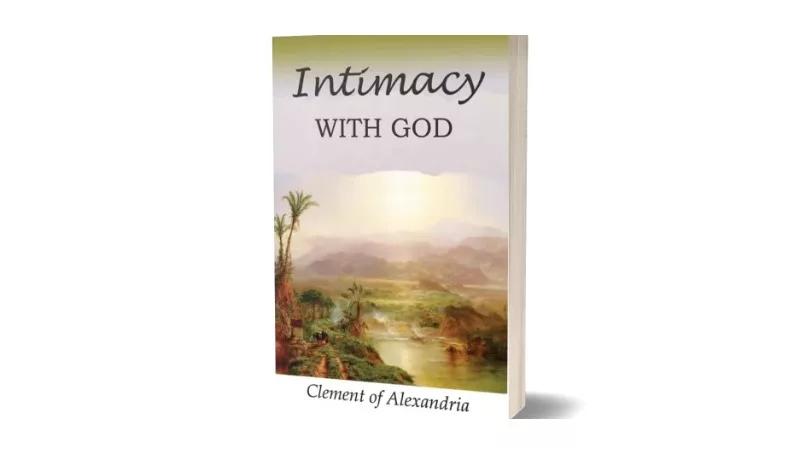
This free audiobook course presents selected readings from Clement of Alexandria on what it means to know God intimately and to live in the footsteps of Christ. The introduction explains Clement’s search for truth, his conversion to Christ, his work as a teacher in Alexandria, and the way these selections are drawn from his larger writings. The course then develops a portrait of the person who is “intimate with God”:
bearing the cross, resisting worldly desire, praying continually, growing in holiness, living by faith, and loving neighbors and enemies. Several chapters address divisions, heresy, and the need to test teaching by Scripture rather than human opinion. The final section focuses on Clement’s treatment of Jesus’ words to the rich young man, asking whether wealth itself condemns a person or whether the deeper issue is the soul’s attachment to possessions.
The course closes with repentance, pastoral care, and the story of the Apostle John and the robber.
Clement begins by describing the one who is intimate with God as a person who follows the Lord’s footsteps by bearing the cross. The chapter emphasizes self-denial, endurance in trials, spiritual warfare, and freedom from being ruled by outward circumstances.
- What does it mean to bear the cross of the Savior?
- How can a Christian lose life in order to find it?
- Why are endurance and spiritual warfare central to intimacy with God?
This chapter contrasts love for God with attachment to worldly pleasures. Clement discusses generosity, love for enemies, prayer, fasting, discipline of the senses, and the person whose whole life becomes prayer and conversation with God.
- How should the one who knows God treat enemies and persecutors?
- What does Clement mean when he says the whole life can be prayer?
- How does fasting relate to abstaining from evil thoughts and deeds?
Clement portrays the godly person as a stranger and sojourner on earth who lives quietly before God. The chapter connects hidden obedience, generosity, thanksgiving, prayer, love, fear of God, and the example of Job.
- What does it mean to live as a stranger and sojourner on earth?
- How does love move a person from fear toward friendship with God?
- Why does Clement point to Job as one who knew God intimately?
This chapter develops Clement’s teaching that prayer is continual fellowship and conversation with God. He rejects the idea that prayer is unnecessary and urges prayer that seeks what is truly good for the soul.
- Why does Clement say God should be honored throughout the whole life?
- How is prayer more than spoken words?
- What should the person who knows God ask for in prayer?
Clement presents holiness as involving meditation, discipline, moral excellence, and God’s power. The chapter also describes daily sacrifices of prayer, praise, Scripture reading, instruction, and giving to those in need.
- How do meditation and disciplined living shape the soul?
- What part does God’s power play in moral excellence?
- How can ordinary daily practices become a holy festival?
Clement teaches that knowing God means being molded after His image and imitating Him in self-control, endurance, righteousness, and generosity. He also argues that true nobility is found in choosing and practicing what is best, not in birth status.
- How does knowing God lead to becoming like Him?
- What do the mouth, heart, and hands represent in spiritual growth?
- Why is true nobility measured by moral choice rather than origin?
This chapter explains faith as the foundation for receiving divine instruction. Clement connects faith with hearing, repentance, hope, obedience, love, and the knowledge of God.
- Why does faith come through hearing?
- How does faith make a person receptive to instruction?
- How are faith, repentance, hope, love, and knowledge connected?
Clement centers this chapter on love for God and neighbor, drawing heavily on 1 Corinthians 13. He also distinguishes outward actions from inward motives and addresses lust, chastity, and love that seeks the beauty of the spirit.
- Why is love necessary even when a person does outwardly impressive deeds?
- How can the same deed differ depending on motive?
- How does Clement interpret Jesus’ warning about lust?
Clement describes growth into God’s image through divine instruction, obedience, courage, self-control, and love. He uses Joseph as an example of steadfastness and warns against reckless approaches to martyrdom.
- How does divine instruction reshape the soul?
- What does Joseph’s example teach about purity and obedience?
- How does Clement distinguish true courage from reckless danger-seeking?
This chapter applies intimacy with God to truthfulness, oaths, resentment, and legal disputes. Clement argues that the godly person’s life should be truthful enough not to require swearing and forgiving enough not to seek retaliation.
- Why does Clement say the godly person should not swear oaths?
- How should a Christian’s yes and no function?
- Why does Clement connect lawsuits with retaliation and lack of forgiveness?
Clement reflects on Christian perfection through Paul’s words in 1 Corinthians 6 and Jesus’ command to be perfect. He defines this perfection as blameless obedience, forgiveness, freedom from fleshly desires, and life joined to the Lord.
- What does Clement mean by Christian perfection?
- How does forgiveness relate to being perfect as the Father wills?
- Why does Clement reject the idea that human virtue equals God’s virtue?
Clement teaches that men and women share the same goal of perfection, citing Judith, Esther, Susanna, and Miriam. He also discusses marriage, moral excellence, the role of a godly wife, and the shared end of faith.
- Can women share equally in the perfection Clement describes?
- What examples of faithful women does Clement use?
- How does Clement measure the happiness of marriage?
Clement answers objections from Greeks and Jews who point to Christian divisions as a reason not to believe. He argues that heresies do not cancel the truth and that sincere seekers must distinguish true teaching from counterfeit claims.
- Do divisions among Christians prove that the truth cannot be found?
- Why does Clement compare heresy to counterfeit money or wax fruit?
- How should sincere people respond to conflicting claims about truth?
This chapter places Scripture at the center of discerning truth. Clement warns that heretics misuse Scripture by quoting selectively, removing context, and twisting meanings, while true teaching is confirmed by the voice of the Lord.
- Why does Clement call Scripture the basis of truth?
- How do heretics misuse Scripture according to Clement?
- Why must Scripture passages be explained by the rest of Scripture?
Clement describes sin and false teaching as illnesses needing spiritual medicine. He distinguishes ignorance, opinion, and knowledge, and presents Scripture, discipline, chastisement, and love as remedies for the soul.
- What are the different states of the soul Clement describes?
- How do knowledge and discipline function as remedies for sin?
- Why does Clement describe God’s correction as chastisement rather than retaliation?
This chapter emphasizes forgiveness, prayer for others, and care for neighbors. Clement also describes the believer as God’s temple, called to a good conscience, gratitude, and use of worldly things in a way that pleases God.
- How should the person intimate with God respond to someone who sins against him?
- Why does Clement connect prayer with care for people in need?
- What does it mean for the believer to be the temple of God?
Clement begins his extended treatment of wealth by warning against flattering the rich and by explaining why wealth can become spiritually dangerous. He also argues that the rich should not despair but should be taught the way of salvation with love and truth.
- Why does Clement warn against praising the rich for their wealth?
- Why might rich people despair when they hear Jesus’ words about wealth?
- How should someone teach the wealthy about salvation?
Clement turns to Jesus’ conversation with the rich young man in Mark 10 and urges careful attention to Jesus’ own words. He presents the young man as sincere under the law but still lacking the fullness found in Christ.
- Why does Clement want Jesus’ own words to interpret the passage?
- What was appropriate about the rich young man’s question?
- How does Clement distinguish the law from the perfection found in Christ?
Clement focuses on Jesus’ words, “If you want to be perfect,” to discuss free will, desire, and what the rich young man lacked. He argues that the deeper renunciation is not merely giving up external possessions but removing materialistic desires from the soul.
- What does Clement draw from Jesus’ phrase, “if you want”?
- What did the rich young man lack?
- Does Clement think selling possessions is mainly about outward poverty or inward detachment?
This chapter continues the discussion of wealth by distinguishing pure and impure souls, true and false riches, and genuine and counterfeit poverty. Clement teaches that salvation depends on the virtues of the soul rather than the mere amount of one’s possessions.
- What makes a soul impure in Clement’s treatment of wealth?
- What is the difference between true riches and false riches?
- How can poverty be genuine or counterfeit?
Clement answers directly that salvation is not impossible for the rich, though wealth can seduce and ruin the soul. He calls the prosperous to learn how to use wealth rightly, to resist its power, and to choose Christ above all competing claims.
- Can the rich be saved according to Clement?
- Why were the apostles alarmed by Jesus’ words about the rich?
- When should a believer turn away from possessions or relationships that hinder faith?
Clement presents love for God and neighbor as the greatest commandments. He explains the Good Samaritan, Matthew 25, and the command to make friends with unrighteous riches as calls to enduring compassion and practical care.
- Why is love for God the greatest commandment?
- How does the Good Samaritan define the neighbor?
- What does Clement mean by making friends with unrighteous riches?
Clement urges believers to use their money to gather a peaceful army of the needy and faithful, whose prayers, counsel, and love guard the soul. The chapter rises into a meditation on God’s love, Christ’s self-giving, and love as the greatest virtue.
- Why does Clement call the downtrodden a peaceful army?
- How can the poor, widows, orphans, and faithful people guard the soul?
- Why does love surpass even faith and hope?
This chapter distinguishes true repentance from empty words. Clement teaches that repentance means ceasing from the sins being repented of, receiving God’s mercy, and submitting to disciplined care, including the help of a godly mentor.
- What makes repentance true rather than false?
- How does Clement describe God’s willingness to forgive?
- Why does Clement advise the rich and powerful to find a godly mentor?
Clement closes with the remembered story of the Apostle John pursuing and restoring a young man who had become a robber. The story illustrates hope, pastoral pursuit, repentance, and the joy of restoration.
- What happened to the young man entrusted to the overseer?
- How did John respond when he learned the young man had become a robber?
- How does this story illustrate true repentance and restoration?
The introduction presents Clement of Alexandria as a seeker of truth who found its fulfillment in Christ and became a teacher in Alexandria. It also explains the selected nature of the readings, Clement’s use of philosophy, his grounding in Scripture, his response to Gnosticism, and the early Christian setting of the work.
- Who was Clement of Alexandria?
- Why were these selections gathered under the theme of intimacy with God?
- How did Clement view philosophy, Scripture, and Gnostic claims?