Direct Answer: Early Baptism Normally Used Immersion, Allowed Pouring, and Only Exceptionally Sprinkling
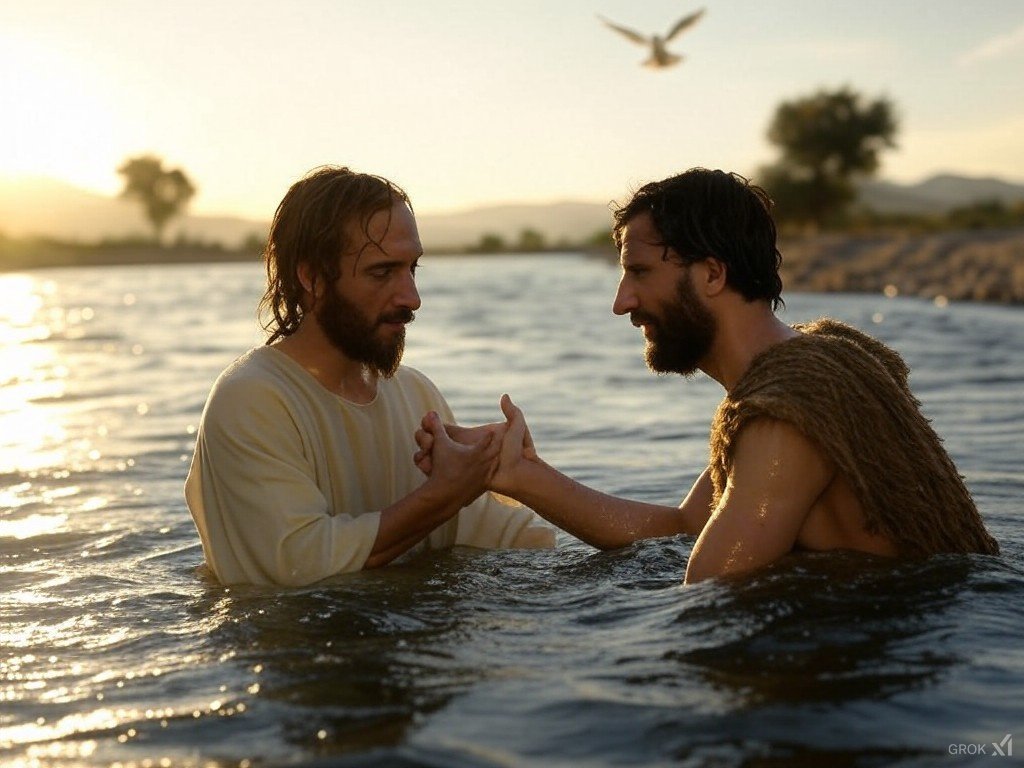
The best answer from these sources is: immersion was the normal and preferred early Christian practice; pouring was explicitly allowed when immersion in adequate water was not practical; sprinkling is mentioned in the supplied teaching material only as an exceptional deathbed allowance, not as the ordinary pattern.
The clearest early Christian witness supplied here is The Teaching of the Twelve Apostles, usually called the Didache, chapter 7. It gives a practical order of preference:
“And concerning baptism, baptize in this way: After you have first said all these things, baptize in the name of the Father, and of the Son, and of the Holy Spirit, Matthew 28:19, in living water. But if you do not have living water, baptize in other water. And if you cannot do it in cold water, then do it in warm. But if you have neither, pour out water three times on the head in the name of the Father and Son and Holy Spirit. But before the baptism, let the one who baptizes fast, and the one being baptized, and any others who can. And you shall instruct the one being baptized to fast one or two days beforehand.”
That passage is important because it is both early and practical. It does not sound like later polemics about one exclusive valid mode. It gives a preferred setting—“living water”—then other water, then warm water if necessary, and finally pouring three times on the head if the earlier options are unavailable.
The related baptism lessons supplied with the evidence summarize the same pattern this way: “Immersion was the normal method, but pouring was also a valid method if immersion wasn’t practical.” Another supplied lesson says, “It was three times, either immersed three times or pour three times.” A further lesson adds that “in exceptional circumstances, the early church even allowed sprinkling,” especially if someone was on a deathbed and it was not practical to pour.
So the answer is not simply “immersion only,” “pouring only,” or “sprinkling only.” These sources show a hierarchy of practice: normally immersion, preferably in living water; if necessary, pouring three times; sprinkling only as an exceptional case in later teaching material provided here.
What Scripture Says
The explicit Scripture reference supplied in the evidence is Matthew 28:19, the Lord’s commission to baptize. The Didache itself quotes or echoes this command when it says to baptize:
“in the name of the Father, and of the Son, and of the Holy Spirit, Matthew 28:19”
The important point for this question is that the supplied Scripture evidence establishes the Trinitarian name into which baptism is performed. It does not, in the source material provided here, settle the exact quantity of water or the mechanical mode by itself. The Didache takes Jesus’ command from Matthew 28:19 as the governing baptismal formula and then gives practical instructions about how baptism was to be done.
That order matters. Scripture is the higher authority. Jesus commands baptism “in the name of the Father, and of the Son, and of the Holy Spirit,” and the early Christian instruction in the Didache preserves that wording as the center of the rite. The mode questions—living water, other water, cold or warm, pouring three times—are then treated as practical instructions built around obedience to that command.
From the supplied evidence, then, Scripture explicitly gives the baptismal commission and name. The early Christian source shows how some very early Christians understood that command in practice: baptism was to be done with water, in the Trinitarian name, with preparation by fasting, and with flexibility when ideal circumstances were not available.
What the Early Christian Writers Say
The Didache: living water preferred, pouring allowed if needed
The main primary early Christian source supplied is The Teaching of the Twelve Apostles – Chapter 7, Concerning Baptism. It is the most important text for this question because it directly addresses baptismal practice.
The passage begins:
“And concerning baptism, baptize in this way: After you have first said all these things, baptize in the name of the Father, and of the Son, and of the Holy Spirit, Matthew 28:19, in living water.”
Several things are explicit here.
First, baptism is to be performed after prior instruction: “After you have first said all these things.” The supplied excerpt does not include the full preceding instruction, but the sentence assumes that baptism follows teaching.
Second, baptism is done in the Trinitarian name: “in the name of the Father, and of the Son, and of the Holy Spirit.” This is directly tied to Matthew 28:19.
Third, the first-named setting is “living water.” A supplied lesson explains that “living water” means moving or flowing water, and notes that this had a Jewish ritual background: “Living water was like moving water,” and “it has to come from a source and move out.” The lesson does not make this a new command beyond the Didache, but it helps explain what the Didache’s phrase meant in practice.
Then the Didache immediately adds alternatives:
“But if you do not have living water, baptize in other water.”
This is the first major sign of flexibility. Living water is preferred, but not absolutely required.
The Didache continues:
“And if you cannot do it in cold water, then do it in warm.”
Again, there is a preference but not a rigid requirement. Cold water appears to be the ordinary or preferred option, but warm water is accepted if cold water is not available or practical.
Then comes the key line for the immersion-versus-pouring question:
“But if you have neither, pour out water three times on the head in the name of the Father and Son and Holy Spirit.”
This is the clearest primary-source evidence in the supplied material for pouring. The Didache does not merely mention pouring as a later emergency invention; it gives a direct instruction: “pour out water three times on the head.” It also keeps the Trinitarian name connected to the action.
The Didache then adds preparation by fasting:
“But before the baptism, let the one who baptizes fast, and the one being baptized, and any others who can. And you shall instruct the one being baptized to fast one or two days beforehand.”
That fasting instruction is not directly about mode, but it shows that baptism was treated seriously and with preparation. Flexibility about water did not mean casualness about baptism.
Related baptism lesson: immersion normal, pouring valid
The supplied lesson segment titled Baptism summarizes the Didache’s practice this way:
“It often comes to a great surprise to people that the early Christians weren’t dogmatic on the mode of baptism. Immersion was the normal method, but pouring was also a valid method if immersion wasn’t practical.”
This statement is useful because it draws together the practical force of the Didache. The Didache’s first preference for baptizing “in living water,” and its fallback to pouring when water is lacking, is read in the lesson as showing that immersion was normal, while pouring was valid when immersion was not practical.
The same lesson quotes the pouring instruction:
“But if you do not have either, pour out water three times upon the person's head in the name of the Father, the Son, and the Holy Spirit.”
That is very close to the Didache wording. The lesson’s conclusion is not that the early church regarded mode as irrelevant. Rather, it says the ordinary pattern was immersion, but the early Christian rule included mercy and practicality.
Related baptism Q&A: a spirit of flexibility
A supplied Q&A lesson on whether a person baptized once should be re-baptized because the early church used triple immersion says:
“So we see a spirit in the Didache. In fact, it gives us several options. It preferred flowing water or living water, I should say, which had a special meaning in the Jewish setting. That living water was preferable.”
The same segment continues:
“So it said that's preferred, but if it's not available, then use other water. It said, you know, immerse three times, but if there's not enough water, then you can pour three times. So what I do see in the Didache is there was a spirit of flexibility.”
This source adds two important interpretive points.
First, it reads the Didache’s preferred form as triple immersion. The supplied Didache excerpt itself says “baptize … in living water” and then “pour out water three times on the head” if necessary. The lesson interprets the normal action as immersion and says the ancient practice was “immerse three times” or “pour three times.”
Second, it argues that the point is not magical exactness. The lesson says the Didache shows “a spirit of flexibility,” and describes God as “flexible” and “merciful,” not looking for failure to “dot every i” as a reason to cast someone out. That is a theological application from the supplied teacher, not a separate early Christian quotation, but it is directly based on the Didache’s multiple allowed water arrangements.
Related baptism lesson: triple immersion or triple pouring
Another supplied segment, What Mode of Baptism Was Most Often the Priority Mode or Did Early Christians Have a Specific Mode That They Held To?, says:
“If that's not available, any kind of water, if you not enough water to immerse, then pour. It was three times, either immersed three times or pour three times.”
This again supports the same conclusion. The lesson treats immersion as the priority mode, especially when enough water is available, but not as the only possible valid mode. Where there is not enough water to immerse, “then pour.” The repeated “three times” corresponds to the Trinitarian name.
Sound Faith transcript: not dogmatic where the earliest sources were flexible
A supplied Sound Faith transcript, Unveiling Early Christian Baptism: The Threefold Immersion, says:
“The ones closest to the apostles. Where if it was valid to be so dogmatic, they would have been the ones most dogmatic.”
The same transcript says:
“They immersed three times in the name of the Father, Son, Holy Spirit. I thought it, you know, what I had known was just a single immersion. I'm not suggesting it's invalid if it was just one immersion, but that was new to me. You know, either pour three times if you don't have enough water or immerse three times.”
This is not a primary early Christian document, but it reinforces the interpretation of the Didache in the supplied teaching material. The speaker is struck by two features of the early evidence: triple practice in connection with Father, Son, and Holy Spirit, and flexibility rather than later dogmatism.
Another supplied Sound Faith transcript, Unpacking Baptism Tradition vs Modern Understanding, states:
“It's clear from this, that's what it meant, immersion, because he uses it as a verb to mean immersion. And then he says, ‘Oh, if you don't have enough water to immerse, pour water three times in the name of the Father, Son, and Holy Spirit.’”
Again, the supplied transcript interprets the early instruction as immersion normally, pouring if water is insufficient. It also warns against being “dogmatic” beyond what the earliest source itself requires.
The supplied lesson on sprinkling
The most direct supplied statement about sprinkling comes from the Baptism lesson segment, not from the Didache excerpt. It says:
“In exceptional circumstances, the early church even allowed sprinkling, and that was if somebody was on their deathbed and it wasn't practical to really pour.”
This should be handled carefully. The primary early Christian excerpt supplied here directly says “pour out water three times on the head.” It does not directly mention sprinkling. The lesson, however, reports that in exceptional circumstances the early church allowed sprinkling, specifically when someone was on a deathbed and pouring was not practical.
So, based only on these sources, sprinkling should not be presented as the normal early Christian mode. It appears here as an exceptional allowance, and the direct early text supplied for non-immersion baptism is pouring rather than sprinkling.
The same lesson adds an important clarification:
“Now, when I'm talking about pouring, I'm not talking about just a drop or two of water on somebody's head.”
That matters because “pouring” in this discussion should not be collapsed into a minimal symbolic drop. The lesson distinguishes pouring from a tiny token amount of water.
The lesson also says:
“We have church buildings, we've found the remains of them, that go back as early as the early 200s, and every church building that has been uncovered always has a baptismal pool in it.”
This archaeological statement, supplied in the lesson, supports the claim that immersion or substantial water baptism remained the ordinary expectation. Since the evidence here is only a lesson excerpt and not a detailed archaeological source list, it should be cited modestly: the lesson reports early church buildings with baptismal pools, consistent with immersion as normal.
What Is Explicitly Stated
Here is what the supplied sources explicitly state.
- Baptism is to be done in the name of the Father, Son, and Holy Spirit.
The Didache says:
“baptize in the name of the Father, and of the Son, and of the Holy Spirit, Matthew 28:19”
This is the clearest connection between the early practice and Jesus’ command in Matthew 28:19.
- Living water is preferred.
The Didache says:
“baptize … in living water.”
A supplied lesson explains “living water” as flowing or moving water. The Didache itself gives it first place.
- Other water may be used if living water is unavailable.
The Didache says:
“But if you do not have living water, baptize in other water.”
This is explicit flexibility.
- Warm water may be used if cold water is not available.
The Didache says:
“And if you cannot do it in cold water, then do it in warm.”
Again, the passage gives a preference without making the preference absolute.
- Pouring three times on the head is explicitly allowed if the earlier water options are lacking.
The Didache says:
“But if you have neither, pour out water three times on the head in the name of the Father and Son and Holy Spirit.”
This is the strongest direct early Christian evidence in the supplied material for pouring.
- Fasting before baptism is instructed.
The Didache says:
“before the baptism, let the one who baptizes fast, and the one being baptized, and any others who can.”
This is not a mode question, but it shows the seriousness attached to baptism.
- The supplied lessons explicitly state that immersion was normal and pouring was valid when immersion was not practical.
One lesson says:
“Immersion was the normal method, but pouring was also a valid method if immersion wasn't practical.”
Another says:
“It was three times, either immersed three times or pour three times.”
- The supplied lesson explicitly says sprinkling was allowed only in exceptional circumstances.
The Baptism lesson says:
“In exceptional circumstances, the early church even allowed sprinkling, and that was if somebody was on their deathbed and it wasn't practical to really pour.”
That is explicit in the supplied teaching material, though not directly in the Didache excerpt.
What Is Strongly Implied
Several conclusions are strongly implied by the evidence, even where the primary text does not state them in modern terms.
1. The ordinary early Christian expectation was more than a tiny amount of water
The Didache’s first preference is “living water,” then “other water,” then cold or warm water, and only then pouring on the head if the earlier conditions cannot be met. That sequence strongly implies that the ordinary practice involved enough water to baptize the person in a fuller way.
The supplied lessons make the implication explicit by saying immersion was normal. One lesson says:
“Immersion was the normal method”
Another says:
“if you not enough water to immerse, then pour.”
The pattern is: use sufficient water when available; use pouring when sufficient water is not available.
2. Triple action was connected to the Trinitarian baptismal name
The Didache explicitly says to pour “three times” on the head “in the name of the Father and Son and Holy Spirit.” The supplied lessons also speak of “triple immersion” or “triple pouring.”
This does not prove from the supplied Scripture alone that Jesus commanded three separate immersions or pourings. Rather, the early Christian practice reflected the threefold name: Father, Son, and Holy Spirit. The supplied teaching material says this “fits Jesus' words to baptize in the name of the Father, the Son, and the Holy Spirit.”
3. The early church was not treating the mode as a magical formula
The Didache’s practical alternatives strongly imply that the exact water setting was not treated as an absolute condition for validity. The supplied Baptism lesson states this directly:
“This wasn't a magical right that you had to do things just a certain way or else it wasn't valid.”
The source then says:
“I think God has accepted baptisms that were just a single pouring or immersion, but I certainly think the preferred way should be triple immersion or triple pouring since this was the ancient practice, and it fits Jesus' words to baptize in the name of the Father, the Son, and the Holy Spirit.”
This is a modern teacher’s conclusion from the ancient practice, and it should be recognized as such. The Didache itself gives the basis: several acceptable water arrangements, with pouring allowed when necessary.
4. Pouring was not a rival ordinary mode but a permitted substitute when necessary
The Didache’s wording is conditional: “But if you have neither, pour out water three times on the head.” That makes pouring explicitly valid, but the structure places it after living water, other water, and cold or warm water. So the strongest reading is not that the Didache makes all modes equally preferred. Rather, it gives a preferred order while still allowing pouring.
5. Sprinkling should be described cautiously
Because the primary early Christian excerpt supplied here does not mention sprinkling, and because the supplied statement about sprinkling comes from a lesson summary, the strongest careful statement is: these sources present sprinkling as exceptional, not normal, and the direct ancient text supplied supports pouring rather than sprinkling.
What These Sources Do Not Address
Several limits should be stated plainly.
First, the supplied Scripture evidence is limited to Matthew 28:19 as referenced by the Didache. The evidence here does not include a full biblical study of baptism passages, such as narratives in Acts or apostolic theological explanations of baptism. Therefore, this answer should not pretend to prove the whole doctrine of baptism from all Scripture. It answers the mode question from Matthew 28:19 as used in the Didache and from the supplied early Christian and teaching sources.
Second, the supplied primary early Christian source is mainly the Didache. Other early Christian writers may discuss baptism, but they are not supplied here for this exact question. Therefore, this answer should not claim to represent every early Christian writer or every region of the early church. It can say the supplied early evidence, especially the Didache, shows a flexible practice with immersion normally assumed and pouring allowed.
Third, the direct Didache excerpt explicitly mentions pouring, but not the word “sprinkling.” The sprinkling statement comes from a supplied baptism lesson, which says sprinkling was allowed in exceptional deathbed circumstances. Without a primary quotation for sprinkling in the evidence, the answer should not overstate that point.
Fourth, the Didache does not directly answer every modern question about whether a baptism done by single immersion, single pouring, or sprinkling should be considered valid today. The supplied lessons make pastoral comments in that direction, saying they are not suggesting a single immersion is invalid and saying God is merciful. But the primary early text itself gives the ancient instructions rather than a modern validity chart.
Fifth, the supplied evidence does not provide a detailed archaeological report. One lesson says early church buildings from as early as the early 200s had baptismal pools. That supports immersion as ordinary, but the present evidence does not include the underlying excavation records. It should therefore be cited as a lesson claim, not as a fully documented archaeological survey.
Summary
The early Christian evidence supplied here gives a balanced answer.
Jesus’ command in Matthew 28:19 stands at the center: baptism is in the name of the Father, Son, and Holy Spirit. The Didache repeats that Trinitarian formula and then gives practical directions.
The Didache’s order is clear:
- “baptize … in living water” if possible;
- if not, use “other water”;
- if cold water is not possible, use warm water;
- if those are not available, “pour out water three times on the head in the name of the Father and Son and Holy Spirit.”
The supplied baptism lessons interpret this as showing that immersion was the normal method, often understood as triple immersion, while pouring three times was accepted when immersion was not practical. A supplied lesson also says sprinkling was allowed in exceptional deathbed situations when even pouring was not practical, though the direct early source provided here documents pouring rather than sprinkling.
So the most careful conclusion is:
The early church normally baptized by immersion, preferably in living or flowing water; it explicitly allowed pouring three times on the head when adequate water was lacking; and, according to the supplied teaching material, sprinkling was only an exceptional allowance, not the ordinary early Christian mode.