

Sources for: Are Anabaptists Protestant, Catholic, or Neither?
This page gathers the early Christian writings first, followed by Bible passages and scripture references, and related resource links.
Sources Included
11 sources included Early Christian writings first · Bible passages second
Early Christian Writings 1 included
These are the early Christian writings and library sources behind the page.
-
Correspondence with Pope Innocent I - Chapter 1
…as if anyone could judge that those who begin with an offense of this kind have anything good in them or have done anything right. For we understand that such deeds were never done by our fathers; or rather, they were prevented because no one was given authority to ordain another to take the place of one who was still living. For a false ordination cannot deprive the priest of his rank, since neither can he be a bishop who is wrongly put in another man's place. And regarding the keeping of the canons, we declare that we ought to follow those that were established at Nicaea. To those alone the Catholic Church is bound to give obedience and recognition. And if others are put forward by certain men, which disagree with the canons made at Nicaea and are shown to have been composed by heretics, let them be rejected by the Catholic bishops. For the inventions of heretics ought not to be added to the Catholic canons, because by their hostile and unlawful decrees they are always trying to weaken the purpose of the canons of Nicaea. Therefore, we say not only that these should not be followed, but rather that they should be condemned among heretical and schismatic decrees, as was formerly d…
Related Resources 10 included
These are related pages, lessons, and media linked from the source review.
-
And so the Anabaptists were neither Catholic nor were they Protestant or Reformed. They had a third way, which is definitely the Kingdom way. It was the same conclusions the Waldensians had come to, the Donatists, novocationists, the primitive Christians, what all kingdom Christians have believed through the centuries. One of the early Anabaptist leaders, Menno Simons, where we get the name Mennonites, but we'll talk a little bit more about him later, he expressed it this way. He said," Now perhaps some may answer, our belief is that Christ is the Son of God, that His Word is truth, and that He purchased us with His blood and truth." We were regenerated in baptism, and we received the Holy Spirit.
-
Why Do Anabaptists Quote Protestants Who Hold Erroneous Doctrines Like Charles Finney, Wesley, Etc?
I totally agree. When I chose Chambersburg Christian Fellowship, we were looking for churches where we could submit to the brothers, submit to the brotherhood and elders. And we went to so many evangelical churches where they condoned just about everything that it was such a breath of fresh air to find Chambersburg. This is also another one from Paul Brown. Why do Anabaptists quote Protestants who hold Aaron's doctrines like Charles Finney, Wesley, et cetera? I thought Anabaptists were neither Protestant nor Catholic. Okay. Question is something that is maybe my pet peeve. You probably weren't aware of that when you asked the question. But yeah, it bothers me when the Anabaptists or any kingdom Christians start quoting Protestants, particularly where the Protestants are in error.
-
👆Full Video👆 Anabaptists Rediscovering Christ Beyond Institutions
But I'm concerned that many Anabaptists are putting their emphasis on the wrong things and are falling into the very trap that the Reformers and the Catholics fell into. They are defining themselves by human institutions rather than by the call of Christ. But I praise God that these people are still practicing many of the teachings of Jesus. Furthermore, there are many churches who have begun to revive the vision of the Kingdom of God, and there are also many non-Anabaptists who also see that the Catholic and Protestant theological systems are not sufficient.
-
“How to Answer Catholic and Orthodox Claims – part 1” by Lynn Martin
And they may not be a closed-minded—they may not be closed-minded people, but they have such a strong sense of having arrived that they'll likely be more interested in convincing you than listening to you convince them. However, I think this is really valuable because, I mean, there may be those who are interested in listening, but you may also help evangelicals or Anabaptists who are facing the Roman Catholic and Eastern Orthodox apologetics and help them not to be swept off their feet by the claims that are made by these churches. And in my opinion, in the next decade or so, we're going to see a small but significant number of Anabaptists, young people especially, lean towards these churches, the Roman Catholic and Eastern Orthodox churches, and maybe Anglicanism as well, which is a Protestant denomination, but has a lot of the same—they don't claim
-
Separation from the World: Lessons from Early Anabaptists
And it's not a matter of the church so much to deal with it. The church deals with heresy. I mean, the Roman Catholic Church and the Protestant Church have dealt with what they called heresy, but they really didn't punish bad behavior with the ban or anything. They didn't put them out. Okay? They left that up to the civil government. The ban is not used in their churches, and so the supper is not truly kept. They don't follow Christ's order to first teach and then baptize. They abolish the cross of Christ by not living uprightly. So this is why these folks are saying, "We can't go to the Roman Catholic churches, to the Lutheran churches, to the Zwinglian churches and so on. We can't go to them because of these things. We have to be separate from them." And then we have what I would just call garden variety, wickedness, and fleshliness.
-
Who is Right? Catholics and Orthodox? Protestants? Someone Else? - Lynn Martin
and Protestant. And I think that very few people are aware that today there's a third option, there's a third way other than the Catholic way or Catholic and Orthodox way, because they're very similar churches in some ways, um, and the Protestant way. And I think few Christians realize that, um, many churches have been keeping alive the original faith that the apostles taught. Um, but my question is, how are Christians supposed to know about the third way, which I'm going to call the Anabaptist faith today? For the most part, Anabaptist churches aren't, um, creating books, podcasts, YouTube videos, etc., that are aimed toward other Christians to help them understand why—why we're Anabaptist and what our
-
What's the Kingdom of God? What is Kingdom Christianity?
But I praise God that these people are still practicing many of the teachings of Jesus. Furthermore, there are many churches who have begun to revive the vision of the Kingdom of God, and there are also many non-Anabaptists who also see that the Catholic and Protestant theological systems are not sufficient. Instead, they see that God calls people to be part of a kingdom governed by the principles of heaven. These are the people who are called Kingdom Christians. If what you heard in this video challenged or inspired you, please be sure to like and subscribe so that you can see more videos about the Kingdom of God.
-
Anabaptists & Early Christians: Congregational Church Origins
And it's interesting, the first Anabaptists, a number of them were very well read in the early Christians. A Pilgrim Arpeck would be an example. He quotes the early Christians back to the Catholics, who are trying to quote them to uphold the Catholic position, and he quotes the early Christians back to them. Look, you know, you can proof-text the early Christians like you can the Bible. But for the most part, they were just trying to follow what they saw in the New Testament, which were congregational churches. And yeah, it's what we see in the earliest works of the early Christians as well. Now, these are congregational churches that work together. Join us in earnestly contending for the faith that was once for all delivered to the saints.
-
"Sacred Roots: Q&A on Anabaptists’ Understanding of the Sacraments" by Dean Taylor
And I was just talking yesterday with my two Catholic young men about this. But it's so focused just on salvation in these ancient churches. Just like it's this grace that you get to be saved. And it's apart from anything else. And it's so Gnostic. Whereas we are saying there's so much more here. There's so much more that happens. And then out of that, the importance of living that out in our lives in this incarnational grace is such a powerful reality. And I think the Anabaptists, in many ways, have understood that in such powerful ways. And maybe as a fruit, right?
-
Menno-Protestants 2 - David Bercot
I really don't know all the ones that they're listing, but they did go on to explain who they're calling an Anabaptist. So anyone who uses the name Mennonite, Amish, or Hutterite, yeah, they're automatically included in the worldwide Anabaptists. But they're also including the Church of the Brethren and the Brethren in Christ. Now, my guess is there are very few Brethren in Christ people who would call themselves Anabaptists. I mean, there might be a few, but I would say very, very few. It is in their history. They started off as Anabaptists, but then they took on Protestant theology and thought that would make the combination of the two would make the perfect church. Well, over time, the Protestant has pretty well stamped out the Brethren in Christ.
Related Resources
 Course Lesson
The Anabaptists
Open the related lesson, course, or teaching segment for deeper study.
Course Lesson
The Anabaptists
Open the related lesson, course, or teaching segment for deeper study.
 Video
Anabaptists rediscovering Christ beyond institutions
Open the related lesson, course, or teaching segment for deeper study.
Video
Separation from the World: Lessons from Early Anabaptists
Open the related lesson, course, or teaching segment for deeper study.
Video
the Kingdom of God and Kingdom Christianity
Open the related lesson, course, or teaching segment for deeper study.
Video
Anabaptists rediscovering Christ beyond institutions
Open the related lesson, course, or teaching segment for deeper study.
Video
Separation from the World: Lessons from Early Anabaptists
Open the related lesson, course, or teaching segment for deeper study.
Video
the Kingdom of God and Kingdom Christianity
Open the related lesson, course, or teaching segment for deeper study.
 Library Text
Correspondence with Pope Innocent I - Chapter 1
Read the early Christian or ANF source in context.
Video
Anabaptists and early Christian congregational church origins
Open the related lesson, course, or teaching segment for deeper study.
Video
Who is Right? Catholics and Orthodox? Protestants? Someone Else?
Open the related lesson, course, or teaching segment for deeper study.
Library Text
Correspondence with Pope Innocent I - Chapter 1
Read the early Christian or ANF source in context.
Video
Anabaptists and early Christian congregational church origins
Open the related lesson, course, or teaching segment for deeper study.
Video
Who is Right? Catholics and Orthodox? Protestants? Someone Else?
Open the related lesson, course, or teaching segment for deeper study.
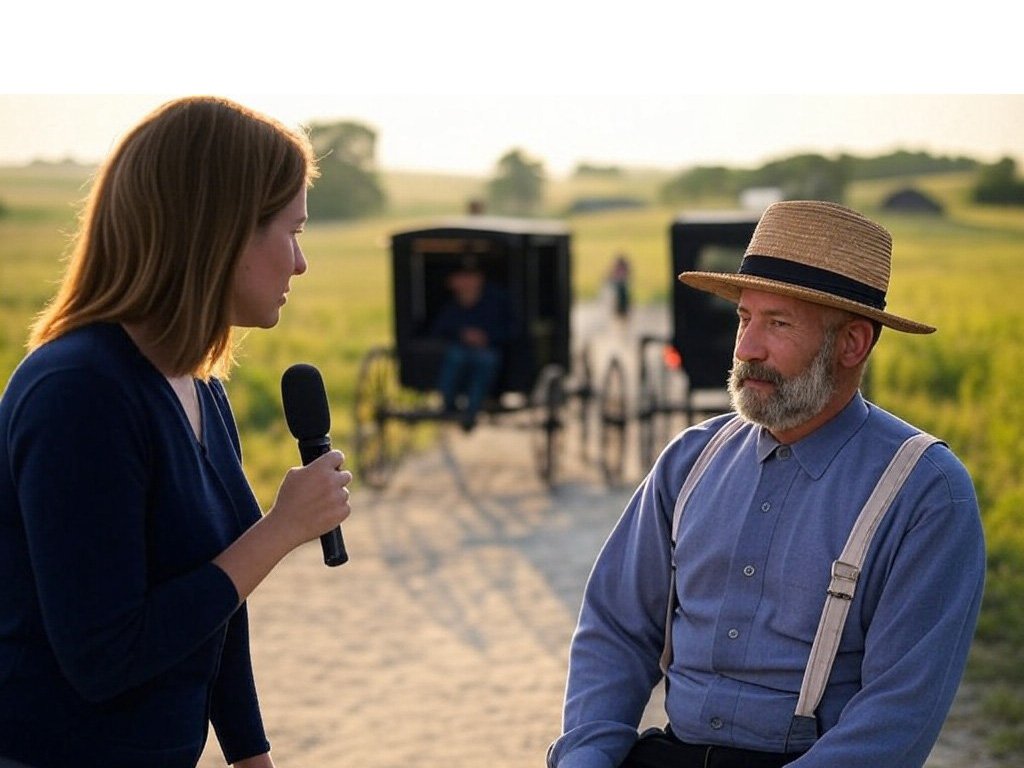 Course Lesson
Why Do Anabaptists Quote Protestants Who Hold Erroneous Doctrines?
Open the related lesson, course, or teaching segment for deeper study.
Video
Menno-Protestants 2
Open the related lesson, course, or teaching segment for deeper study.
Video
“How to Answer Catholic and Orthodox Claims – part 1” by Lynn Martin
And they may not be a closed-minded—they may not be closed-minded people, but they have such a strong sense of having arrived that they'll likel...
Course Lesson
Why Do Anabaptists Quote Protestants Who Hold Erroneous Doctrines?
Open the related lesson, course, or teaching segment for deeper study.
Video
Menno-Protestants 2
Open the related lesson, course, or teaching segment for deeper study.
Video
“How to Answer Catholic and Orthodox Claims – part 1” by Lynn Martin
And they may not be a closed-minded—they may not be closed-minded people, but they have such a strong sense of having arrived that they'll likel...
Answer Preview
Anabaptists are best understood as neither Roman Catholic nor Protestant in the usual theological sense. Their historic claim is a “third way”: a return to the faith, church life, and obedience they saw in Jesus, the apostles, and the earliest Christians. That does not mean every group with Anabaptist roots has remained distinct from Protestant theology.
The Short Answer
Anabaptists are best understood as neither Roman Catholic nor Protestant in the usual theological sense. Their historic identity is a “third way”: not submission to Roman Catholic or Orthodox institutional claims, and not merely a Protestant revision of Catholic theology, but a return to the teaching of Jesus, the New Testament church, and the life of the earliest Christians.
That answer matters because the label “Protestant” can hide the very thing early Anabaptists were trying to recover. They were not simply asking, “Which side of the Reformation debate should we join?” They were asking, “What did Christ command, and what did the apostolic church practice?”
Why This Question Matters
If “Protestant” only means “not Roman Catholic,” then Anabaptists might look Protestant at first glance. They rejected Roman Catholic authority structures, refused many Catholic practices, and lived in the same world where Lutheran and Zwinglian reforms were taking place.
But if “Protestant” means belonging to the theological and churchly system of the magisterial Reformers, the answer changes. The lesson on The Anabaptists states the distinction plainly: “the Anabaptists were neither Catholic nor were they Protestant or Reformed.” Their “third way” is described as the “Kingdom way,” connected with the same basic conclusions associated there with primitive Christians and other renewal movements.
So the issue is not merely a history label. It is a question of authority, church life, discipleship, baptism, separation from the world, and obedience to Christ.
What Scripture Says
No Christian identity is safe if it rests mainly on a party name. The Anabaptist argument, at its strongest, is not “our tradition is old” or “our group is right.” It is that Christ’s call must govern the church.
That is why the Sound Faith discussion on Anabaptists rediscovering Christ beyond institutions warns against defining Christians by “human institutions rather than by the call of Christ.” The issue is not whether a church can trace a name, a hierarchy, or a confessional system. The issue is whether it practices the teachings of Jesus.
The same concern appears in the discussion of early Anabaptist separation. In Separation from the World: Lessons from Early Anabaptists, the critique of Roman Catholic, Lutheran, and Zwinglian churches centers on discipleship and church order: they did not “follow Christ’s order to first teach and then baptize,” did not rightly use church discipline, and did not preserve the cross of Christ through upright living.
That is the biblical heart of the matter as presented by Anabaptist teaching: the church is not defined first by being anti-Catholic or anti-Protestant. It is defined by hearing Christ, teaching disciples, baptizing those who respond, keeping a holy brotherhood, and living as a kingdom governed by heaven’s principles. The video on the Kingdom of God and Kingdom Christianity expresses this as God calling people “to be part of a kingdom governed by the principles of heaven.”
How the Earliest Christians Understood This
The earliest Christian witness matters here, but it must be used rightly. Early Christian writers are not equal to Scripture. They can, however, show how Christians close to the apostolic age understood church life.
A discussion of Anabaptists and early Christian congregational church origins notes that some early Anabaptists were well read in the early Christians. Pilgram Marpeck is mentioned as one who answered Catholic arguments by quoting early Christian writers back to them. The point was not to replace the Bible with the fathers. The point was that early Christian practice did not always support the later institutional claims being made against the Anabaptists.
That same discussion says the early Anabaptists were “trying to follow what they saw in the New Testament,” namely congregational churches, and that this is also seen “in the earliest works of the early Christians.” The picture given is not isolated individualism, but congregations that “work together.”
A later church document such as Correspondence with Pope Innocent I - Chapter 1 shows a different kind of concern: bishops, ordination disputes, Catholic recognition, and obedience to the canons of Nicaea. That kind of post-Nicene institutional framework helps explain why Anabaptists did not simply identify their restoration effort with “Catholic” church order.
Common Misunderstandings
Misunderstanding 1: “Neither Catholic nor Protestant” means Anabaptists invented a brand-new Christianity. That is not the historic Anabaptist claim. The claim is restoration, not novelty. Lynn Martin’s talk Who is Right? Catholics and Orthodox? Protestants? Someone Else? describes a “third option” and connects it with churches seeking to keep alive “the original faith that the apostles taught.”
Misunderstanding 2: If Anabaptists quote Protestants, they must be Protestant. Quoting a writer does not mean adopting that writer’s whole theological system. In the Q&A segment Why Do Anabaptists Quote Protestants Who Hold Erroneous Doctrines?, the speaker objects to uncritical use of Protestant teachers precisely because Anabaptists are understood as “neither Protestant nor Catholic.”
Misunderstanding 3: Every group with Anabaptist roots remains equally non-Protestant. History is messier than labels. David Bercot’s Menno-Protestants 2 argues that some groups with Anabaptist history later took on Protestant theology so strongly that the Protestant element “pretty well stamped out” the Anabaptist one. So the question must be answered both historically and practically: What does a particular church actually teach and practice?
What This Means for Christians Today
The best answer is not merely, “Anabaptists are neither.” The better answer is, “Anabaptists are meant to be a Christ-centered, kingdom-shaped people rather than a Catholic or Protestant party.”
That means the test is not whether a church has the right historical slogan. The test is whether it follows Jesus in real life: discipleship before baptism, a disciplined brotherhood, separation from worldly systems, love of enemies, practical holiness, and a church life shaped by the New Testament rather than by state power or inherited institutions.
This also guards against pride. Saying “neither Catholic nor Protestant” can become just another identity badge. The warning from Anabaptists rediscovering Christ beyond institutions applies to Anabaptists too: it is possible to define oneself by an institution instead of by the call of Christ.
Keep Studying
For a focused introduction, begin with The Anabaptists, which states the “neither Catholic nor Protestant” answer directly.
To explore the broader “third way” question, study Lynn Martin’s Who is Right? Catholics and Orthodox? Protestants? Someone Else?.
For the early Christian connection, see Anabaptists & Early Christians: Congregational Church Origins.
For practical differences in church discipline and separation, study Separation from the World: Lessons from Early Anabaptists.
For a caution about Anabaptist groups adopting Protestant theology, see David Bercot’s Menno-Protestants 2.
For background on later Catholic institutional language, compare Correspondence with Pope Innocent I - Chapter 1.